

Overview
Do you have a proposal for research that could make an original contribution to healthcare knowledge and go on to improve the health of our society?
Our Research Degree (PhD), offered in partnership with and awarded by Southampton Solent University, could be your opportunity to undertake valuable original research, supported by our experienced academic team.
Choosing to undertake your PhD with us means you’ll experience the many benefits of being part of a specialist health sciences university. We train a wide range of health-related professionals and, uniquely, provide multiple clinical services. Our students have access to highly specialised on-site facilities, such as our Integrated Rehabilitation Centre and Open Upright MRI, within which a range of health-related research is embedded. Our specialised and experienced staff will become your supervisory team and support your research, training and academic development.
Applications for our research degrees are currently closed. If you are interested in our programme, please feel free to get in touch with the team via our enquiry form.
Applications for October 2027 entry will open later in the year.
Course Details
Why study for a Research Degree at Health Sciences University?
During your degree you’ll not only have access to our wide range of teaching facilities but our world-class academic and clinical staff too. Research Degree (PhD) students have the opportunity to get experience in a range of places including our on-site clinics, which includes our £4.5m Integrated Rehabilitation Centre, specialised clinical imaging facilities and student-led clinics, such as podiatry and chiropractic.
Focused Health Research
We have an internationally recognised team of researchers in many health-related subject areas including musculoskeletal health, medical imaging, rehabilitation, health promotion, osteopathy, psychology and sport. As we develop our growing portfolio and expertise, as an institution, emerging areas are digital health, health education and patient-centred care.
Innovative
As a specialist health sciences university, our research strategy is focused on advancing innovation and excellence in health sciences. We welcome talented graduates and experienced clinicians to join us in shaping the future of research and making a tangible impact on health and care.
Great Facilities
Our Bournemouth campus hosts two large clinics in Bournemouth and London serving the local community, including a well-established musculoskeletal clinic seeing around 1,000 patients per week, and our Integrated Rehabilitation Centre. Our London campus also features a clinic providing additional opportunities for clinical research and service evaluations. Together, these facilities offer a rich environment where research, health education, and patient care are closely integrated.
Our Community
With a strong team based across our Bournemouth and London sites, we’re a well-connected and integrated community of students, academic and clinical staff. This encourages’ cross-disciplinary research ideas. We have professional links with our local health care community and have a network of researchers we collaborate with both nationally and internationally.
Exceptional Locations for Studying and Living.
Our Bournemouth Campus is situated on the south coast of England and is a 5-minute walk from the beautiful beach of Bournemouth. We are close to two national parks and the world heritage site of the Jurassic Coast. We are a 2-hour train ride from London with two international airports (Bournemouth and Southampton) less than 30 miles away.
Our London campus is situated on London Borough High Street, offering unparalleled access to the vibrant heart of the capital. Surrounded by iconic landmarks like the Tower of London and Borough Market, students benefit from a dynamic cultural hub. Excellent transport links ensure easy exploration of London’s diverse attractions. From historic sites to culinary delights, the area provides an enriching experience for students seeking academic excellence in a vibrant city setting.
Key Research Areas
We have expertise in musculoskeletal health and care (including chiropractic, osteopathy, and physiotherapy), psychology and mental health, sport exercise and health sciences, dietetics, podiatry, medical imaging, clinical reporting, sport rehabilitation, speech and language therapy, occupational therapy, and workforce development.
You can find out about our latest research here: Research at HSU | Health Sciences University.
Our research is focused around three broad themes:
- Improving the health, wellbeing and quality of life of current and future generations.
- Enhancing human performance and functioning.
- Innovating for excellence in health care and health sciences.
HSU’s Research Centres bring together researchers, clinicians, students, partners, and public and community contributors in collaborative, inclusive, and supportive environments where ideas can flourish
1. The HSU Centre for Osteopathic Research & Leadership (CORaL)
2. The HSU Centre for Pain & Active Inference (PAIn) Research
3. The HSU Centre for Human Performance Research
4. The Centre for Workforce and Systems Innovation
5. The National Centre for Chiropractic Research
6. The Institute for Musculoskeletal Health & Innovation
We will support PhD projects that contribute towards these themes and our Research Centres. If you’re passionate creating knowledge and innovations that shape the future of healthcare, our Research Degree programme lets you undertake original, impactful research in health sciences.
Assessment Process
The major progression points are a transfer from MPhil to PhD as outlined in the programme regulations and student handbook and a final PhD viva voce exam after submission of the PhD thesis.
In addition to these major research degree milestones, the experience and academic progress of research students in formally monitored once a year via an Annual Monitoring process which involves a Progress Review.
Expected Learning
During the first year of the programme there will be a requirement for candidates to complete a PGCert in Research Methods may be delivered by HSU or by our validating partner, Southampton Solent University.
Although there may be the option to predominantly attend these sessions remotely, some face-to-face attendance will be required.
This is designed to bring all candidates up to a minimum standard with research methods and is there to ensure doctoral students have a sufficient grounding in the range of research methods and skills required for a PhD.
Your studies will be centred at Health Sciences University, with your supervisory team agreeing key degree milestones as laid out by the Health Sciences University regulations and student handbook.
Structure of Study
The MPhil/PhD will be predominately autonomous learning, with guidance and support from your PhD supervisory team.
Staff
Our experienced academic team
Learn more about our Doctoral Coordinator for Bournemouth, Dr Sophie MacKenzie, Doctoral Coordinator for London, Dr Oliver Thomson, and view HSU’s course’s potential supervisors below.

Doctoral Coordinator
Dr Sophie MacKenzie
Senior Lecturer in Speech and Language Therapy
Sophie joined Health Sciences University in January 2023 as a senior lecturer in the speech and language therapy team. She leads on two SLT units: Acquired Communication and Eating, Drinking and Swallowing Needs and Speech and Language Therapy across the Lifespan. She is also Doctoral Coordinator for the Bournemouth Campus.
Full bio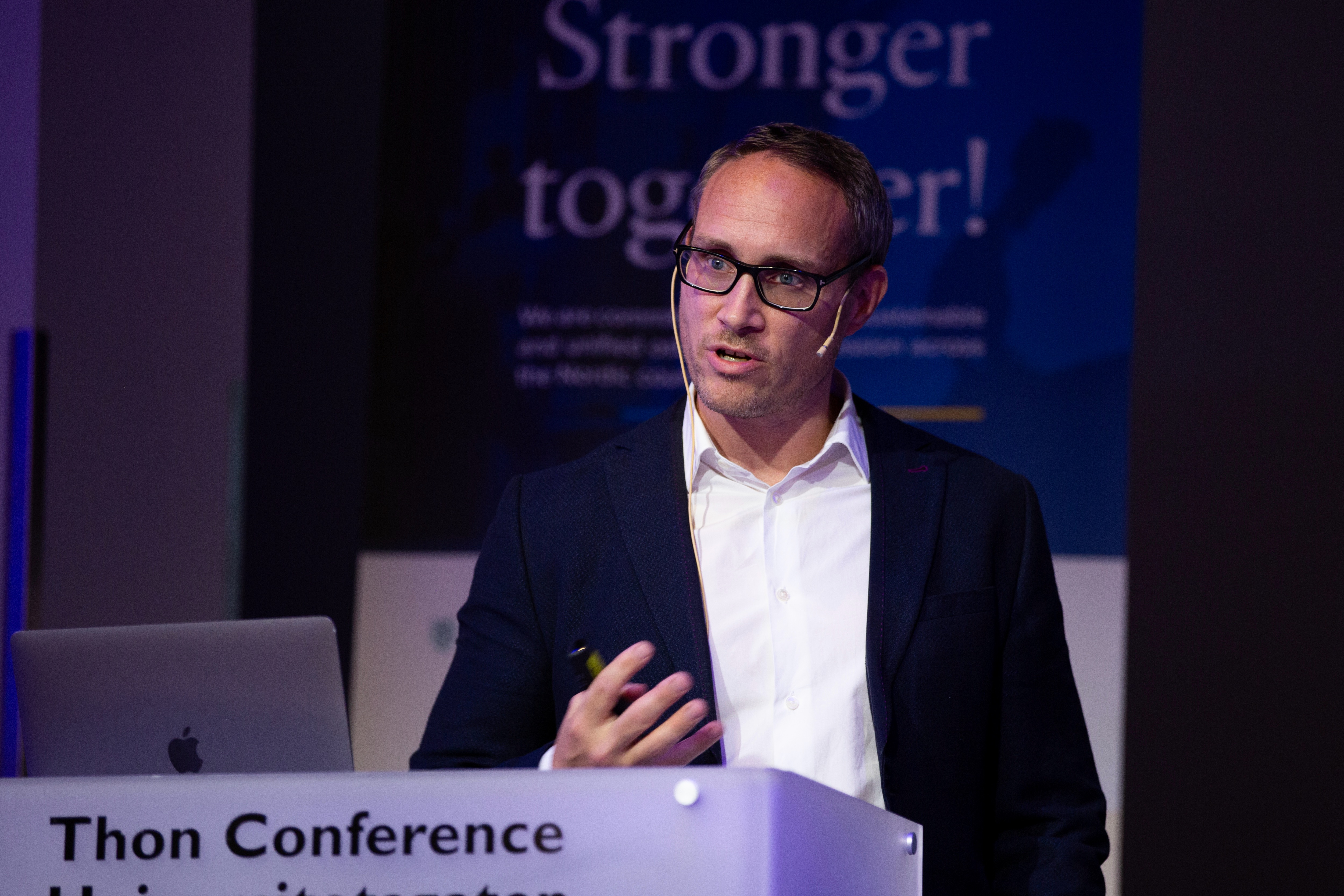
Doctoral Coordinator
Dr Oliver Thomson PhD, MSc, BSc (Hons) Ost Med, BSc (Hons), DO
Principal Research Fellow & Doctoral Programme Leader
Oliver Thomson is Associate Professor and Doctoral Programme Leader.
Full bio
BSc, PgCert, PhD, FRCC (Hon), FEAC - Professor of Integrated Musculoskeletal Care and Health Sciences University Doctoral Coordinator

MSc, PhD, CPsychol - Associate Professor Physiology

Associate Professor - Clinical Management
Associate Professor in Dietetics

Associate Professor in Podiatry

BSc MSc PhD CPsychol – Senior Lecturer in Psychology

PhD, MRes, BSc (Hons), Senior Lecturer (Workforce Development)

BSc, DC, MSc, DChiro, FHEA, FRCC (Ortho) – Associate Professor

Lecturer in Sport and Exercise Psychology

PhD, PGCert, MChiro, BSc – Senior Lecturer (Clinical Sciences)

PhD Psychol AFBPS HCPC FBASES FHEA – Director of Education and Student Experience, Professor in Psychology of Human Performance, Head of Centre for Human Performance Research

MSc Chiropractic Course Lead, SOC Research Ethics Lead & Lecturer in Health Promotion and Public Health
Professor

Head of Research & Knowledge Exchange and Director - NCOR

Research Fellow

Head of Health Business School
Doctor of Medicine; Senior Lecturer of Anatomy

Lecturer in Healthcare Management

Lecturer in Marketing

Lecturer in Healthcare Management

Lecturer In Management and Social Enterprise

Lecturer in Management and sustainability

Casual Associate Lecturer

Associate Lecturer

Accounting and Finance Lecturer

Entry Requirements
How do I apply? 
How do I apply?
To enrol on our MPhil/PhD programme, students will initially register for MPhil with possibility of transfer to PhD, on satisfactory completion of all applicable monitoring requirements as presented in the Postgraduate Research Handbook.
For students enrolling on the MPhil/PhD in October 2026, we have three fee waivers available to UK home students. These are awarded based on merit to the strongest applicants. Prospective students wishing to be considered for a fee waiver should ensure they have other financial means in place in the event a fee waiver is not awarded.
- Fee-waivers will be available to UK home students for the duration of their studies (3 years full-time and 6 years part-time). Allocations will be made through a competitive process. Fee waivers are not available to applicants already undertaking a PhD at HSU; receiving any other bursary or award (from HSU or externally); or in full-time employment.
- Self-funded students are still welcome to apply to study a research degree with us. Self-funded projects are open to home and international students. Please see guidance on how to apply as a self-funded student below
There is one entry point in October each year.
In your application, please specify whether you are proposing your own research project. All applicants are advised to make contact with your potential supervisors before applying to discuss your proposed project.
Please note, international students will normally require a student visa to be able to study in the UK. There are costs associated with applying for a visa, so please ensure you have the means to meet these costs before you apply to the Research Degree programme. For more information for international students, please see our Visas and Immigration pages.
For general questions on Postgraduate Research Degree entry requirements or to register your interest in the course please use the contact form below.
Applications for our research degrees are currently closed. If you are interested in our programme, please feel free to get in touch with the team via our enquiry form.
Applications for October 2027 entry will open later in the year.
International Students
International Students
For applicants whose first language is not English, it is necessary to demonstrate a satisfactory standard in English.
Applicants whose first degree is not English should provide evidence of successfully completing a first degree from a UK University or a degree that that been taught and assessed in English, or by holding an ILETS overall score of 6.5 with no less than 6.0 in each component.
Please note: Only our self-funded opportunities are open to international students
Entry requirements
Entry requirements
Applicants for an MPhil/PhD should hold at least one of the following:
a) a first or upper second class honours degree from a UK University or a qualification which may be deemed equivalent by NARIC* and the admissions review panel;
or
b) a master’s degree from a UK University or a non UK qualification which may be deemed equivalent as above;
or
c) other qualifications, publications and/or appropriate professional training and experience which may be considered equivalent by the admissions review panel to one of the above.
*National Academic Recognition Information Centre
Supporting documentation for your application
Supporting documentation for your application
If you want to apply to be a PhD student with us (through a fee waiver or self-funded) you can choose to submit your own project proposal or apply to one of our defined research projects. See the relevant guidance below.
All applicants will need to upload the following documentation in support of your application:
- Qualification transcripts / certificates (scanned copies can be submitted, but if your application is successful you will be required to present the originals at registration).
- Photograph ID page of your passport.
- A confirmation of funding letter, or guarantee form from your funder / employer (if your studies will be sponsored).
-
Two letters of recommendation are required, normally including at least one academic referee who can comment on your research potential.
- CV
- A personal statement detailing your experience and why you are suitable for postgraduate research study. Your personal statement should be no more than 1,000 words.
- Research proposal of c.2,000 – 4,000 words* which includes a proposed timeline of your research and bibliography.
- Evidence of English language proficiency if applicable.
*The research proposal should be 2,000-4,000 words and include the following:
If you are proposing your own research project:
- Your project title and key research questions
- An overview of the context into which your research will fit, including:
- The aims and objectives of your proposed research
- An overview of current literature that supports your proposed project,
- How it adds to, develops (or challenges) previous work by researchers in the field,
- Why the research is important to the subject area, and
- How you think the research will make an original contribution to knowledge.
- An outline of how the research will be achieved within the normal duration of a PhD.
- Consideration you have given to research methods, what research method(s) you propose to use, and your rationale for why these are appropriate to the project.
- Any consideration or discussion you have had with any prospective supervisors at Health Sciences University for the project (please note this is mandatory before proposing your own research project).
- Consideration of the sources, resources and / or facilities required to successfully complete the research. If the project will require access to external organisations or specialist facilities, the proposal should include details of how you intend to secure access to these for the required duration.
- An indicative bibliography demonstrating your critical grasp of current literature in the field and how you plan to contribute to it.
- Potential research dissemination and potential long-term impacts of the project.
- How your research interests are suitable to deliver the project successfully, and what makes you the ideal candidate for the project.
If you are applying for one of the listed research projects:
- An outline that demonstrates your understanding of the research project, its goals, potential impact, and the approach you would take as the doctoral candidate to include:
- Why the research is important to the subject area, and
- How you think the research will make an original contribution to knowledge.
- An outline of how the research will be achieved within the normal duration of a PhD.
- Consideration you have given to research methods, what research method(s) you propose to use, and your rationale for why these are appropriate to the project.
- Consideration of the sources, resources and / or facilities required to successfully complete the research. If the project will require access to external organisations or specialist facilities, the proposal should include details of how you intend to secure access to these for the required duration.
- An indicative bibliography demonstrating your critical grasp of current literature in the field and how you plan to contribute to it.
- Potential research dissemination and potential long-term impacts of the project.
- How your research interests are suitable to deliver the project successfully, and what makes you the ideal candidate for the project.
Please note: Full-time students will be allocated up to £500 per year for research expenses (£250 per year for part-time students)
Assessment process for applications
Assessment process for applications
Eligible applications will be assessed according to the following criteria:
- The applicant’s understanding of the project.
- The applicant’s specific understanding of what will be involved in delivering the project.
- The potential for the applicant to achieve academic and research excellence.
- The applicant’s understanding of what a PhD entails and what it takes to be successful.
- The proposal is aligned with HSU’s research themes and specialisms.
Those that are scored highly will result in the applicant being invited to an interview. Following the interviews, decisions will be made on which applications will be invited to study a research degree with us from October 2026, including which applications will be awarded fee waivers. There is no right of appeal for the funding decisions.
Still have questions about applying?
Course Fees
Our current course costs for the Postgraduate Research Degree course 2026/27 entry* are per annum and are shown below.
Home/ROI/Channel Islands
£2, 493 Part-time
£4, 988 Full-time
International
£9,143 Part-time
£17, 046 Full-time
Our tuition fees policy can be found here on our latest policies page.
Should you have any questions on course fees please see our Fees and Payment Information page or contact our admissions team on the form below.
There is an option to apply for a Postgraduate Doctoral Loan that can help with course fees and living costs while you study a postgraduate doctoral course.
Please note: These fees are for the 2026-27 academic year only and may be subject to increase in subsequent years of study. Any increase will be in line with our Tuition Fees Policy but will not be more than 5%.

Why choose Health Sciences University
There are many benefits to studying at Health Sciences University, from our expertise and history in teaching health sciences, to our state-of-the-art facilities, on-site clinical training, and of course our location on the beautiful Bournemouth coast.
Latest News
Discover and read all the latest news, press releases and happenings here at Health Sciences University.
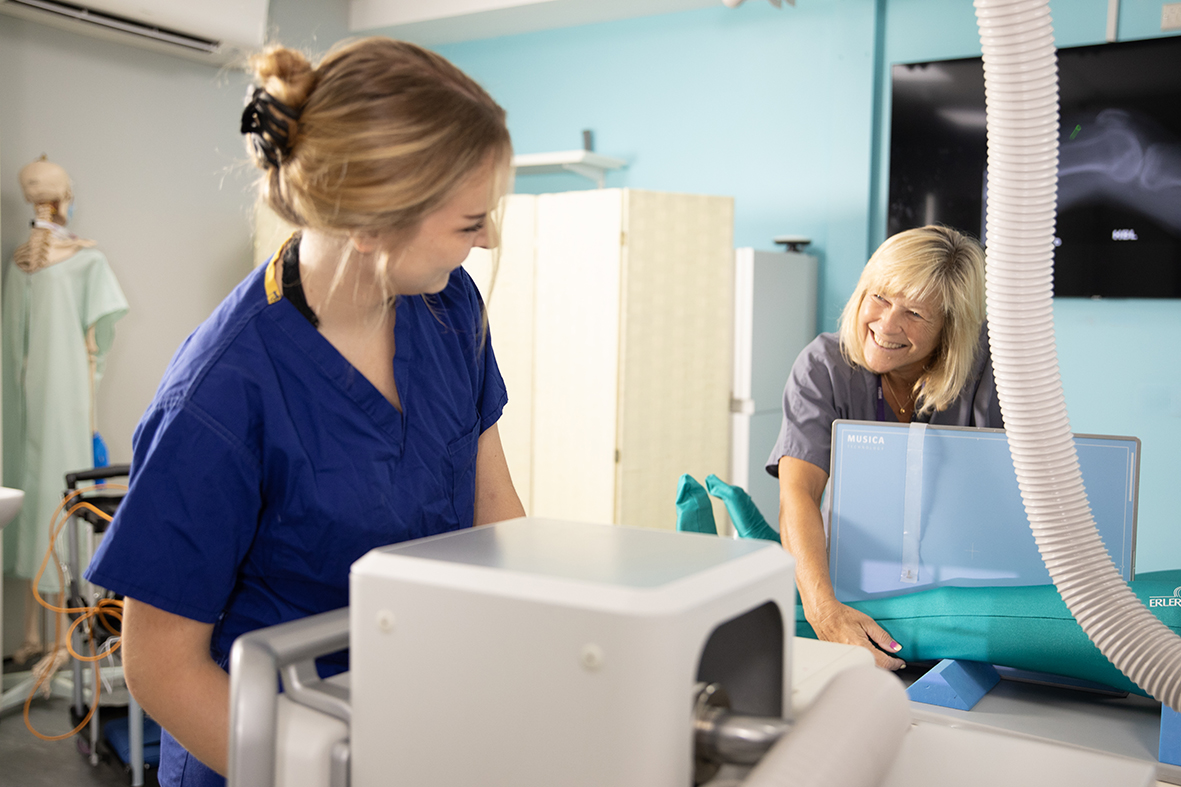

Health Sciences University is sponsoring the inaugural MSK Awards 2026, including the Innovation in MSK Practice Award, with Professor Steven Vogel also joining the expert judging panel.
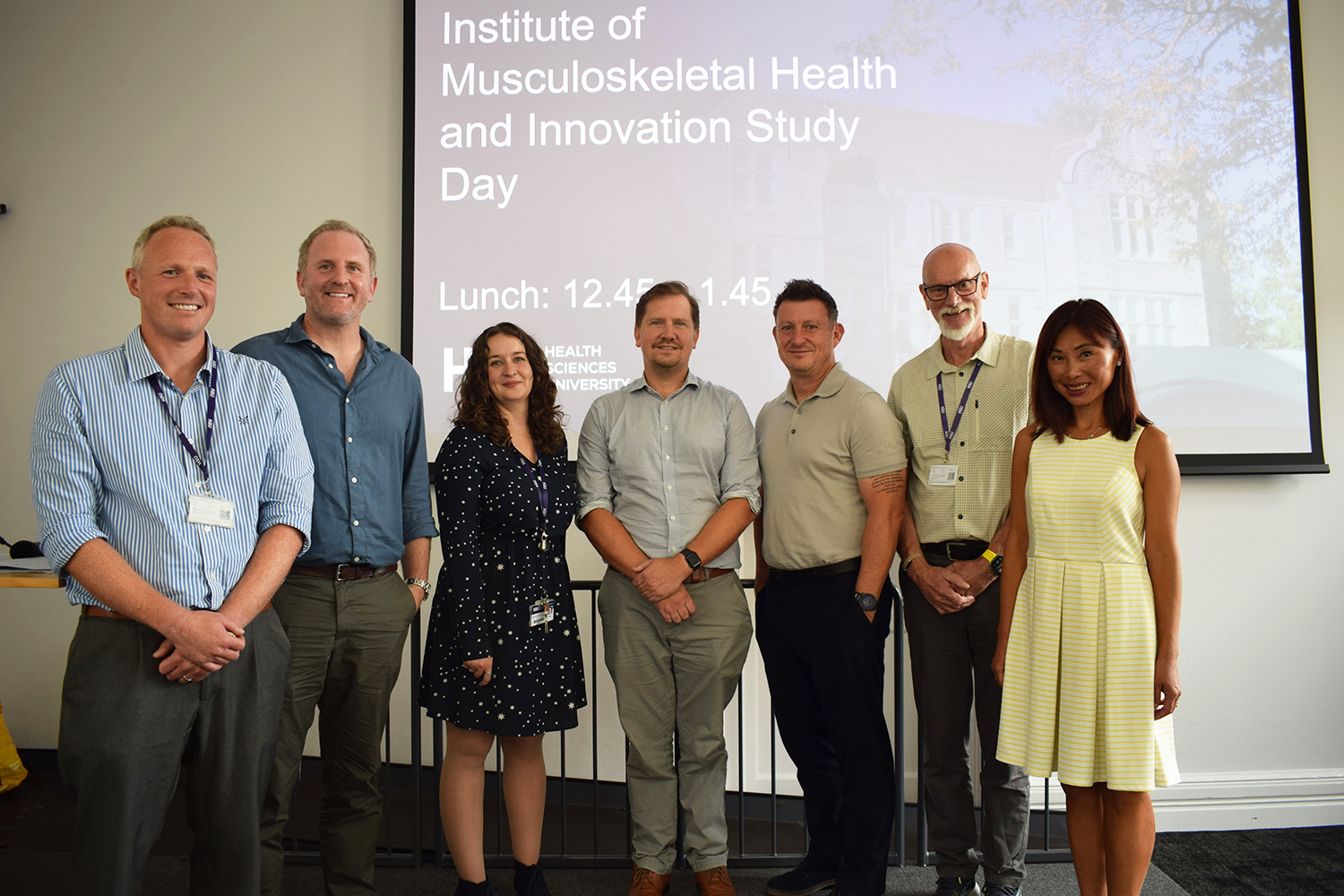
Health Sciences University (HSU) welcomed over 50 healthcare professionals from across the musculoskeletal (MSK) community for the launch of the new Institute of Musculoskeletal Health and Innovation (IMHI), bringing together expert speakers, clinicians, students and educators for a day of continuing professional development centred on clinical reasoning and decision-making.

Health Sciences University has been shortlisted for Specialist Institution of the Year at the THE Awards 2026, recognising the University’s specialist approach to education, clinical care, applied research and workforce impact.


Find us
Health Sciences University
Bournemouth Campus
Parkwood Road
Bournemouth
BH5 2DF
Health Sciences University
London Campus
275 Borough High Street,
London
SE1 1JE
Health Sciences University
Reading Campus
19 Castle Street
Reading
RG1 7SB