Professionalism and Boundaries Co-creation in Clinical Healthcare Practice Education
Applications for this PhD project are now open. The deadline for applications is 6 April 2026.

Applications for this PhD project are now open. The deadline for applications is 6 April 2026.
Professionalism and the maintenance of appropriate boundaries are central to safe, ethical, and effective healthcare practice (Cruess, Cruess, & Steinert, 2010; Cruess & Cruess, 2018). In clinical education, professionalism has traditionally been framed as a set of stable norms and behaviours transmitted from educators to learners through formal curricula, assessment, and role modelling (Birden et al., 2014). However, contemporary healthcare practice is increasingly shaped by interprofessional collaboration, patient partnership, digital communication, and cultural diversity, all of which disrupt fixed notions of professional boundaries (Fenwick, 2016; Hodges et al., 2011).
Growing theoretical and empirical work suggests that professionalism is not merely acquired but socially constructed through participation in practice (Billett, 2014; Wenger, 1998). Boundary norms, in particular, appear to be actively negotiated and re‑created within everyday clinical interactions between students, educators, patients, and healthcare teams (Monrouxe & Rees, 2017). Despite this, there remains limited empirical research examining how professional boundaries are negotiated, learned and re-created in situ within clinical healthcare education. Thus, the study primarily aims at presenting and understanding co-creation as an essential social practice tool needed to support contemporary clinical healthcare practice education to support effective ethical practice, professional identity formation, educational design and meaningful learning.
Email: adetola.adekunle@hsu.ac.uk
This study aims to explore how professionalism and professional boundaries are co‑created within clinical healthcare practice education. The objectives are to:
The study will adopt a qualitative, interpretivist research design. Data will be generated through semi‑structured interviews and focus groups with healthcare students, clinical educators, and practising clinicians across selected clinical education sites using purposive sampling technique.
Observational fieldwork in clinical teaching environments will complement participant narratives, allowing lived examination of boundary negotiations as they occur in practice. Data will be analysed using reflexive thematic analysis (Braun & Clarke, 2021), informed by sociocultural learning theory theories of learning and professional identity formation literature (Billett, 2014; Wenger, 1998, Cruess & Cruess, 2018). Ethical approval will be sought from University Ethics Committee, with particular attention to power dynamics/relations in clinical education practice, confidentiality, and participant wellbeing.
The study is expected to generate nuanced empirical insights into how professional boundaries are negotiated in clinical education practice amid ambiguity and competing norms. It is aimed at clarifying tensions between formal codes of professionalism conduct and lived clinical practice (Hodges et al., 2011). It will also foster the identification of pragmatic strategies that learners and educators can employ to manage the realities of ambiguity and ethical complexity in their clinical education practices.
This study addresses a gap in empirical literature in understanding how negotiated professional boundaries are co‑created in clinical education. By reframing professionalism as relational and context‑sensitive, it will inform future curriculum design, educator development, assessment strategies and workplace-based learning practices such as during clinical placements. Drawing on Cruess et al. (2016), it supports preparing future healthcare professionals for real‑world clinical practice by promoting reflective, inclusive and adaptive approach to professional boundaries framing.

HSU is offering up to three fee waivers for UK home applicants starting in October 2026. All eligible UK home applicants will automatically be considered for fee waiver support, which is awarded competitively based on the excellence of the candidate.
International applicants are unfortunately not eligible for fee waivers.
All applicants are expected to have financial plans in place to cover their studies and should not rely on a fee waiver.
Self-funded students are also welcome to apply for this project. Self-funded students can be UK home students or international students.
Available to both UK and International students
Billett, S. (2014). Learning through health care work: Premises, contributions and practices. Medical Education, 48(1), 124–131.
Birden, H., Glass, N., Wilson, I., Harrison, M., Usherwood, T., & Nass, D. (2014). Teaching professionalism in medical education: A best evidence medical education (BEME) systematic review. BEME Guide No. 25. Medical Teacher, 36(1), 47–64.
Braun, V., & Clarke, V. (2021). Thematic analysis: A practical guide. Sage.
Cruess, R.L., & Cruess S.R., (2018) The development of Professional Identity in Understanding medical education : evidence, theory, and practice (T. Swanwick, K. Forrest, & B. C. O’Brien, Eds.; Third edition.). Wiley-Blackwell.
Cruess, R. L., Cruess, S. R., & Steinert, Y. (2010). Linking the teaching of professionalism to the social contract: A call for cultural humility. Medical Teacher, 32(5), 357–359.
Cruess, R. L., Cruess, S. R., Boudreau, J. D., Snell, L., & Steinert, Y. (2016). A schematic representation of the professional identity formation process. Academic Medicine, 91(6), 743–747.
Fenwick, T. (2016). Professional responsibility and professionalism: A sociomaterial examination. Routledge.
Hodges, B. D., Ginsburg, S., Cruess, R., et al. (2011). Assessment of professionalism: Recommendations from the Ottawa 2010 Conference. Medical Teacher, 33(5), 354–363.
Monrouxe, L. V., & Rees, C. E. (2017). Healthcare professionalism: Improving practice through reflections on workplace dilemmas. Wiley Blackwell.
Wenger, E. (1998). Communities of practice: Learning, meaning, and identity. Cambridge University Press.
Discover and read all the latest news, press releases and happenings here at Health Sciences University.
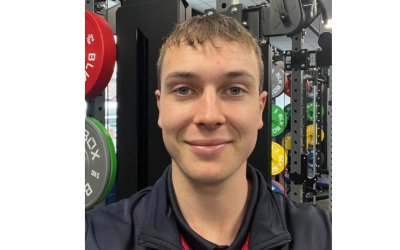
HSU graduate Ben Samways studied BSc (Hons) Sport, Exercise and Health Science before progressing into strength and conditioning with an MSc at Bournemouth University.
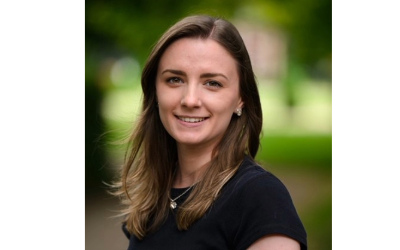
HSU graduate Nikita completed BSc Clinical Exercise Science before progressing to an MSc in Health Education and Promotion and a PhD in Tobacco Control at Maastricht University in the Netherlands.
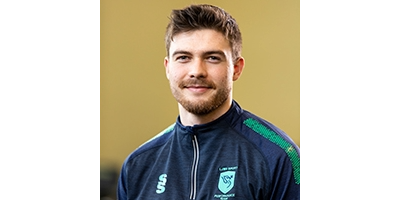
HSU graduate Joel Kearney studied BSc Clinical Exercise Science before progressing into elite sport performance, biomechanics and strength and conditioning. Following an MSc at LJMU, UKSCA accreditation and a Vice-Chancellor’s Scholarship PhD, Joel has worked with organisations including Liverpool FC, British Cycling, British Gymnastics and the FA, and is now Head of Strength & Conditioning at Championship Rugby Union side Caldy RFC.

Since joining HSU in 2023, Billy Coleman has been teaching across the BSc and MSc Sport Rehabilitation programmes while also coordinating student placements. A BASRaT-accredited practitioner and HSU MSc Sport Rehabilitation & Therapy graduate, they combine teaching with hands-on industry experience at Wimborne Town FC and Bournemouth Heart Club, supporting patients across cardiac, respiratory, diabetes and cancer rehabilitation.
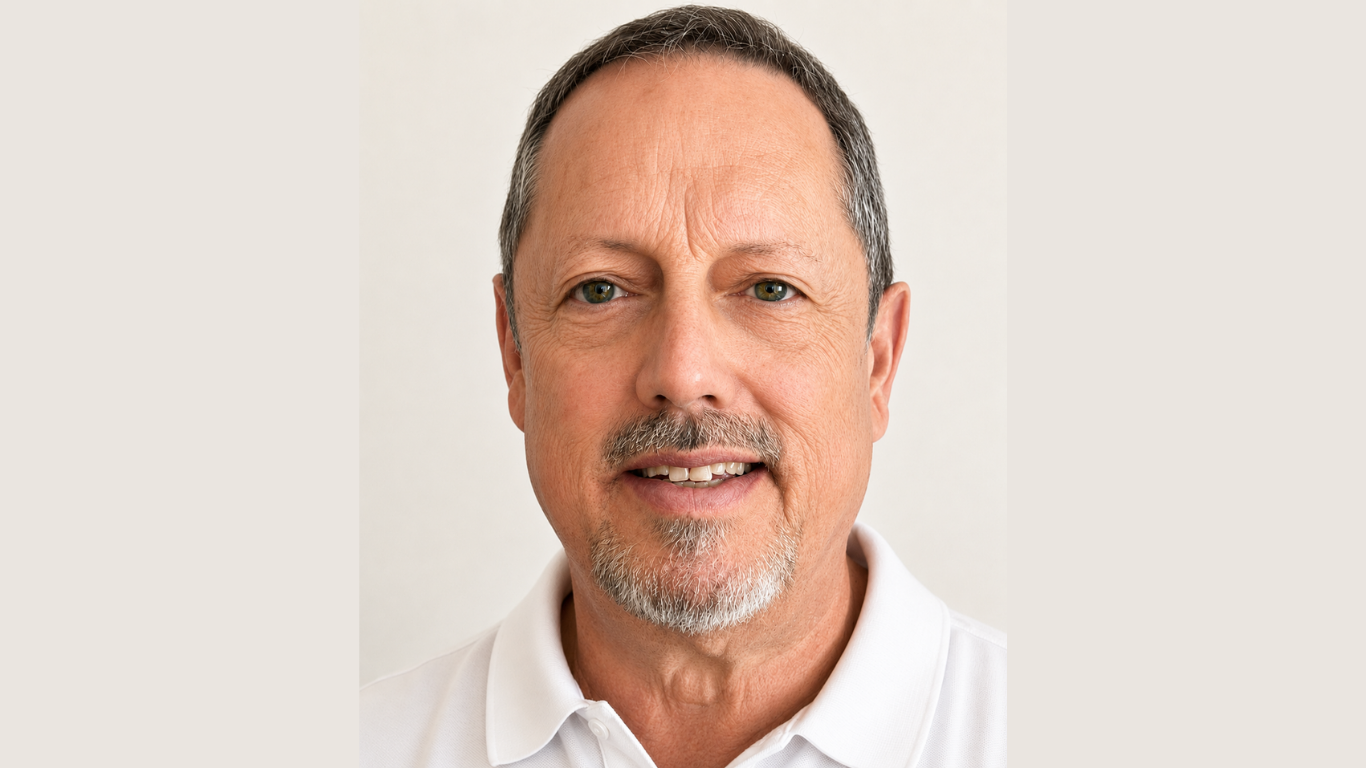
Health Sciences University has appointed internationally recognised clinician, researcher and educator Professor Jeremy Lewis PhD FCSP as a Professorial Research Fellow within its Institute of Musculoskeletal Health and Innovation (IMHI).
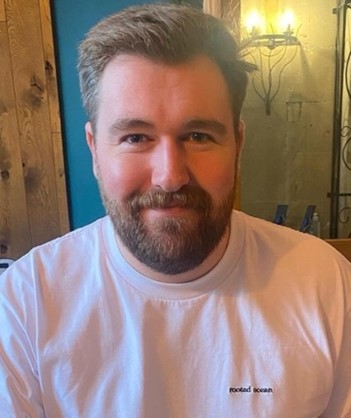
HSU graduate Sam Bigley studied BSc Exercise Science (Health and Rehabilitation) before progressing into respiratory and prehospital care.


Health Sciences University
Bournemouth Campus
Parkwood Road
Bournemouth
BH5 2DF
Health Sciences University
London Campus
275 Borough High Street,
London
SE1 1JE