
Overview
Speech and language therapy is a specialist, science-based profession focused on assessing and treating communication needs and swallowing difficulties. Our BSc (Hons) Speech and Language Therapy course is designed to develop autonomous, team-orientated practitioners who deliver compassionate, evidence-based care and who are ready for the breadth of modern employment opportunities.
You’ll develop strong foundations in the subjects that underpin the profession – including anatomy, neurology, phonetics, phonology and linguistics – and you’ll build the professional skills you need to practise safely and inclusively. Person-centred practice sits at the heart of the curriculum, with a strong emphasis on communication, consent, safeguarding, ethics and reflective practice.
Practice-based learning is integral. Across your placements you’ll gain experience with a wide range of client groups and settings, including opportunities linked to Health Sciences University’s on-site clinical services, alongside NHS, education and community environments. You’ll also learn alongside students from other health disciplines at HSU, strengthening your ability to work effectively in multi-professional teams.
Please note: Subject to HCPC approval and Royal College of Speech and Language Therapists (RCSLT) accreditation.
Course details
Across three years you will develop the knowledge, skills and professional behaviours expected of a contemporary speech and language therapist. You will learn to:
- Assess, diagnose and manage speech, language, communication and swallowing needs in babies, children and adults, and design tailored, evidence-based intervention plans.
- Build strong foundations in anatomy, neurology, phonetics, phonology and linguistics, and apply these to communication across the lifespan.
- Work collaboratively with families, educators and healthcare teams, and communicate effectively with compassion and cultural sensitivity.
- Practise ethically and professionally, with equality, diversity and inclusion embedded throughout your learning.
- Use research evidence and reflective practice to support decision-making, quality improvement and lifelong learning.
Assessment is designed to be authentic and practice-relevant, supporting you to build a broad skill set for employment. You can expect a blend of assessment types that may include written work, case-based tasks, practical/clinical assessments, presentations and reflective/professional practice activities. Assessment is designed to develop your clinical reasoning and your ability to apply evidence to real-world practice.
Yes. Practice-based learning is a core part of speech and language therapy education. You will undertake mandatory practice-based learning hours in a range of settings, which may include on-site clinical learning opportunities, NHS services and schools, as well as other community, private and voluntary environments.
Placements are designed to help you consolidate academic learning, develop professional confidence, and work with a variety of client groups under the guidance of skilled clinicians and practice educators.
This is a full-time course delivered through a blended model. Your week will typically include a mix of lectures, seminars, workshops and practical skills teaching, plus guided independent study. Workload varies across the year and will change during placement blocks, where you will follow the expectations and schedule of your placement setting.
Unit breakdown
Please note: The following units are provided for indicative purposes only and may be subject to change pending approval.
Year 1
Foundations of evidence‑based practice– 15 credits 
Develop academic and enquiry skills to appraise evidence and apply it to clinical decisions.
Person‑centred care, communication and ethics – 15 credits
Build professional behaviours, consent, safeguarding and inclusive practice foundations.
Foundations of communication: phonetics, phonology and linguistics – 30 credits
Develop the linguistic foundations that underpin typical and atypical communication.
Human Sciences for Speech and Language Therapy: Anatomy & Neurology – 30 credits
Explore relevant anatomy and neurology to support assessment and clinical reasoning.
Communication across the lifespan – 30 credits
Understand typical development and key influences on communication across ages and contexts.
Year 2
Research for clinical decision‑making – 15 credits
Strengthen research literacy and data skills to support evidence-based practice and improvement.
Professional practice 2: collaborative working & clinical reasoning – 15 credits
Advance clinical reasoning and teamwork skills, including interprofessional learning activities.
Acquired communication and swallowing needs – 30 credits
Assess and manage adult acquired communication disorders and dysphagia.
Speech and Language Therapy with children and young people – 30 credits
Develop knowledge and skills for paediatric communication needs in health and education settings.
Practice‑based learning 1 – 30 credits
Supervised practice learning to consolidate skills with real clients and multidisciplinary teams.
Year 3
Research project – 30 credits
Complete a substantial piece of enquiry or service‑focused research aligned to SLT practice.
Leadership, enterprise and quality improvement– 15 credits
Develop leadership and improvement skills to support safe, effective services and a smooth transition into practice.
Advanced conditions and complex needs – 30 credits
Work with complexity across clinical populations, integrating evidence and person-centred approaches.
Speech and Language Therapy across the lifespan – 30 credits
Integrate learning across life stages and settings, preparing for diverse employment routes.
Practice‑based learning 2 – 15 credits
Final placement preparation and consolidation towards professional readiness.
Why study speech and language therapy at HSU?
Study BSc (Hons) Speech and Language Therapy at HSU and join a specialist health sciences community focused on real‑world, person‑centred care. You’ll build strong foundations in the science of communication, develop hands‑on clinical skills through workshops and simulation, and gain practice‑based learning experience across a range of settings. Our curriculum is designed to help you graduate confident, compassionate and work‑ready for modern speech and language therapy practice.
Careers and progression
Speech and language therapists work across a wide range of settings, including the NHS, private practice, educational institutions, and community services, as well as in higher education and the charity sector. You may work with children, young people and adults, and with diverse communication and swallowing needs.
Interprofessional learning
You will have opportunities to learn alongside students from other health disciplines at HSU, developing the collaborative skills needed for multidisciplinary practice.
Why HSU?
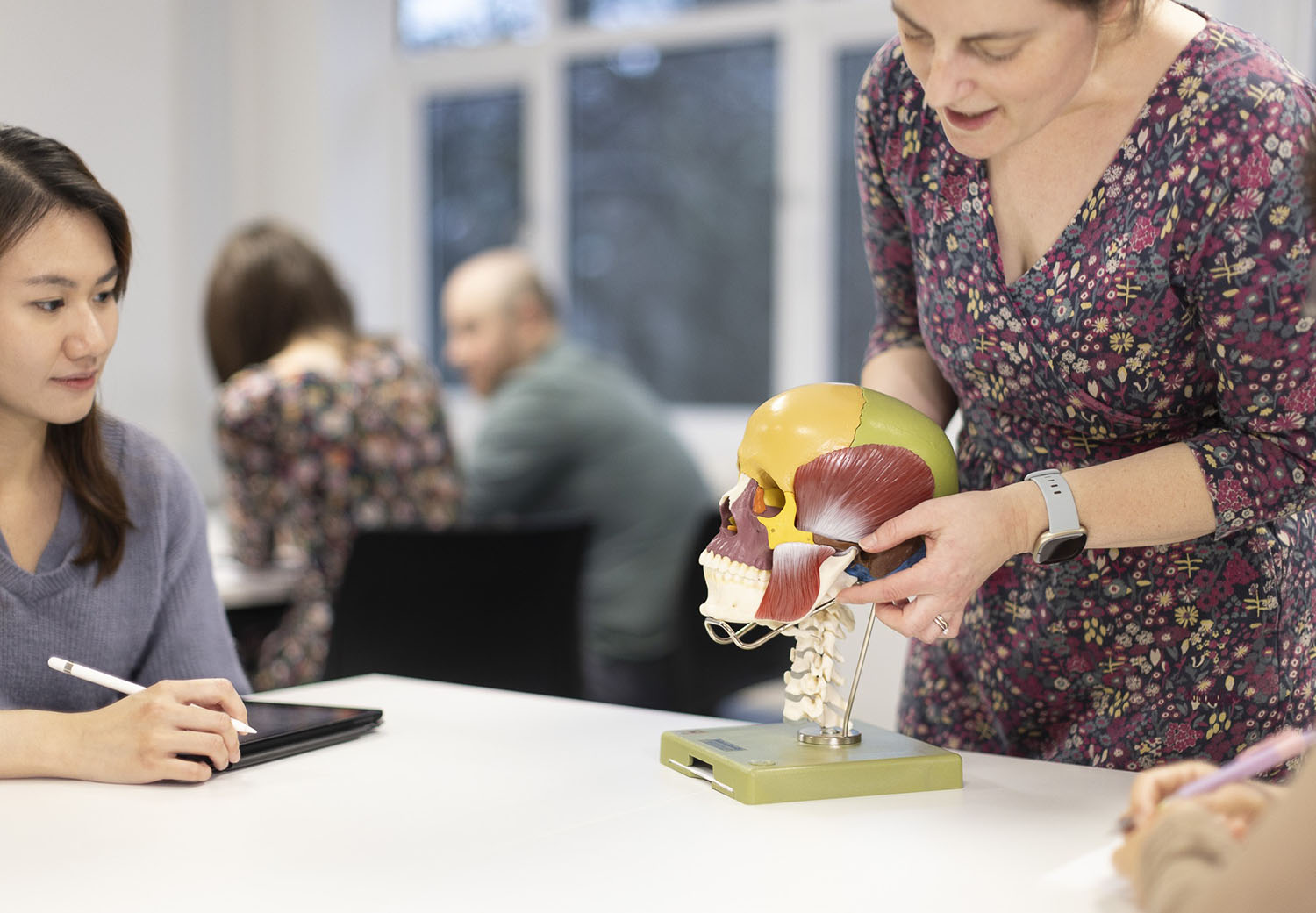
HSU is a specialist health sciences university. Learning alongside other future healthcare professionals and accessing specialist facilities and clinical learning opportunities helps you gain insight into clinical life after graduation.
What to expect
Strong focus on person‑centred practice and professional readiness.
- Development of communication, partnerships and leadership skills.
- Practice‑based learning designed to expose you to a breadth of client groups and settings.
Support and next steps
If you have questions about entry requirements or applying, contact Admissions. We encourage you to visit an Open Day or arrange a campus tour to explore facilities and meet the team.
Entry requirements
What qualifications do I need?
Indicative entry requirements for this course:
- GCSE: English and Maths at grade 4 or above (or equivalent)
- UCAS Tariff: Typically 112-120 UCAS points achieved through A levels or equivalent qualifications (e.g. BTEC National Diplomas and Extended Diplomas, T Levels in relevant subject areas, Access to Higher Education Diplomas, International Baccalaureates, Scottish Highers and Advanced Highers, Irish Leaving Certificates and other national and internationally recognised Level 3 qualifications)
The University is committed to ensuring that it offers a route to high-quality education for students from a range of backgrounds. Contextual offers may be made to applicants who meet our contextual eligibility criteria. The university may also make offers on the basis of work/life experience and non-academic aspects of the application.
Is there anything else that is required?
Because this is a clinical course with practice-based learning, you should expect:
- An Enhanced Disclosure and Barring Service (DBS) check (UK applicants).
- Occupational health screening prior to starting the course.
- An interview as part of the selection process.
- Mandatory practice-based learning/placement participation.
International Students
International applicants are welcome. Entry requirements and English language requirements vary by country/qualification.
As an HCPC-regulated profession, you will also need to meet the required standards of English.
Please refer to our International Entry Requirements and English Language Requirements guidance and contact Admissions if you need support.
Still have questions about applying?
Course fees
Our current course costs for the BSc Speech and Language course are per annum and are shown below.
Tuition Fees 2027/28
UK/ROI/ Channel Islands
£10,050 Fees for overseas students are still to be confirmed.
These fees are for the 2026/27 academic year only and may be subject to an increase in subsequent years of study. Any future increase will be in line with our Tuition Fees Policy which can be accessed on our Study Money Matters page.
Additional Course Costs
In addition to tuition fees, there may be further course-related costs and requirements which should be taken into consideration when planning for your studies. Visit our Additional Costs page for more information.
Visit The Funding Clinic for more information
For more information about our admissions policies and procedures, including our Admissions Complaints and Appeals Policy, see latest policies.
For questions related to payment of tuition fees please visit our Fees and Payment Information page or contact studentfinance@hsu.ac.uk
Additional Funding
Students studying for a recognised Allied Health Profession qualification may be entitled to apply for additional funding from the NHS Learning Support Fund.
This fund provides supplementary financial support to the mainstream student loans system, and is intended to support students whilst they train and gain professional registration. This funding is not means-tested and is a grant rather than a loan, so the majority of students will not need to pay it back when they start work in the future.

Facilities
- AI‑enabled simulated clinical learning environments to support safe skills development.
- On‑site clinics and treatment rooms supporting real‑world clinical learning opportunities.
- Prosection laboratory and anatomy learning facilities.
- Specialist teaching spaces designed for workshops, small-group learning and practical skills.
- Library and digital learning resources to support evidence‑based practice.
- Access to wider campus facilities that support multidisciplinary learning (including imaging services where relevant).
Register your interest
Register your interest / enquiry

Why choose Health Sciences University
There are many benefits to studying at Health Sciences University, from our expertise and history in teaching health sciences, to our state-of-the-art facilities, on-site clinical training, and of course our location on the beautiful Bournemouth coast.
Latest News
Discover and read all the latest news, press releases and happenings here at Health Sciences University.
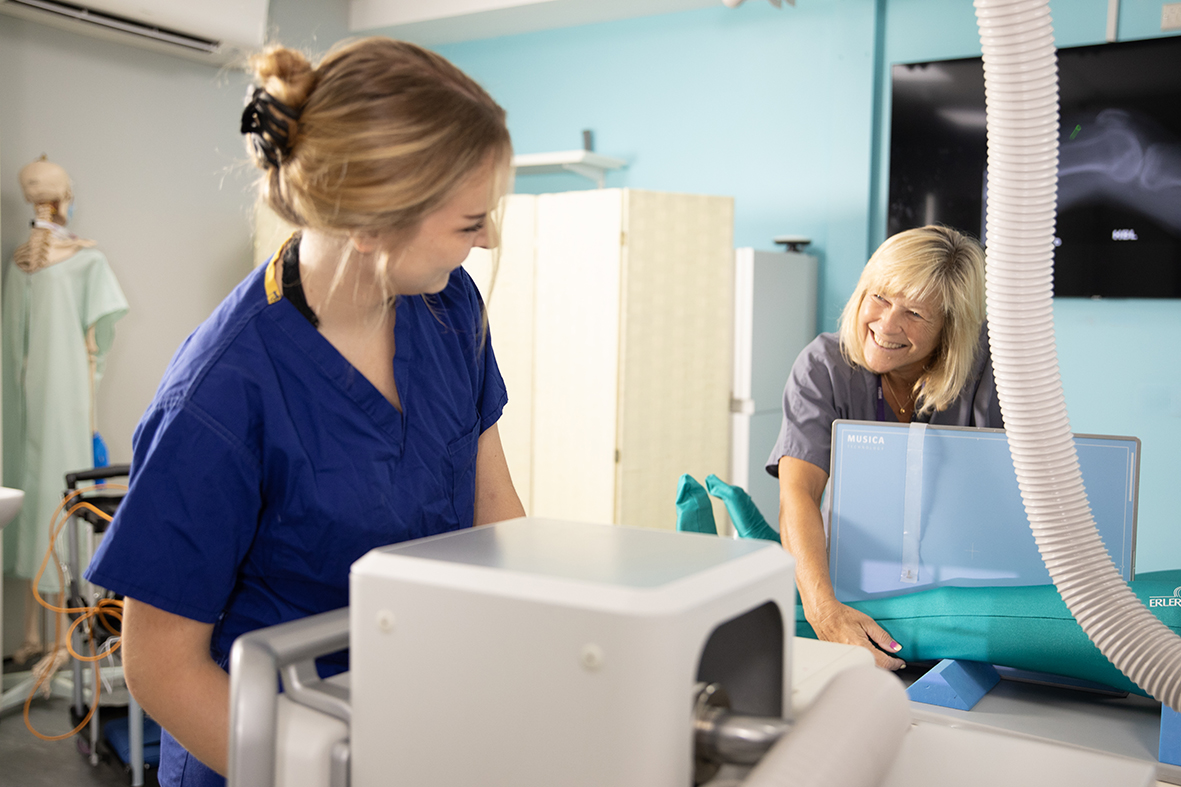

Health Sciences University is sponsoring the inaugural MSK Awards 2026, including the Innovation in MSK Practice Award, with Professor Steven Vogel also joining the expert judging panel.
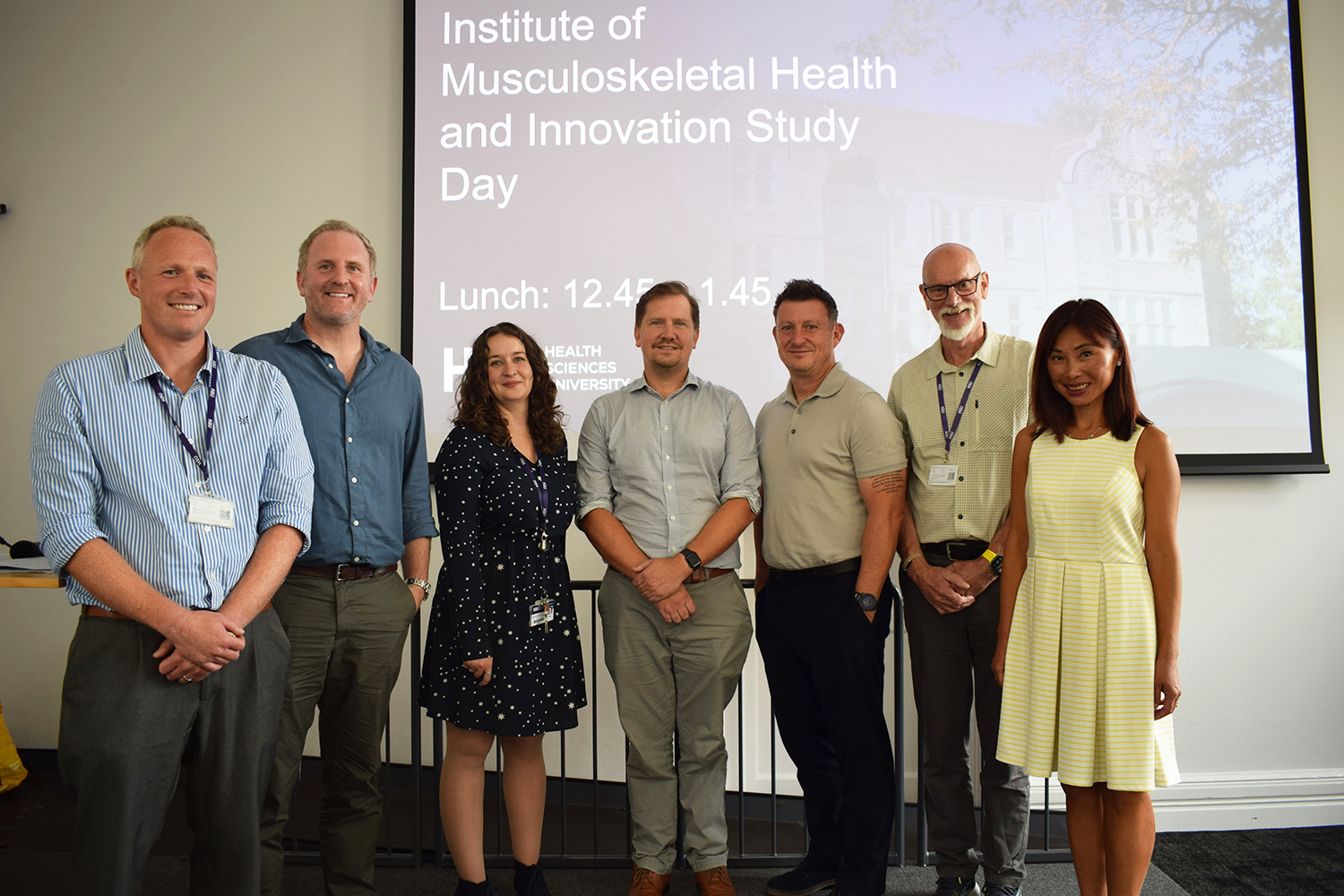
Health Sciences University (HSU) welcomed over 50 healthcare professionals from across the musculoskeletal (MSK) community for the launch of the new Institute of Musculoskeletal Health and Innovation (IMHI), bringing together expert speakers, clinicians, students and educators for a day of continuing professional development centred on clinical reasoning and decision-making.
Health Sciences University has been shortlisted for Specialist Institution of the Year at the THE Awards 2026, recognising the University’s specialist approach to education, clinical care, applied research and workforce impact.