Towards better treatments for diabetic nerve pain
Neuropathy Optimisation through Self-management and Therapy

Neuropathy Optimisation through Self-management and Therapy
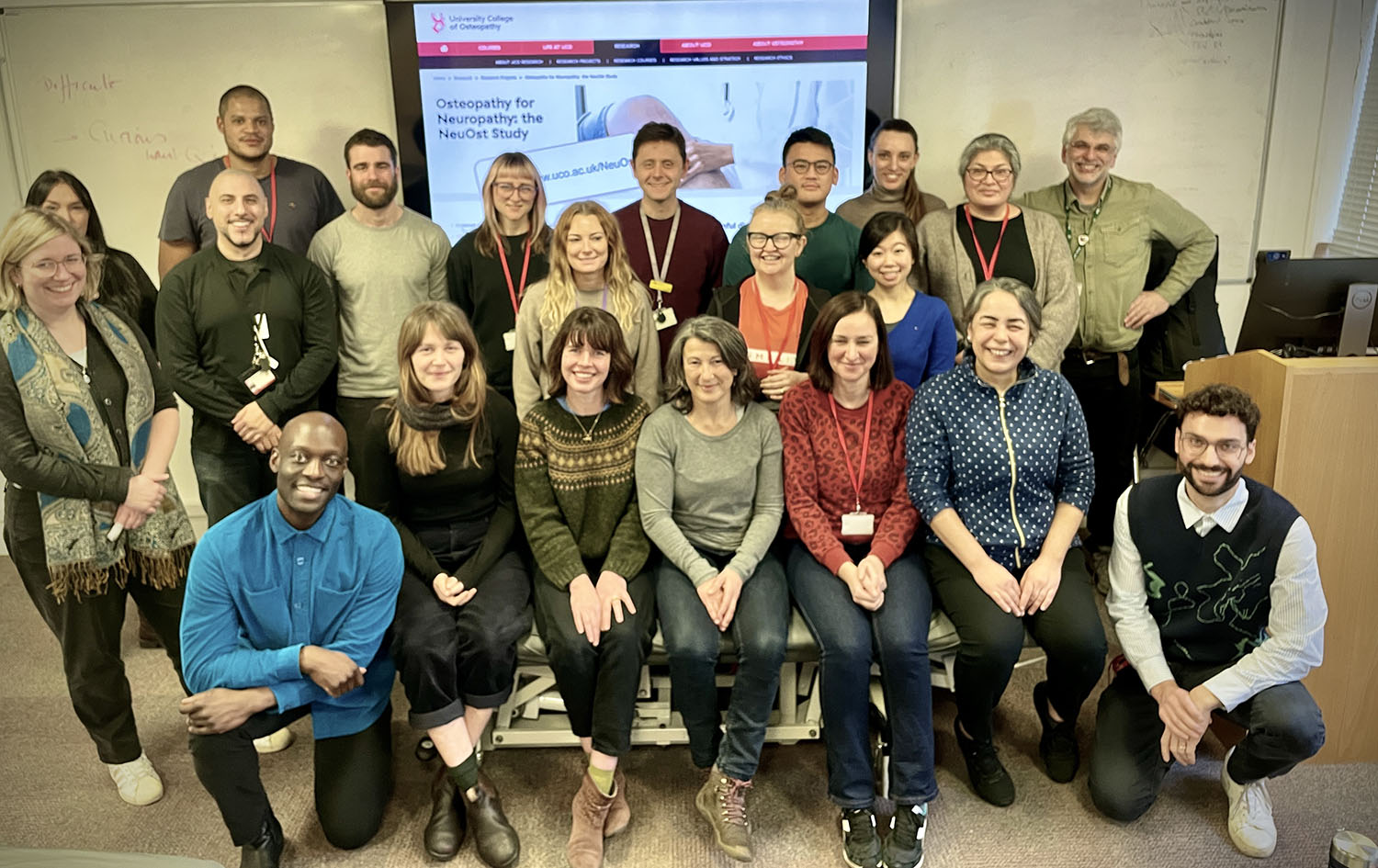
Over half a million people in England live with burning pain in their feet caused by nerve damage from diabetes. This condition, known as ‘painful diabetic neuropathy’, happens when high blood sugar attacks the nerves and often leads to long-term pain, balance problems and wounds that won’t heal.
Many people with diabetic neuropathy are older and have additional health conditions, such as joint pain or heart problems. Diabetic neuropathy causes lots of suffering, huge costs and increases the risk of serious complications. What’s more, the medications used to treat this kind of pain often don’t work effectively and have side effects.
People living with this condition have told us they want treatment options that don’t rely on medications and support their wider health and daily lives. Doctors also need better tools for their patients. Treatments like exercise, hands-on manual therapy or guided conversations for wellbeing might provide better options, helping with pain, balance, strength, overall wellbeing and providing a sense of control.
The aim of the Neuropathy Optimisation through Self-management and Therapy (NeuOST) project is to explore a new drug-free approach for people living with diabetes-related pain. The project focuses on the development and testing of a unique new treatment package that combines physical therapies – such as exercise and manual therapy – with guided conversations for managing pain.

The NeuOST team set out with three primary aims. The first was to develop an evidence-based multimodal treatment that has a good chance of working for people with painful diabetic neuropathy. Secondly, we aimed to create a training programme for clinicians, teaching them about the condition and how to use the NeuOST treatment. And building on these, we wanted to test whether people living with the condition find the treatment acceptable. If so, we can look to run a research study to test the effects of the treatment (a larger ‘clinical trial’).
Eventually, we want to make the NeuOST treatment package available on the NHS, and test whether it works better than the care that people with painful diabetic neuropathy currently receive.
People with lived experience are at the heart of this project, having contributed from the beginning.
We are also working with an international team of clinicians and researchers, led by Dr David Hohenschurz-Schmidt, Honorary Senior Research Fellow at Health Sciences University (HSU) and full-time postdoctoral researcher at Imperial College London.
David is supported by a team of patient partners who guide the research process, and has established a group of research collaborators:
In January 2024, we trained our first cohort of clinicians. These were fully qualified osteopaths who learnt about diabetes, neuropathy and the NeuOST treatment in a 2-day course, which was developed and delivered by our project team.
Between 2024 and June 2025, we conducted a small study with 36 participants at HSU. The new NeuOST treatment package was safely delivered, people were satisfied and there is reason to believe it could improve people’s lives. We also learned a lot about what might be useful for patients and what might be difficult. However, we need to run a larger study to really test the treatment’s effects.
Through an interview study with the research participants and clinicians of the trial, we also learned how NeuOST could be improved to better support people from different backgrounds, as well as how it could potentially be adapted for use in the NHS.
At time of publication we are proposing the NeuOST package to large national funders for further development and testing within the NHS. We hope to enter the next research stage in 2026.
The project so far has been kindly supported with funding from the Alan and Sheila Diamond Charitable Trust, The Osteopathic Foundation, and the Society for Back Pain Research.
The NeuOST project has already demonstrated that a new approach to caring for those with diabetic nerve pain is possible. There is huge potential in combining multiple drug-free treatment options – and crucially, patients like this approach.
Similarly, osteopaths, with their foundational training in pathology and diagnosis, can expand their skillset to work with people who experience additional long-term illnesses beyond musculoskeletal pain.
In the next few years, we hope to build on these insights and optimise NeuOST for use in public healthcare systems.
The intervention and the 2024/2025 NeuOST feasibility trial at HSU are described in this peer-reviewed publication: https://doi.org/10.1080/17581869.2025.2515010
An article reporting on the study’s results is in preparation and will be linked here once available.
Further, results of the study were presented at the 2025 German Pain Congress and at the iO Convention in London.
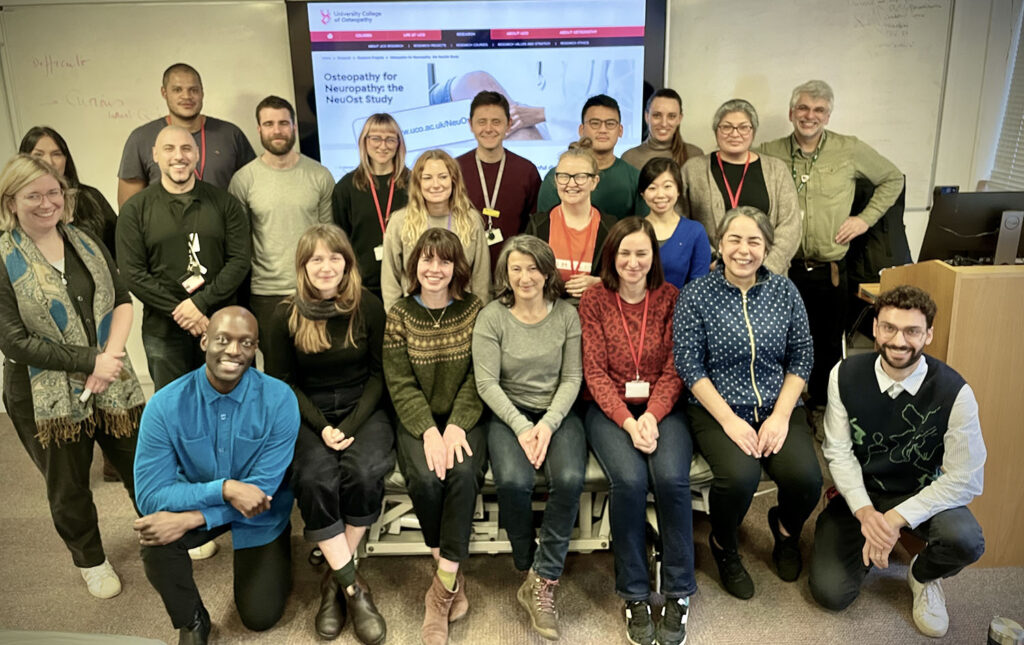
Please reach out if you are interested in this project. While we are not currently recruiting research participants, we hope to be able to do so again soon. To contact us, email David.Schmidt@hsu.ac.uk
For more information and to stay updated on the latest developments regarding the NeuOST study, please subscribe to our newsletter here.

Health Sciences University
Bournemouth Campus
Parkwood Road
Bournemouth
BH5 2DF
Health Sciences University
London Campus
275 Borough High Street,
London
SE1 1JE
Health Sciences University
Reading Campus
19 Castle Street
Reading
RG1 7SB