
Overview
Leadership is a fundamental aspect of sport, particularly as it relates to the effectiveness of teams within sport environments (Cotterill & Fransen, 2016). In current conceptualisations of leadership in organisational settings, team leadership has been recognised as a distinct form of organisational leadership (Kozlowski et al., 2016). That is, team leadership can be viewed as any individual fulfilling a team’s needs. Athlete leadership has been defined more specifically as “an athlete, occupying a formal or informal role within a team, who influences a group of team members to achieve a common goal” (Loughead et al., 2006, p.144). Athlete leaders have been reported to positively influence team cohesion, athlete satisfaction, team identification, team confidence and the motivational climate within the team (Cotterill & Fransen, 2016).
Recent work has reported that the leadership needs of a sport team exceed the capabilities of one individual, and it is often multiple persons in the team who occupy the different leadership roles on and off the field (e.g., Duguay et al., 2019; Fransen et al., 2014). The leadership needs within a sports team can be met in a range of different ways by different individuals undertaking different roles including, coaches, team captains, and informal athlete leaders (Mertens et al., 2021).
However, while there has been an increasing focus on understanding leadership within sports teams, and athlete leadership in recent years (Cotterill & Fransen, 2016), far less attention has been paid to approaches to the development of leadership within teams.
Project Contact:
Professor Stewart Cotterill
Email: scotterill@aecc.ac.uk
Details
The aim of this PhD is to better understand current approaches to leadership development within professional sports teams. To assess their impact, and to make recommendations for future team leadership development programmes.
This programme of research will utilise a mix of both qualitative and quantitative approaches to best understand the measurable and perceived impact of different approaches to team leadership development. Specifically, qualitative studies adopting a phenomenological approach will be conducted to better understand the approaches to leadership development adopted at both professional and academy levels. Utilising these outcomes, a new approach to leadership development will be developed and applied in context as an intervention study. A range of specific psychological and performance-focused factors will be measured pre/post intervention to seek to quantify the potential impact of the new programme.
To provide evidence to support or reject current approaches to team leadership development and to provide a range of recommendations for future best practice in the systematic development of leaders to provide leadership within sport teams.
It is envisaged that the outcomes from this programme of research will help to drive changes in approaches to team leadership, and team leader development in professional sports teams. To provide a greater focus to the development of leaders and leadership at different levels in professional sport. Explicitly helping sports academies to systematically development leadership and leader skills and abilities at different levels.
Funding 
We have funding available via fee-waiver support for up to three UK home students. Applicants are asked to make it clear as part of their application that they are applying for this opportunity. Decisions will be made based on the excellence of the candidate.
Self-funded students are also welcome to apply for this project. Self-funded students can be UK home students or international students.
Availability
Available to both UK and International students.
Potential Supervisors
- Stewart Cotterill, Professor of the Psychology of Human Performance, Health Sciences University, UK
- Stephanie Tibbert, Lecturer in Sport & Exercise Psychology, Health Sciences University, UK
- Katrien Fransen, KU Leuven University, Belgium.
References
Cotterill, S. T., & Fransen, K. (2016). Leadership in team sports: Current understanding and future directions. International Review of Sport and Exercise Psychology. 9(1), 116-133. https://doi.org/10.1080/1750984X.2015.1124443
Duguay, A. M., Loughead, T. M., & Cook, J. M. (2019). Athlete leadership as a shared process: Using a social network approach to examine athlete leadership in competitive female youth soccer teams. The Sport Psychologist, 33(3), 189-202. https://doi.org/10.1123/tsp.2018-0019
Fransen, K., Vanbeselaere, N., De Cuyper, B., Vande Broek, G., & Boen, F. (2014). The myth of the team captain as principal leader: Extending the athlete leadership classification within sport teams. Journal of Sports Sciences, 32, 1389-1397. https://doi.org/10.1080/02640414.2014.891291
Kozlowski, S., Mak, S., & Chao, G. (2016). Team-centric leadership: An integrative review. Annual Review of Organizational Psychology and Organizational Behavior, 3(1), 21-54. https://doi.org/10.1146/annurev-orgpsych-041015-062429
Loughead, T. M., Hardy, J., & Eys, M. A. (2006). The nature of athlete leadership. Journal of Sport Behavior, 29, 142-158.
Mertens, N., Boen, F., Haslam, S. A., Steffens, N. K., Bruner, M. W., Barker, J., Slater, M., & Fransen, K. (2021). Harnessing the power of ‘us’: A randomized wait-list controlled trial of the 5R Shared Leadership Development Program (5RS) in basketball teams. Psychology of Sport and Exercise, 54, https://doi.org/10.1016/j.psychsport.2021.101936
Latest News
Discover and read all the latest news, press releases and happenings here at Health Sciences University.
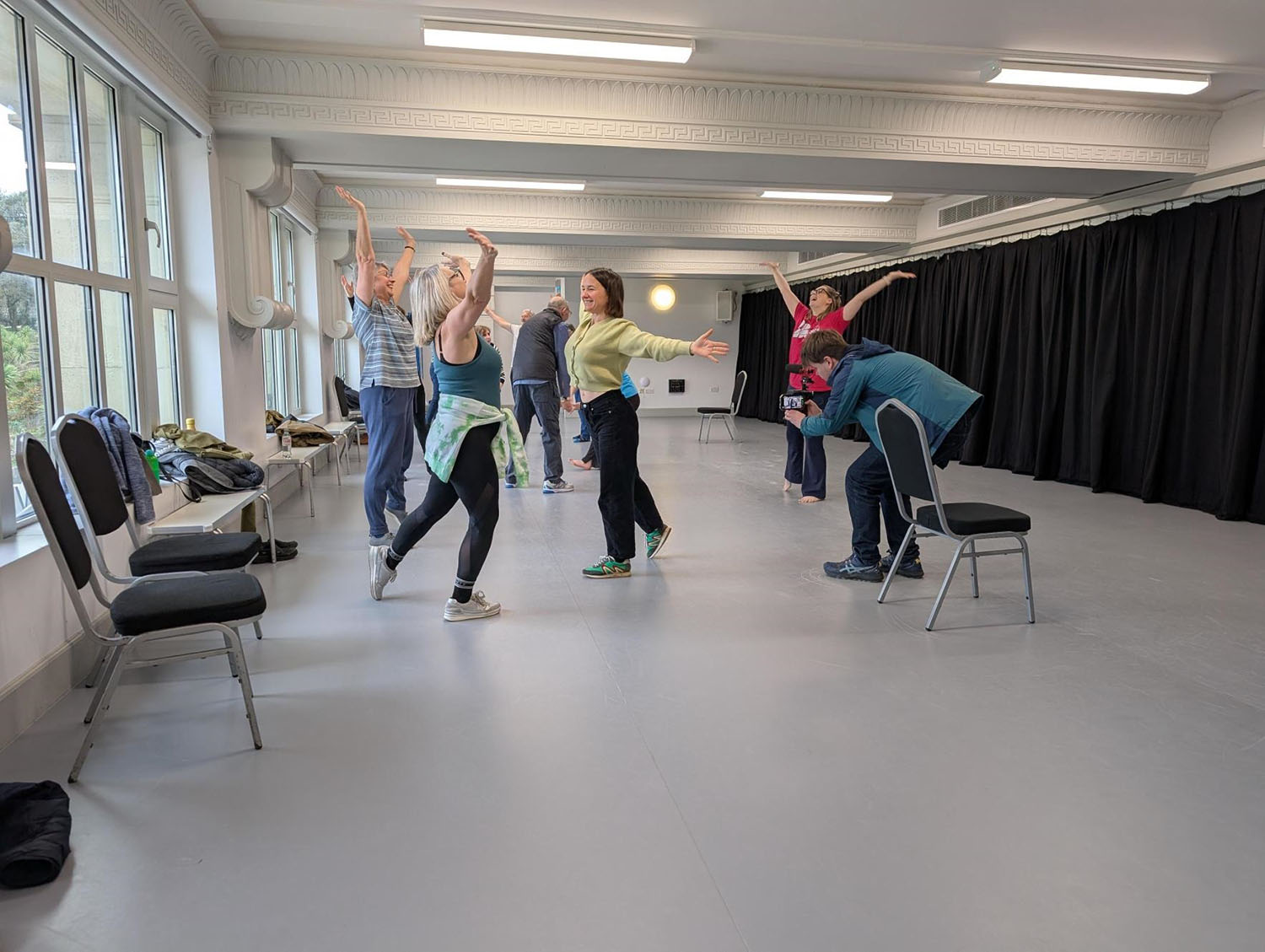
A pioneering community dance programme in Dorset is enabling older adults living with chronic lower back pain to move more, fear less and reconnect socially.

On Thursday 5th 2026, March Health Sciences University was delighted to host a vibrant evening celebration of International Women’s Day 2026 for the Dorset Police Women’s Inspire Network (WIN) and the Women’s Network at University Hospitals Dorset.
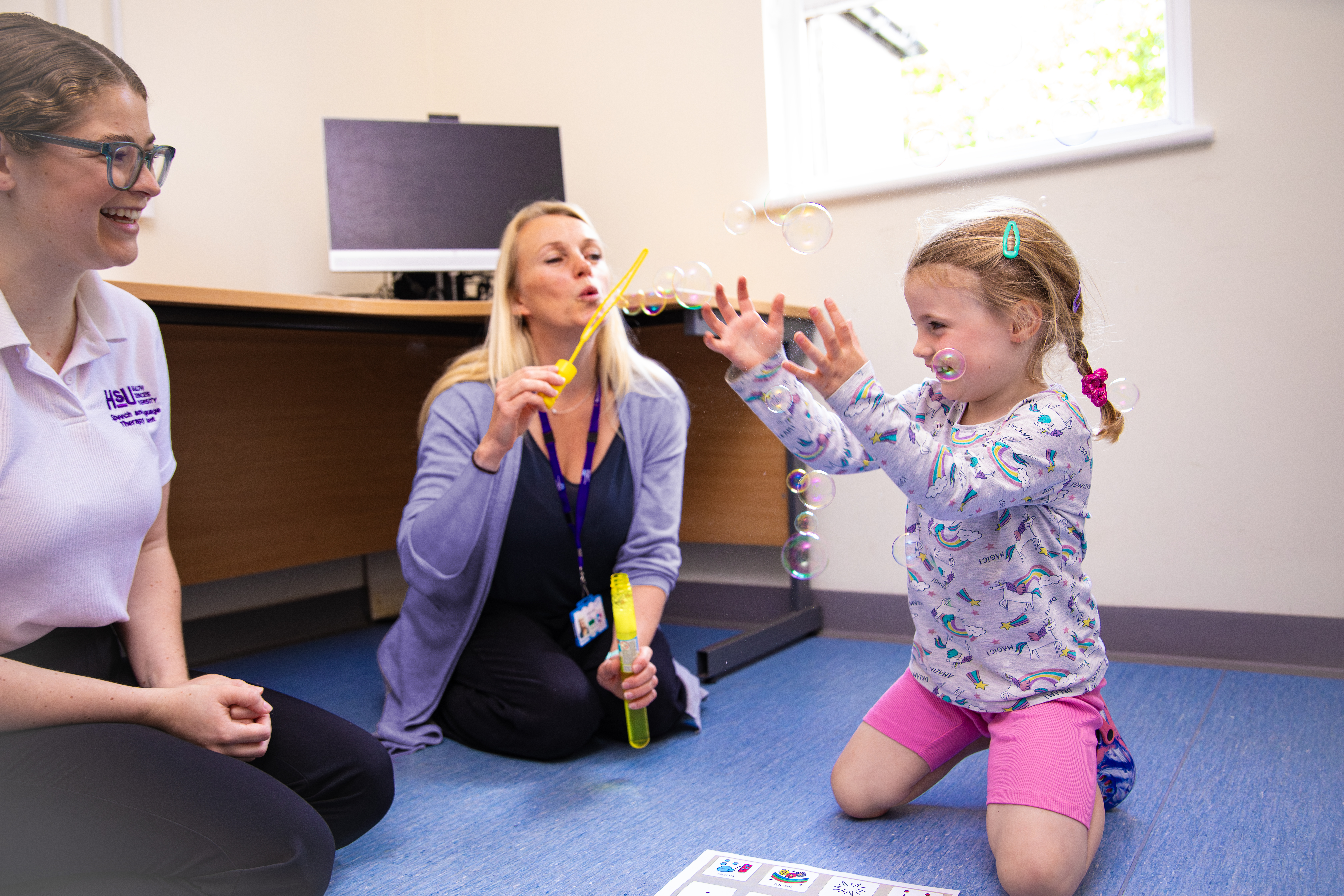
For Health Sciences University, training the next generation of highly skilled and compassionate speech and language therapists has never been more pressing, as the UK Government publishes its long-awaited Schools White Paper, Every Child Achieving and Thriving, which outlines “a vision for education for the next decade”.

Health Sciences University (HSU) and the College of Integrated Chinese Medicine (CICM) have confirmed that they have begun early exploratory discussions about the possibility of a future merger. HSU and CICM already have an established academic relationship, with HSU currently validating CICM’s degree provision. The discussions now underway are separate from, and additional to, this existing validation arrangement.
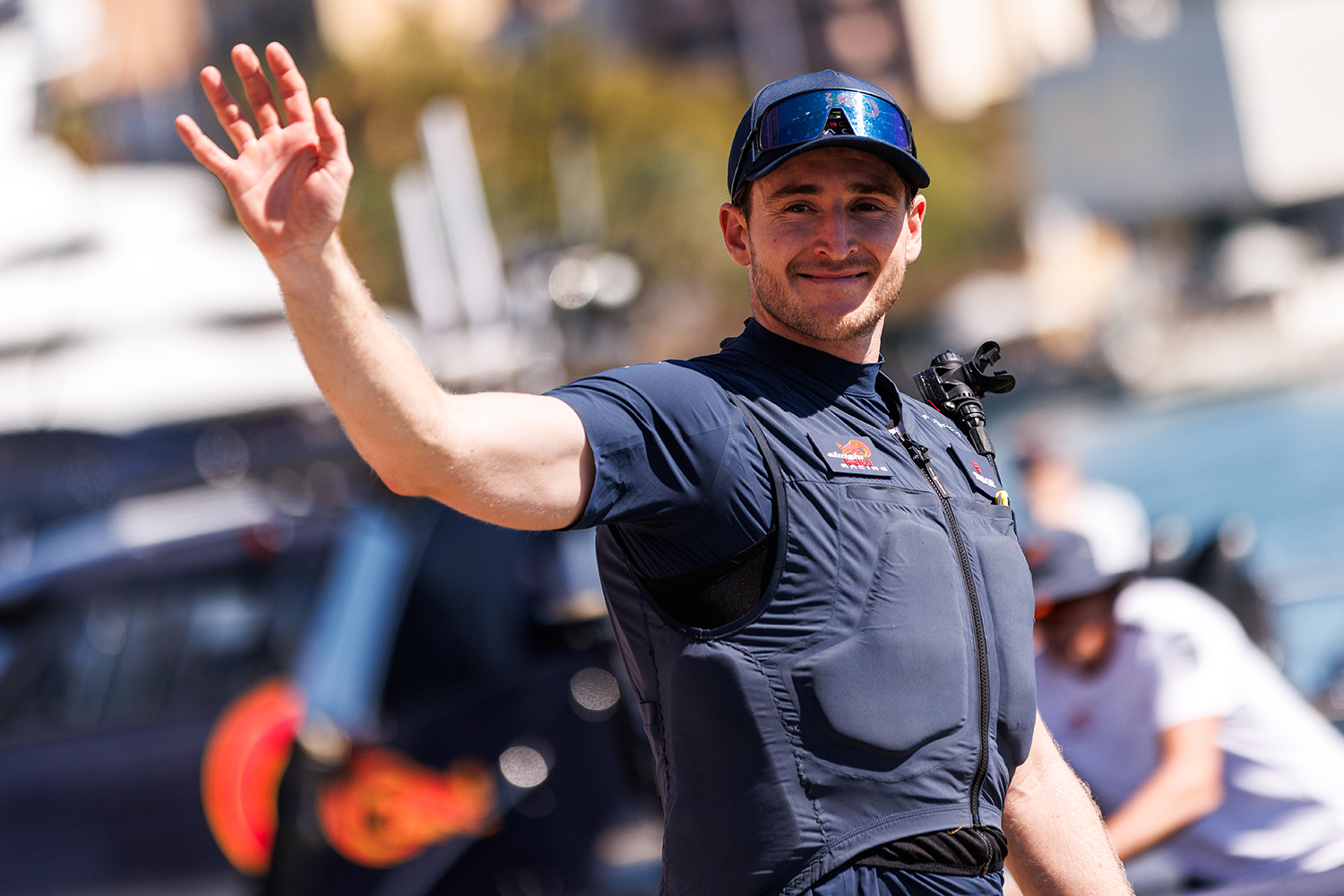
Nils Theuninck is a third-year Master of Chiropractic student at Health Sciences University with an impressive background in elite sailing. He has competed internationally as part of the Swiss National Sailing Team and has earned several podium finishes at major events. Most recently, Nils sailed with Alinghi Red Bull Racing in their challenge for the 37th America’s Cup. His dedication to both sport and chiropractic has been recognised with a 2025 International Sports Chiropractic Federation (FICS) Student Scholarship. We spoke to him about his sailing journey, how this influenced his decision to study chiropractic, and his goals for the future.

The National Student Survey (NSS) is now open and will close on 30 April 2026. If you’re a final‑year undergraduate, this is your chance to tell us about your experience of studying at HSU.

