
Overview
The Master of Chiropractic MChiro (Hons) at Health Sciences University is a four year, full time course designed to prepare you for a rewarding career as a chiropractor. You will develop the scientific knowledge, hands on clinical skills, professional confidence and evidence informed judgement needed to support people to move, function and live well.
Chiropractors are regulated healthcare professionals who specialise in the diagnosis, treatment and management of musculoskeletal conditions, such as back, neck and joint pain. In the UK, they take a patient centred, holistic approach, assessing symptoms, movement and overall health to develop individual care plans. Treatment may include manual therapy techniques such as spinal manipulation, mobilisation and soft tissue work, alongside exercise rehabilitation and lifestyle advice. Chiropractors are regulated by the General Chiropractic Council and typically work in private practice or multidisciplinary settings, while also liaising with other healthcare professionals where appropriate to support safe and effective patient care.
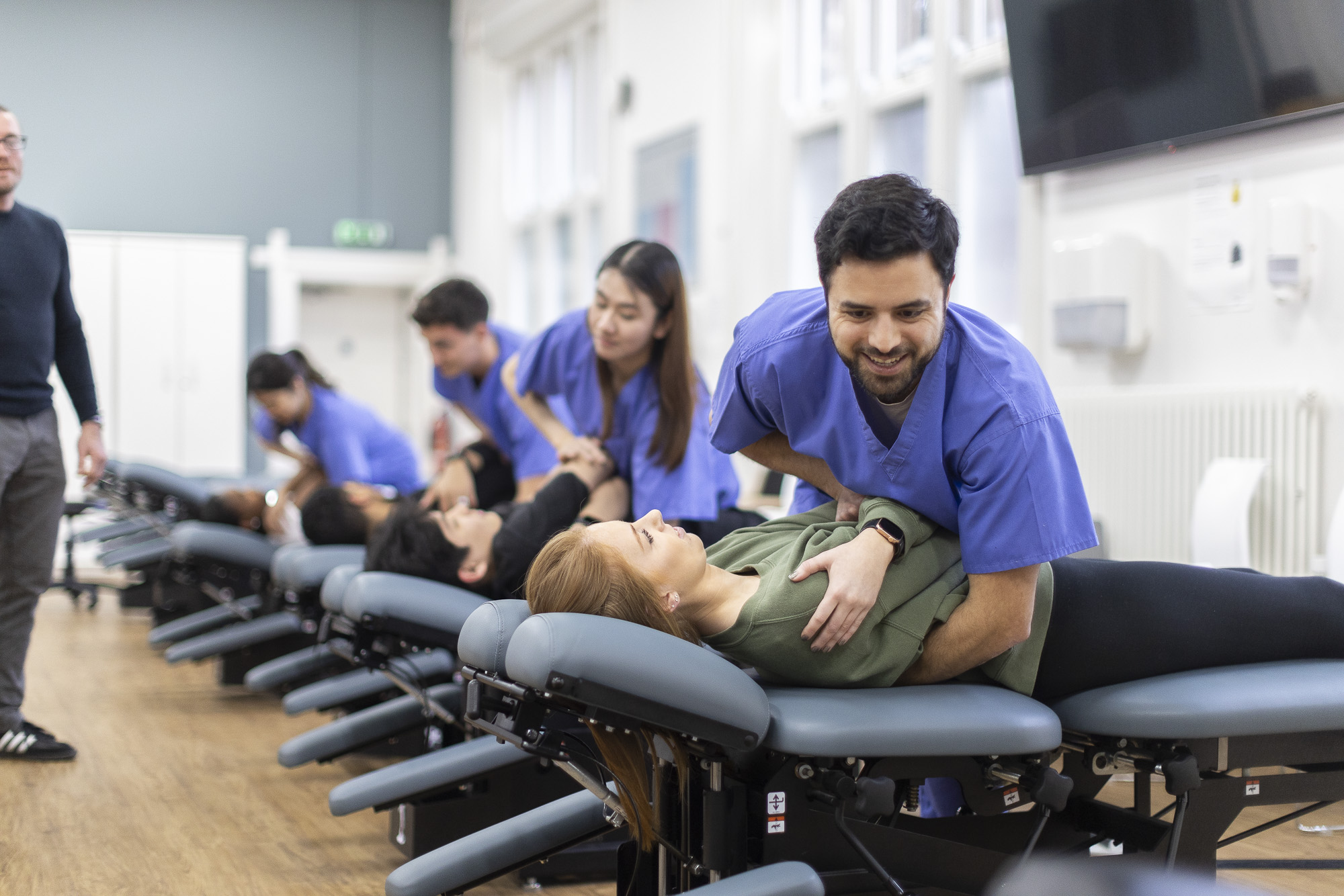
Based within the AECC School of Chiropractic, you will learn in a specialist health sciences environment with a long-established reputation for chiropractic education, practical training and clinical preparation. From the beginning of the course, you will take part in practical classes, simulation, clinical skills teaching and guided learning that help you build confidence step by step.
Successful completion of the full MChiro award meets the educational requirements to apply for registration with the General Chiropractic Council, subject to meeting the Council’s health, character and fitness to practise requirements.
Why study MChiro at Health Sciences University?
Studying the MChiro at Health Sciences University means joining a specialist health sciences community with a long-established heritage in chiropractic education. Based within the AECC School of Chiropractic, the course sits within one of Europe’s longest-running centres for chiropractic education, with a strong reputation for practical training, clinical preparation and graduate success.
You will be taught by an experienced team that includes practising chiropractors and healthcare professionals, bringing together expertise from areas such as clinical practice, rehabilitation, anatomy, imaging and public health. This means you learn from people with real-world experience, helping you understand chiropractic from both a scientific and practical perspective.
HSU has a strong, supportive student community. You will benefit from peer support, including peer assisted learning (PALS), where students in later years help support and guide those earlier in the course through shared learning, advice and practical tips. You will also have opportunities to learn alongside and from students across different years. Beyond your studies, you will become part of a wider alumni network, connecting you to graduates working in chiropractic clinics, multidisciplinary healthcare, sport and rehabilitation settings.
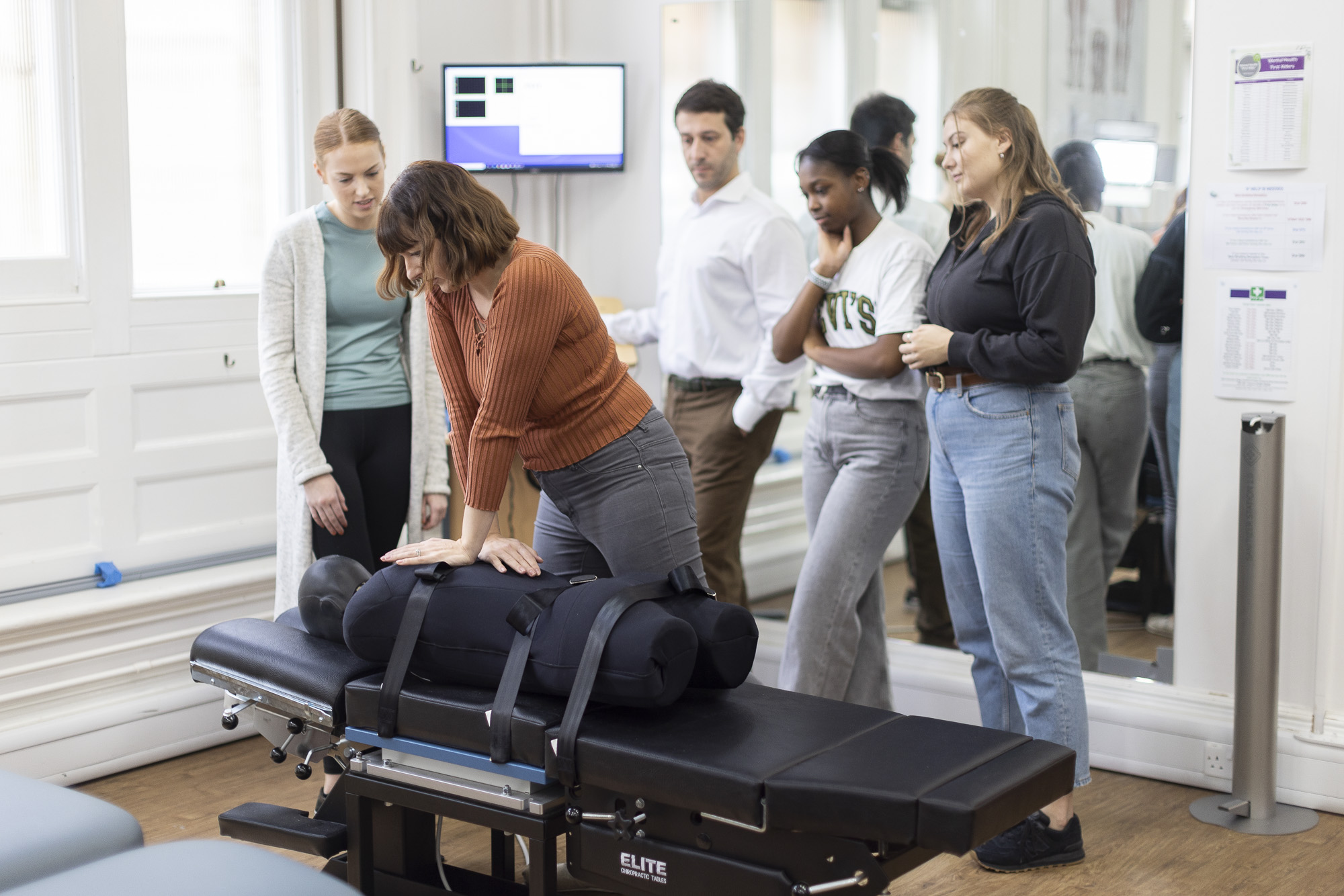
A major strength of studying at HSU is the specialist campus environment. Students have access to purpose-built practical rooms, technique benches, anatomy facilities, simulation spaces, imaging review rooms, open campus practice areas and large on-site clinical services. Open access to practical, clinical and anatomy learning spaces outside timetabled sessions supports students to practise, consolidate skills and build confidence throughout the course.
The course is also designed around progressive clinical development. You will move from observation, simulation and supported participation into substantial supervised placement and clinical learning. This means your academic learning, practical skills, professional behaviours and placement experience are connected throughout, helping you prepare for safe, evidence informed and person-centred practice.
What do graduates go on to do?
Graduates of the MChiro are prepared for professional chiropractic practice and related roles within healthcare, musculoskeletal health, rehabilitation, sport, occupational health and wellbeing settings. Successful completion of the full MChiro award meets the educational requirements to apply for registration with the General Chiropractic Council, subject to meeting the Council’s health, character and fitness to practise requirements.
The course also supports wider career development and progression. Graduates may go on to work in chiropractic clinics, multidisciplinary healthcare environments, sports and rehabilitation settings, or pursue postgraduate study, research, specialist practice development or continuing professional development pathways. Pay and external stats: Everything you need to know about a career in chiropractic | British Chiropractic Association
Become a chiropractor – Society for Promoting Chiropractic Education
The MChiro is accredited by the European Council on Chiropractic Education (ECCE), an international body that sets standards for chiropractic education and training. This accreditation means your qualification is recognised as meeting established international quality standards and may support opportunities to work abroad. The extent to which you can practise in another country depends on local registration and regulatory requirements, and graduates should check the specific requirements of the country in which they wish to work
Highlights of studying MChiro
- Learn within one of Europe’s long-established centres for chiropractic education.
- Build hands on skills through practical classes, simulation and supervised clinical learning.
- Develop clinical reasoning, communication and professional judgement from the start.
- Complete over 1,000 hours of placement related learning across the course.
- Study in specialist facilities, including practical rooms, anatomy resources, simulation spaces and on-site clinical services.
- Explore final year optional areas including paediatrics and pregnancy, sport, complex pain, rehabilitation, biomechanics and exercise science.
- Graduate prepared for safe, evidence informed and person-centred chiropractic practice.
Students experience a progressive clinical journey across the course, beginning with observation, simulation and practical skills development before moving into supported participation and extended supervised clinical placement. By the later stages of the course, students complete substantial placement learning, including supervised clinical practice and practice-based competency development.
Key learning experiences include hands on chiropractic practical classes, anatomy and biomechanics learning, imaging interpretation, clinical reasoning activities, public health and behaviour change learning, case-based assessment, placement portfolios and viva voce assessment. Students also engage with areas such as paediatrics, pregnancy related care, sports presentations, complex pain, rehabilitation, biomechanics, diverse populations, safeguarding, leadership and quality improvement.
In the final year, optional units allow students to explore a strand of practice in greater depth before graduation. Options include paediatric and pregnancy chiropractic, sports chiropractic, complex pain management, evidence informed rehabilitation, clinical biomechanics and exercise science.
Students have opportunities to learn within a wider health sciences environment and engage with collaborative healthcare practice throughout the course. The curriculum includes public health, behaviour change, referral, co-management, communication, clinical governance and interprofessional learning, helping students understand how chiropractic sits within wider healthcare systems.
Interprofessional learning is embedded across the course through case-based learning, simulation, placement preparation, collaborative practice and reflection on patient pathways.In placement settings, students may engage with the multidisciplinary management of patients, including communication with other healthcare professionals, referral reasoning, co-management decisions and shared approaches to patient care.
HSU’s specialist campus environment also supports collaboration across health science disciplines through shared facilities, clinical services, simulation, rehabilitation spaces and wider professional learning opportunities. This helps students develop the communication, teamwork, professional awareness and collaborative decision making needed for contemporary healthcare practice.
The course is designed to help you build confidence step by step, moving from supported foundational learning to increasingly complex clinical reasoning and supervised patient care.
You will develop the communication, listening and shared decision-making skills needed to support people as individuals, not just manage conditions.
Clinical reasoning is developed throughout the course, helping you learn how to gather information, recognise risk, make decisions and justify your approach.
Regular formative feedback, mentoring and practical rehearsal opportunities help you understand your progress and build confidence before summative assessments.
Final year optional units give you the chance to shape part of your learning around your interests and explore a specialist strand of practice before graduation.



Alternative routes:
Our Foundation Year for Master of Chiropractic course offers a five year route to a chiropractic qualification, providing an additional year to support students with the skills required to progress into the first year of our Master of Chiropractic – MChiro (Hons) course at the HSU School of Chiropractic.
Foundation Year for Master of Chiropractic
Our MSc Chiropractic course offers an alternative route to a chiropractic qualification with a focus on research, data collection and analysis alongside academic teaching and clinical placement in our on-site chiropractic clinic. This course is for students who have successfully met all learning outcomes at level 6 of the MChiro (Hons) course and may be desirable if you are considering a career in research or academia, or may be preferred by some national associations.
The MSc Chiropractic (pre-registration) is an intensive, full-time degree over two years where your previous knowledge will be used to develop clinical problem solving, diagnostic and reasoning skills alongside a programme of clinical skills development.
Course Details
The Master of Chiropractic (MChiro Hons) is designed as a progressive, integrated course that prepares you for safe, evidence informed and person-centred practice. You will bring together anatomy, diagnosis, therapeutic care, communication and clinical reasoning in ways that reflect real clinical practice.
Across the four years, you will move from foundational learning to extended supervised clinical practice, building confidence and professional capability step by step. Learning is hands on and practice focused, with over 1,000 hours of placement-related experience.
You will also explore key areas of contemporary healthcare, including prevention, rehabilitation, complex pain and care for diverse populations, with final year options to develop your areas of interest.
Overall, the course is designed to help you graduate as a confident, reflective and practice ready chiropractor.
What will you learn
The MChiro curriculum is designed as a progressive journey from foundational healthcare learning to confident, supervised clinical practice. Across the course, you will build scientific knowledge, hands on practical skills, professional behaviours and clinical judgement step by step, with each year adding greater clinical relevance, complexity and authenticity.
Learning through real practice
Throughout the course, you will learn in ways that reflect what it is like to work as a chiropractor. This includes practical classes, working through real-life patient cases, simulation, and learning in placement settings.
You will be supported to bring together your knowledge and skills, including assessment, treatment, communication and decision making. The focus is on helping you understand not just what to do, but how to apply your learning safely and confidently in real clinical situations.
Year 1: Foundations and professional formation
In your first year, you will develop the scientific and professional foundations needed for chiropractic study. You will learn about human structure and function, anatomy, physiology, biomechanics, public health and evidence informed practice. You will also begin developing core chiropractic skills, including introductory history taking, patient interaction, observation, palpation, functional assessment, and early orthopaedic and neurological examination skills.
You will be introduced to imaging as a way of understanding normal anatomy and structure, including awareness of common imaging modalities such as X ray, MRI, CT and ultrasound. Practical classes, simulation, guided learning and observational experiences help you build confidence, professional behaviours and your identity as a contemporary healthcare student.
Year 2: Application and integration
In your second year, you will start applying your knowledge to more recognisable clinical contexts. You will develop your understanding of diagnosis, therapeutic management, clinical reasoning, patient communication, pathology, imaging and clinical risk. You will continue to strengthen your hands on practical skills, including chiropractic adjustments, mobilisation, soft tissue approaches, massage and other therapeutic interventions, alongside rehabilitation, exercise-based care and patient education.
Learning will also include how imaging and clinical investigations can support diagnostic reasoning, including when imaging may be indicated, how different imaging modalities are selected, and how normal and abnormal findings are interpreted alongside history taking and physical examination. The curriculum helps you connect anatomy, pathology, assessment, management and evidence informed decision making in ways that reflect real patient care.
Year 3: Complexity, whole patient care and clinical judgement
In your third year, learning becomes more clinically focused and authentic. You will work with more complex and varied presentations and develop your ability to manage whole patient cases, rather than isolated conditions or techniques. You will learn to integrate assessment findings, diagnosis, risk, patient goals, communication, therapeutic options, rehabilitation and management planning. You will also explore patient centred care, behaviour change, applied research, collaborative practice, public health, safeguarding, paediatrics, pregnancy related care, sports presentations, older adults, disability and the needs of diverse populations
Imaging and clinical investigations are developed further as part of whole patient care, including recognising red flags, identifying when referral or further investigation may be needed, and using imaging findings to support safe clinical judgement, co-management and patient centred decision making. A substantial supervised placement experience supports your transition into applied clinical practice, helping you build professional judgement, confidence and readiness for final year placement.
Year 4: Consolidation, optionality and readiness for practice
In your final year, you will consolidate your learning through extended supervised clinical placement, which may include experience within HSU’s on-site clinical services and other approved practice settings. You will take increasing responsibility for patient care, develop confidence in managing uncertainty, justify your clinical decisions and prepare for the transition into professional practice. You will also strengthen your understanding of imaging and investigation findings, clinical governance, audit, quality improvement, leadership, professional accountability and lifelong learning.
Depending on placement setting and learning opportunities, your clinical experience may include exposure to sports, paediatric, pregnancy related, rehabilitation or complex care presentations. You will also choose an optional unit that allows you to explore a strand of practice in greater depth before graduation, such as paediatric and pregnancy chiropractic, sports chiropractic, complex pain management, clinical rehabilitation, biomechanics or exercise science. This gives you the opportunity to shape part of your final year around your interests, future career aspirations and emerging professional identity.
How you will be assessed
Assessment on the MChiro is designed to support your development, not simply test your knowledge. Throughout the course, you will build the skills, confidence and professional judgement needed to become a safe, reflective and practice-ready chiropractor. Assessment methods include written assignments, practical tasks, portfolios, case-based work, presentations, viva voce assessments, OSCE-style activities, structured clinical assessments and placement-based competency evidence. These assessments reflect real chiropractic practice, allowing you to demonstrate not only what you know, but how you apply your learning safely and effectively.
This course uses competency-based and authentic assessment to help you develop the knowledge, practical skills and professional behaviours needed for safe, effective chiropractic practice. Through realistic clinical activities, you will demonstrate competencies in communication, clinical reasoning, patient care, professionalism and safety, with essential practice-based competencies assessed on a Pass/Fail basis alongside graded assessments that recognise academic achievement and clinical decision-making. We are committed to providing an inclusive learning environment and work closely with students and University support services to implement appropriate reasonable adjustments. Applicants are encouraged to contact the Course Lead before applying to discuss any support needs or personal circumstances.
In Year 1, assessment supports your transition into higher education by building confidence in academic study, practical learning and professional behaviour. Assessment methods include written work, digital posters, presentations or recorded tasks, practical skills evidence, reflective work and portfolio-based assessment. Some assessments include Pass/Fail competency requirements, such as practical skills, placement logs, mandatory training and tutor sign-off, reinforcing the professional standards expected in healthcare education.
Some Level 4 assessments also provide a choice of submission format, including written, recorded, poster or presentation-based options. These assess the same learning outcomes using the same criteria, while promoting inclusivity, student agency and confidence. Collectively, Year 1 assessments develop the academic skills, evidence literacy, communication skills and early professional behaviours needed for subsequent clinical learning and chiropractic practice.
In Year 2, assessment becomes more clinically focused, helping you apply anatomy, pathology, imaging, therapeutic knowledge and evidence-informed practice to realistic patient scenarios. Assessment methods may include portfolios, practical skills sign-offs, image interpretation tasks, case-based submissions, recorded case presentations and viva voce assessments. These assessments develop your clinical reasoning, decision-making and ability to apply chiropractic skills safely in supervised or simulated settings, supporting your progression from foundational knowledge to integrated clinical practice.
In Year 3, assessment focuses on whole-patient care, increasing clinical complexity and preparation for more substantial placement learning. Assessment methods may include OSCE-style activities, competency portfolios, written case-based assessments, presentations, and placement-based evidence. These assessments require you to integrate patient assessment, diagnosis, risk management, communication, imaging and investigation, treatment planning, referral decisions and professional judgement. They are designed to demonstrate your ability to apply your knowledge and skills confidently in more complex and realistic clinical situations.
In Year 4, assessment supports your transition to professional practice. Placement portfolios, viva voce assessments, reflective work and professional development tasks enable you to demonstrate clinical capability, professional judgement and accountability over time. You will be expected to justify clinical decisions, reflect on feedback, demonstrate safe patient management and show readiness for increasingly autonomous supervised practice. Optional final year units provide opportunities to explore areas of interest through applied assessments, including evidence syntheses, posters, case projects, video portfolios, critical reflections and practice based work.
Overall, assessment across the MChiro is fair, varied and professionally relevant, supporting your development as an evidence-informed, reflective and practice-ready chiropractor.
Placement opportunity
Placement and practice-based learning are central to the MChiro and are designed to help you grow in confidence, capability and professional identity throughout the course. Rather than waiting until the final year to experience clinical practice, you will build your skills gradually through a carefully staged journey that includes simulation, observation, supported participation and extended supervised clinical placement.
In the early stages of the course, placement learning introduces you to professional healthcare environments, patient interaction, communication and safe practice. You will take part in simulated learning, practical classes and observational experiences that help you understand how chiropractors work with patients, colleagues and wider healthcare services.
As you progress, your placement learning becomes more applied. You will begin to connect classroom learning with real and simulated clinical situations, developing your confidence in communication, assessment, clinical reasoning, professional behaviour and reflective practice. This supports your transition from learning about practice to actively preparing for practice.
Year 3 
Placement becomes a more substantial part of your development. You will undertake supervised practice-based learning that helps you apply your knowledge to whole patient care, develop professional judgement and prepare for the extended clinical placement experience in the final year.
Year 4
Placement is a flagship part of the course. You will undertake extended supervised clinical placement, which may include experience within HSU’s on-site clinical services and other approved practice settings. You will take increasing responsibility for patient care under supervision, developing your ability to manage clinical complexity, communicate with patients, justify decisions, reflect on feedback and work within professional and governance expectations.
Study time
The MChiro is a full-time course delivered through a blend of scheduled teaching, practical classes, simulation, guided learning, independent study and placement activity. Face to face teaching is normally delivered across two 12-week teaching semesters, with assessment and feedback activity structured throughout the year to support steady progression.
Where possible, the teaching timetable is designed to condense scheduled activity into three days per week. This helps students manage their study time effectively and allows space for independent study, practical skills rehearsal, paid employment, volunteering, observational learning or wider professional development.
Years 1 and 2
Students can typically expect around 12 hours of scheduled teaching contact per week. This may include lectures, seminars, practical classes, clinical skills teaching, simulation, workshops and guided learning activities. Alongside scheduled teaching, students are expected to undertake around 15 hours of self-directed study per week, using VLE materials, recorded lectures, preparation activities, reading, practical skills rehearsal and assessment preparation.
Year 3
Scheduled teaching contact increases slightly as the course becomes more clinically focused. Students continue to attend academic and practical teaching, while also beginning a more substantial placement experience. Placement activity from January through to August runs alongside academic study and includes a substantive summer period between Year 3 and Year 4. This supports the transition into the extended clinical placement activity of the final year.
Year 4
Placement becomes a major part of the learning experience. Final year placement normally runs from September to June inclusive, with academic classes, professional development activity and assessment running alongside supervised clinical practice. This allows students to continue developing their clinical reasoning, professional judgement and readiness for practice while working within supervised clinical environments.
Students are also encouraged to make full use of the wider learning environment outside scheduled sessions. This may include attending additional supervised practical practice sessions, using open campus technique spaces for skills rehearsal, studying in the library, accessing digital learning resources and working independently or with peers to consolidate learning.
Assessment activity takes place across the academic year. Practical and portfolio-based assessments are developed progressively throughout the teaching semesters, while written assessments are normally held towards the end of teaching periods. This staged approach helps students build their knowledge, skills and confidence over time, while preparing for the expectations of professional chiropractic practice.
Unit Breakdown
Year 1
MCH4001 Applied Anatomy
This unit introduces the normal structure and organisation of the human body, from tissues through to major body systems. You will learn anatomy through both theory and practical application, including surface anatomy, anatomical terminology, models, images and safe palpation. The unit provides an essential foundation for physiology, biomechanics, clinical skills and later chiropractic practice.
MCH4002 Foundations of Human Physiology
This unit introduces the core principles of normal human physiology, including homeostasis, cellular function, metabolism and regulation. You will develop the theoretical scientific knowledge needed to understand how the body maintains normal function. This provides the foundation for later study of body systems, dysfunction, disease and clinical science.
MCH4003 Foundations of Chiropractic Practice 1
This unit introduces chiropractic as a person centred, ethical and regulated healthcare profession. You will combine theory, communication practice, reflection and observational learning to understand patient experience, healthcare systems and professional identity. Simulated and observational activities help you begin linking classroom learning with real healthcare contexts.
MCH4004 Foundations of Evidence Informed Practice
This unit introduces the role of evidence in healthcare and chiropractic practice. You will learn what evidence is, how research is generated, and how different types of evidence are organised and used. Through guided academic activities, the unit builds early research literacy and prepares you for later critical appraisal and evidence informed clinical reasoning.
MCH4005 Musculoskeletal, Neuroanatomy and Biomechanics
This unit explores how the musculoskeletal system, nervous system and biomechanics work together to support movement and function. You will combine theoretical learning with practical skills such as surface anatomy, palpation, postural observation and range of movement assessment. This supports progression into clinical examination, movement analysis and chiropractic assessment.
MCH4006 Integrated Human Body Systems
This unit develops your understanding of how major body systems work together to maintain normal function. You will study cardiovascular, respiratory, digestive, renal and endocrine physiology, alongside nutrition, metabolism, growth, maintenance and repair. It provides important theoretical understanding that supports later study of pathology, clinical risk and patient care.
MCH4007 Foundations of Chiropractic Practice 2
This unit builds on early professional learning by introducing foundational physical examination, manual and soft tissue techniques, and basic imaging awareness. You will develop practical skills in safe handling, patient positioning, professional communication and introductory examination within supervised learning environments. The unit combines theory, simulation, practical teaching and observational learning to prepare you for later clinical assessment.
MCH4008 Using Evidence in Chiropractic and Healthcare Contexts
This unit develops your understanding of how evidence is accessed and used within healthcare and chiropractic contexts. You will learn how evidence informs guidelines, professional standards and policy, while recognising uncertainty, variation and potential bias. The unit uses applied academic tasks to help you connect evidence informed practice with safe and accountable healthcare.
Year 2
MCH5001 Clinical Diagnosis and Management 1
This unit develops your ability to assess, diagnose and manage upper quarter presentations, including the cranium, cervical spine, thoracic spine and upper limb. You will combine theory, practical skills, imaging interpretation, clinical reasoning and supervised exposure to practice. Learning includes therapeutic and rehabilitative interventions, supporting safe and evidence informed patient care.
MCH5002 Human Dysfunction and Disease
This unit explores how dysfunction and disease affect normal anatomy, physiology and human function. You will study pain, inflammation, healing, pathology, neurological and systemic disease, medication influences, red flags and clinical risk. The unit strengthens your theoretical understanding of abnormal findings and supports safe diagnostic reasoning in later clinical units.
MCH5003 Clinical Diagnosis and Management 2
This unit focuses on lower quarter presentations, including the lumbar spine, pelvis and lower limb. You will continue to integrate theory, physical examination, imaging, diagnosis, chiropractic therapeutic interventions and rehabilitation. Practical and case based learning help you build confidence in applying chiropractic skills to realistic patient scenarios.
MCH5004 Public Health, Evidence Informed Practice and Clinical Reasoning
This unit brings together public health, behaviour change, health inequalities, evidence appraisal and clinical reasoning. You will explore how wider social, lifestyle and healthcare factors influence patient outcomes and engagement with care. Applied learning activities support patient education, communication, collaborative care and evidence informed decision making.
Year 3
MCH6001 Complex Case Management 1
This unit develops advanced clinical reasoning for more complex and chronic presentations. You will use theory, case based learning, practical reasoning and simulation to manage uncertainty, assess risk and adapt care. The unit supports your progression from structured clinical scenarios towards whole patient decision making.
MCH6002 Patient Centred Care, Behaviour Change and Applied Research
This unit focuses on person centred care, health psychology, behaviour change, pain science and applied research. You will use theory and applied activities to explore how patient goals, beliefs, context and health behaviours influence care and outcomes. The unit supports the design and justification of patient centred interventions using evidence, communication and reflective practice.
MCH6003 Complex Case Management 2
This unit extends your ability to manage complex and diverse patient presentations. You will explore areas such as paediatrics, pregnancy related care, sport, older adults, disability, safeguarding, consent, risk and adapted management. The unit combines theory, case based learning, practical reasoning and assessment activities to support safe clinical judgement and referral reasoning.
MCH6004 Collaborative Chiropractic Practice
This unit includes a substantial supervised placement experience and supports your transition into applied clinical practice. You will combine placement learning, reflection, communication, interprofessional awareness and professional judgement. The unit helps you integrate academic learning with real practice environments and prepares you for final year clinical placement.
Year 4
MCH7001 Chiropractic Practice Placement 1
This placement unit supports you to consolidate clinical reasoning, patient management, communication and professional behaviour in supervised practice. You will take increasing responsibility for patient care while continuing to receive guidance and feedback from clinical educators. Assessment includes competency evidence, reflection and viva voce, helping you demonstrate safe and developing professional capability
MCH7002 Professional Practice and Transition to Independent Practice
This unit supports your transition from student practitioner to graduate chiropractor. You will develop understanding of professional regulation, ethics, clinical governance, CPD, quality improvement and safe practice systems. The unit combines professional theory with applied tasks that prepare you for accountable practice after graduation.
MCH7003 Chiropractic Practice Placement 2
This final placement unit supports you to demonstrate readiness for professional practice through extended supervised clinical activity. You will refine your clinical reasoning, risk management, patient communication, documentation, reflection and professional judgement. The unit helps you evidence consistent, safe and effective practice as you prepare to graduate.
MCH7004 Leading and Managing in Chiropractic Practice
This unit develops your understanding of leadership, management, innovation, sustainability and service development in chiropractic practice. You will explore how chiropractors contribute to safe, ethical and effective healthcare services. The unit uses applied professional tasks to support confidence, business awareness and leadership capability.
MCH7005 Applied Research and Evidence Synthesis in Paediatric and Pregnancy Chiropractic (optional)
This optional unit allows you to explore paediatric and pregnancy related chiropractic practice through evidence synthesis and critical reflection. You will select a focused topic and evaluate evidence, guidance, governance, communication and safeguarding considerations. The unit supports deeper specialist interest while maintaining an evidence informed and professionally accountable approach
MCH7006 Applied Research and Evidence Synthesis in Sports Chiropractic (optional)
This optional unit allows you to explore sports chiropractic through a focused evidence based topic. You will consider athlete welfare, evidence synthesis, governance, performance, injury management and return to activity. The unit supports deeper understanding of sports related practice before graduation.
MCH7007 Applied Research and Evidence Synthesis in Complex Pain Management (optional)
This optional unit allows you to explore complex pain management through evidence synthesis and critical reflection. You will examine biopsychosocial approaches, clinical uncertainty, patient centred care, governance and professional reasoning. The unit supports deeper understanding of complex pain and its relevance to contemporary chiropractic care.
MCH7008 Evidence Informed Clinical Rehabilitation Strategies (optional)
This optional unit develops advanced rehabilitation reasoning and programme design. You will use theory, case based learning, practical evidence and applied tasks to create and justify rehabilitation strategies for complex musculoskeletal presentations. The unit supports clinical reasoning, adaptability and person centred rehabilitation planning
MCH7009 Clinical Biomechanics and Exercise Science
This optional unit explores the application of biomechanics, exercise science and technology informed practice to chiropractic and musculoskeletal care. You may work with movement analysis, performance data, ethical considerations and applied clinical reasoning. The unit supports students interested in movement, function, exercise and performance related practice.
Course Specification
Find out more about this course by reading the course specifications below:
Course-Specification 2026/27-v3.0.pdf
Staff

Course Leader
Hazel Jensen
MChiro, PGCert - Senior Lecturer AECC School of Chiropractic
Hazel works as a Senior Lecturer in the AECC School of Chiropractic teaching across the Chiropractic Pre Registration courses and Health Sciences Education Post Graduate course. Hazel has completed curriculum reviews, validations and education visitor roles for the institution.
Full bio
M.Tech (Chiro), PgCert, DC - Lecturer (Clinical Sciences)

MSc, PgCLT (HE), BA (Hons), SFHEA – Lecturer in Exercise and Health

Lecturer

Assistant Lecturer In Chiropractic
BSc, DC, MSc, DChiro, FHEA, FRCC (Ortho) – Associate Professor
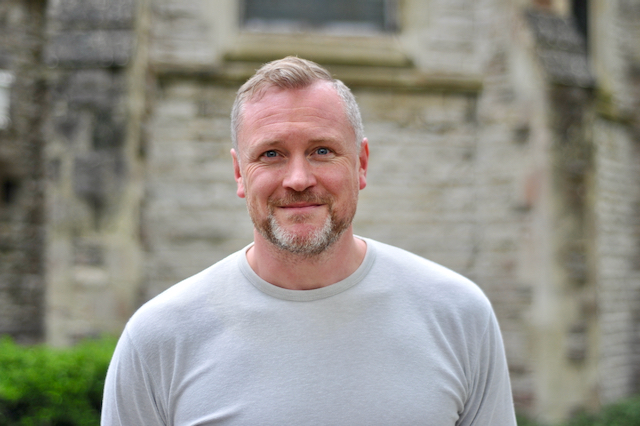
PhD, PGCert, MChiro, BSc – Senior Lecturer (Clinical Sciences)

BSc, DC, MSc, PD, FRCC (Orth), FEAC (Ortho), FHEA, DChiro - Senior Lecturer (Clinical Management)
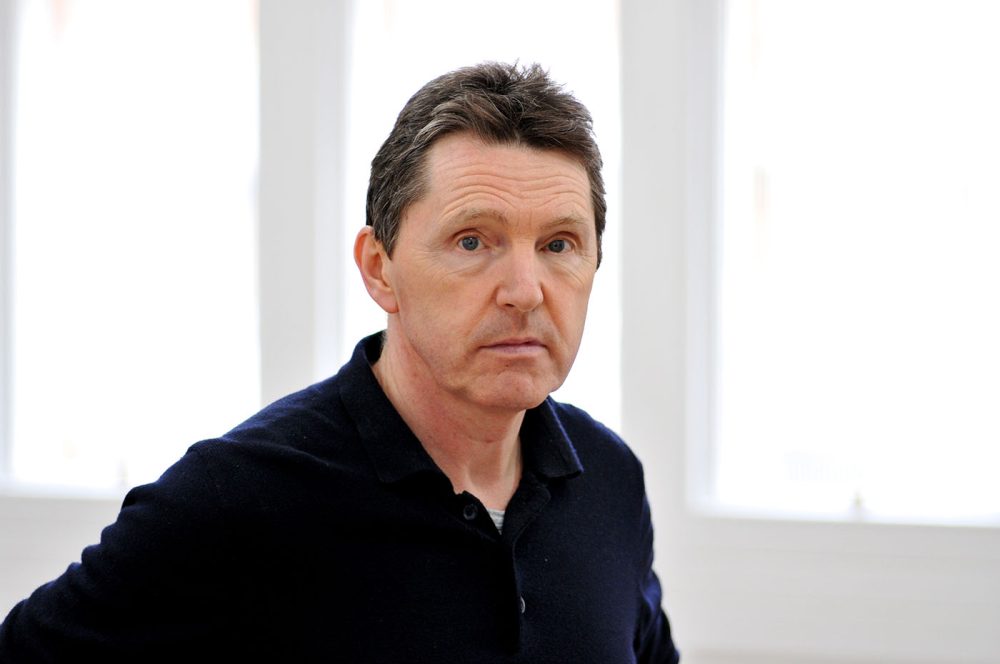
DC, MSc, PhD - Senior Lecturer (Clinical Sciences)

BSc (Biology), D.C., PGCert (Health Science Ed) – Lecturer in Chiropractic

Lecturer in Chiropractic

Senior Lecturer (Anatomy & Physiology)
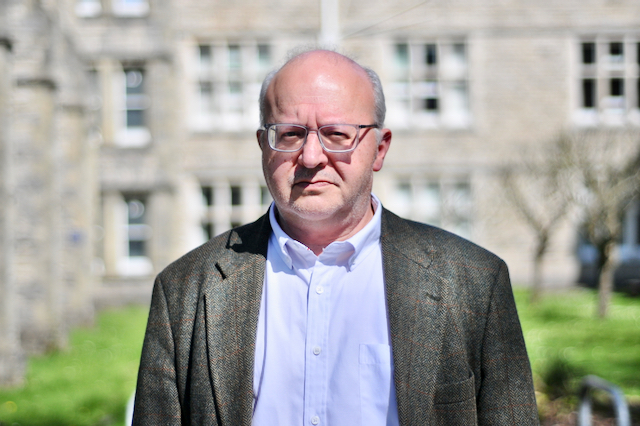
Doctor of Medicine; Senior Lecturer of Anatomy

MSc Chiropractic Course Lead, SOC Research Ethics Lead & Lecturer in Health Promotion and Public Health

Lecturer in Chiropractic

DC, DACBR, MSc - Senior Lecturer (Clinical Sciences, Diagnostic Ultrasound)

DC, DACBR - Senior Lecturer (Clinical Sciences)

Associate Professor - Clinical Management
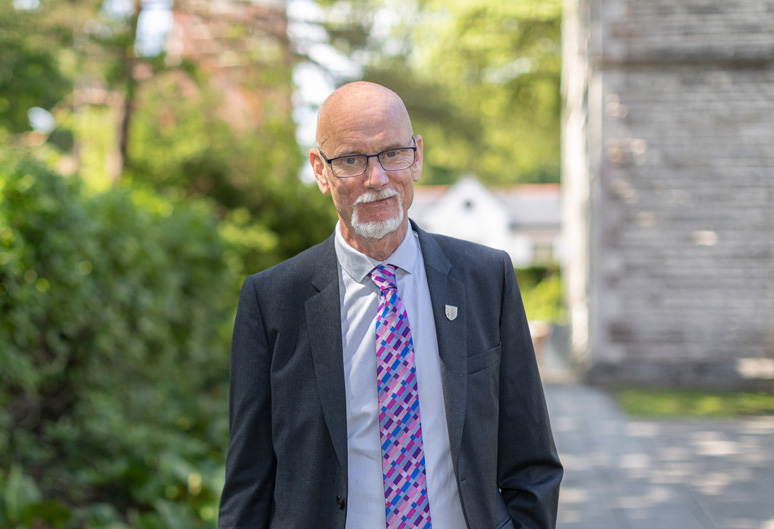
BSc, PgCert, PhD, FRCC (Hon), FEAC - Professor of Integrated Musculoskeletal Care and Health Sciences University Doctoral Coordinator

Clinic tutor
Matthew Garfath
BA (Hons), BSC (Hons), MChiro - Clinic Tutor
Matthew Garfath obtained his MChiro from HSU in 2005. Along with working in private practice since 2016, he has been working part-time as a clinic tutor in Health Sciences University Chiropractic Clinic.
Full bio
BSc, DC, MSc, PG Cert. (Med. Ed.), ICSSD, FEAC, CCEP, FHEA - Chiropractor and Senior Clinical Tutor

Clinic Tutor

Clinical Tutor & Associate Chiropractor
D.C, BSc (Hons), MSc, PGCert
Clinic Tutor and Associate Lecturer

MSc MChiro DC IBCLC FRCC (Paeds), Senior Chiropractic Paediatric Educator Practitioner & Lead New-born Feeding Clinic Tutor

Clinic Tutor
BSc, MSc, DC - Clinical Tutor
Clinic Tutor
Lead Practice Educator

Head of School
Daniel Moore
Head of School. AECC School of Chiropractic.
As Head of School Daniel is responsible to the Executive Leadership Team for all activities within the AECC School of Chiropractic. Working closely with the School Leadership Team (SLT) he works to ensure they are delivering outstanding student experience and outcomes. He seeks growth opportunities for the School, and works together with groups across HSU to support the mission and objectives of the University.
Full bioEntry Requirements
What grades do I need?
Academic Requirements
· Normally a minimum of 112 UCAS tariff points
· Achieved through A levels or equivalent Level 3 qualifications
· At least one science subject, which may include PE. Where A levels are presented, at least one science subject must be included (which may include Physical Education). For applicants presenting alternative Level 3 qualifications, a sufficient curriculum covering relevant scientific content must be demonstrated through formal documentation and qualification content mapping.
Accepted qualifications include:
· A levels
· BTEC National Diplomas and Extended Diplomas
· T Levels in relevant subject areas
· Access to Higher Education Diplomas in science or health related disciplines
· International Baccalaureate
· Scottish Highers and Advanced Highers
· Irish Leaving Certificate
· Other national and internationally recognised Level 3 qualifications
All qualifications are considered in line with UCAS tariff equivalence and institutional admissions policies.
Internal Routes
Progression from Foundation Year Chiropractic
Students enrolled on the University’s Foundation Year Chiropractic pathway progress directly to Level 4 of the MChiro on successful completion of the course, in line with approved progression arrangements. These students are considered progression applicants rather than internal course transfers.
Progression from other Foundation Year courses
Students completing alternative University Foundation Year courses may be considered for entry to the MChiro via formal course transfer processes. In such cases, prior learning and credits will be reviewed and formally ratified to confirm equivalence and suitability for entry at Level 4.
Other routes
Recognition of wider experience
In line with University policy, applicants who do not meet standard academic entry requirements may be considered on an individual basis where they can demonstrate the necessary knowledge, skills and readiness for study through relevant prior learning, professional experience or other appropriate evidence, which will be assessed and formally verified through the admissions process.
There are no variations to institutional admissions regulations.
Is there anything else that is required?
In addition to the general admissions criteria:
- Applicants are required to undergo a selection interview process as part of the admissions procedure.
- Applicants must obtain a satisfactory Enhanced Disclosure and Barring Service (DBS) check, or an equivalent national police clearance for applicants residing outside the UK, in accordance with safeguarding requirements.
- Applicants are required to complete an Occupational Health screening prior to enrolment to ensure they are fit to undertake the demands of the course and professional training.
- Applicants must meet the University’s English language requirements (e.g. IELTS or equivalent), where applicable, to ensure safe and effective communication in clinical and academic contexts.
- The University operates Fitness to Practise procedures for healthcare courses and all students are required to adhere to these throughout the course.
International Students
Undergraduate standard: 6.0 overall with no less than 5.5 in each component. As home students but local police check or DBS equivalent.
Facilities
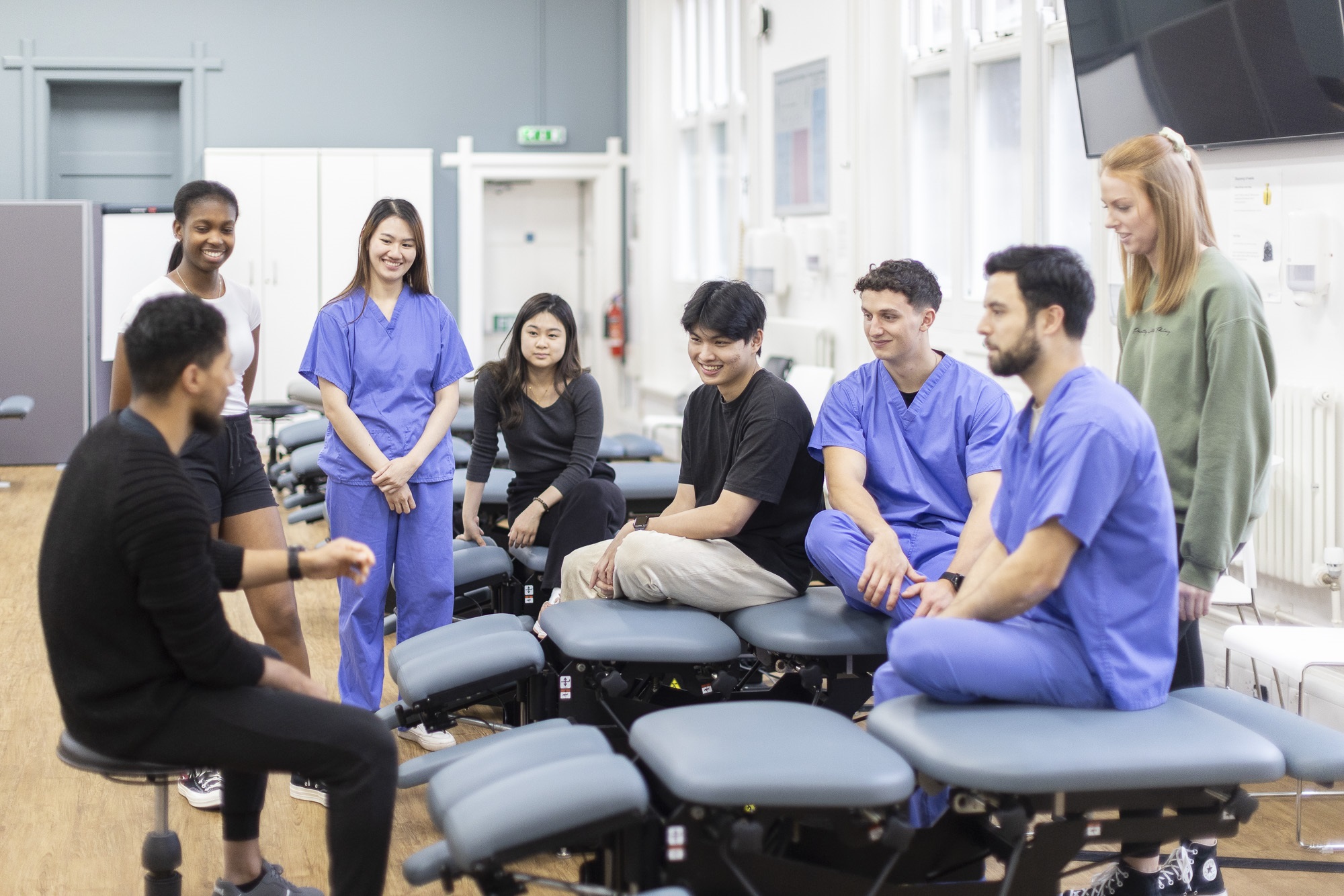
- Dedicated chiropractic practical rooms and technique spaces, including industry-standard benches used for hands-on practical teaching and skills development.
- Open access practical skills spaces, available outside scheduled teaching times for supervised or independent practical skills rehearsal.
- Anatomy and pro-section learning facilities, supporting learning in human structure, surface anatomy and clinically relevant anatomical understanding.
- Anatomage Table, anatomical models and digital anatomy resources, helping students visualise anatomy, movement and body systems in interactive ways.
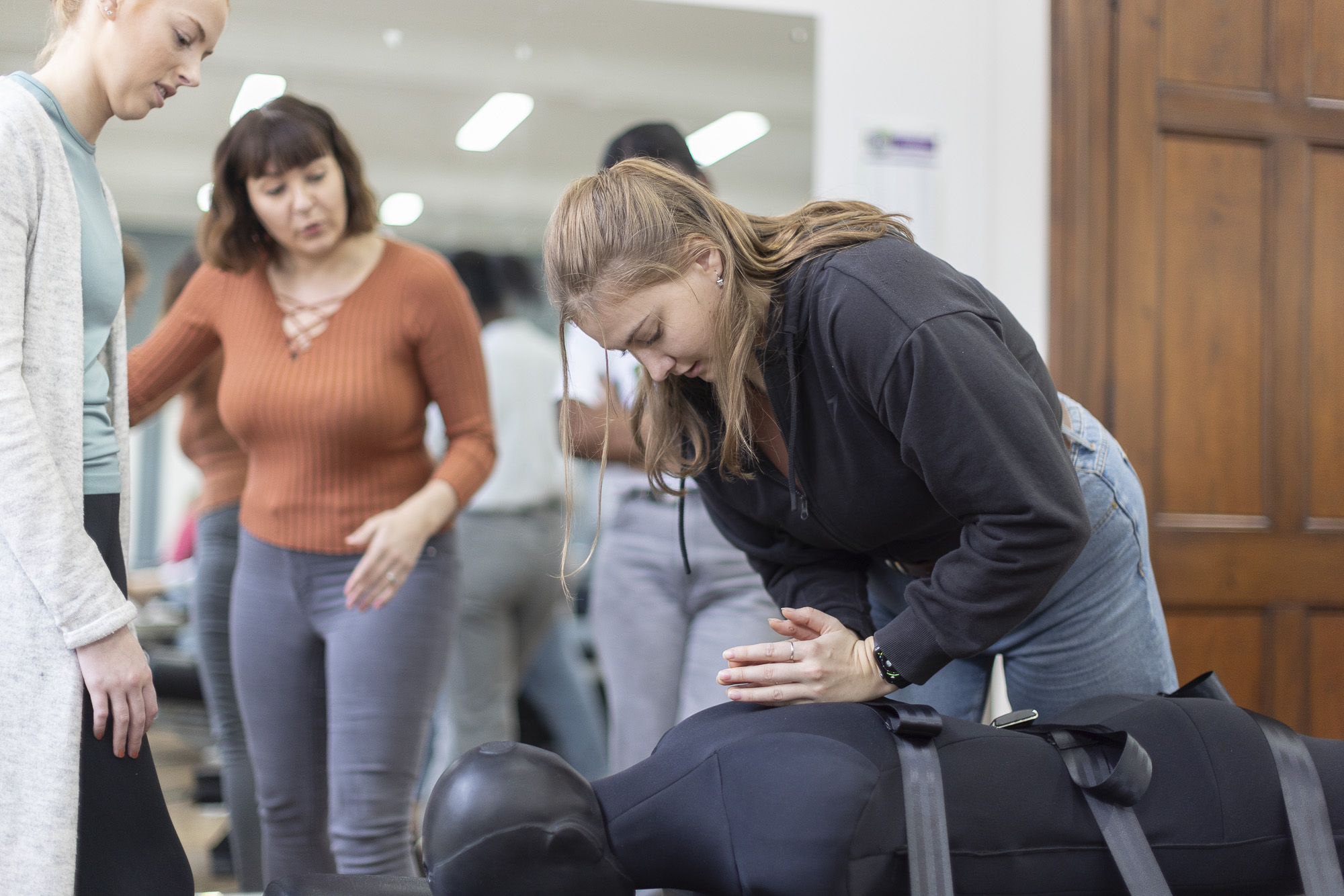
- Simulation suites, simulation models and task trainers, supporting safe rehearsal of clinical, communication and practical skills before placement and patient-facing activity. Computer-based learning rooms for imaging review, supporting development of imaging awareness, interpretation and clinical reasoning.
- Specialist teaching spaces across the Parkwood Road campus, including Parkwood, Cavendish and Garnet buildings, with access to seminar rooms, workshop spaces and lecture rooms.
- Technology-enhanced learning and VLE resources, including recorded content, preparation materials and online learning activities to support guided and independent study.
- Placement and practice-based learning settings, including HSU clinical services and approved external or community-facing placement environments.
- Learning Hub and library resources, supporting academic study, evidence informed practice, independent learning and assessment preparation.
- On-site HSU clinical services, including clinical learning environments where students can develop professional skills and experience supervised practice.
- Campus facilities supporting wider student life, including social spaces, café facilities, gym access and the wider Bournemouth campus environment. The Bournemouth campus includes Parkwood Campus, Garnet Campus and Cavendish House, with specialist health science learning facilities, an on-site health clinic, dedicated technique practice rooms, lecture theatres and clinical facilities
Still have questions about applying?
Course Fees
Tuition Fees 2026/27
UK/ROI/Channel Islands and Isle of Man students – £9,790
International – £17, 684
These fees are for the 2026/27 academic year only and may be subject to an increase in subsequent years of study. Any future increase will be in line with our Tuition Fees Policy which can be accessed on our Study Money Matters page.
Additional course costs
Your tuition fees will cover the cost of all mandatory elements of your course. There are additional course related costs are not included in the tuition fees. So you will need to budget for them when you plan your spending.
For further fees guidance for all students at Health Sciences University whether full time or part time please refer to our Tuition fees policy.
Visit our student finance pages for more information on:
- Additional Costs
- Fees and funding
- Scholarships and Bursaries
- Student finance resources
Note:
For students to be eligible for funding from Student Finance England, they must be studying on an eligible course at a provider registered with the Office for Students (OfS). Health Sciences University is registered with the OfS. View the register and search for Health Sciences University.
Looking for accommodation in Bournemouth?
Our partner halls of residence in Bournemouth are managed by Lulworth Student Company and located within their Union House building, right in the heart of Bournemouth town centre.
Bookings are now open for September 2026.
Why choose Health Sciences University
There are many benefits to studying at Health Sciences University, from our expertise and history in teaching health sciences, to our state-of-the-art facilities, on-site clinical training, and of course our location on the beautiful Bournemouth coast.
Case Studies

Student Story: Carolin Pfenning
Second Year student, Carolin Pfenning from Germany discusses the support she has received from her tutors while studying at the University College and about the aspects of her course she has enjoyed most so far.
Learn More
Student Story: Erik Martens
International student, Erik Martens moved to Bournemouth from The Netherlands to study the Master of Chiropractic course at Health Sciences University.
Learn More
Alumni Profile: Martin Kumm’s Story
Alumni Martin Kumm worked as a chiropractor for high performance professional sports teams, before landing his dream job as a chiropractor for the EF Education Easy-Post professional cycling team.
Learn MoreLatest News
Discover and read all the latest news, press releases and happenings here at Health Sciences University.

Health Sciences University is sponsoring the inaugural MSK Awards 2026, including the Innovation in MSK Practice Award, with Professor Steven Vogel also joining the expert judging panel.
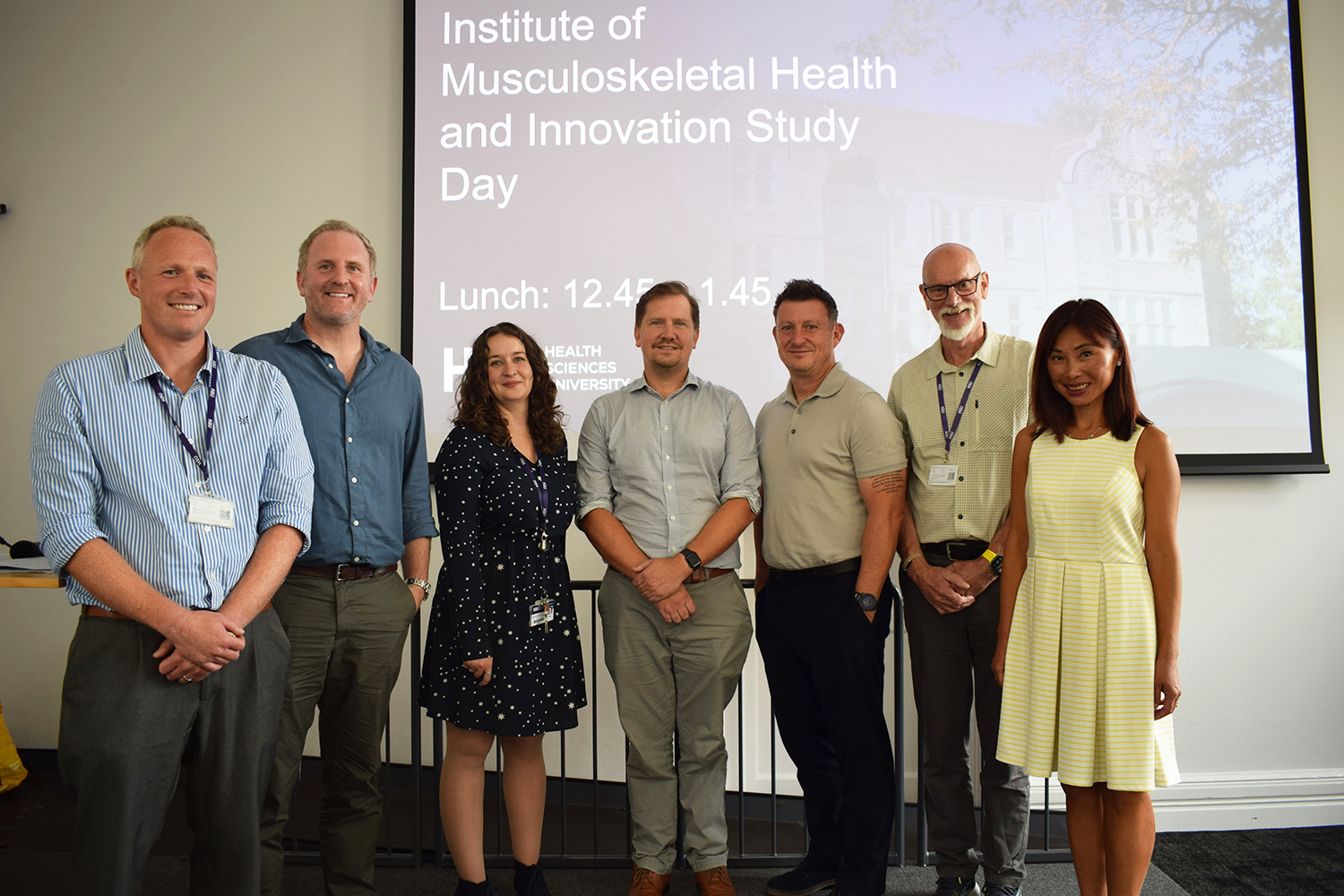
Health Sciences University (HSU) welcomed over 50 healthcare professionals from across the musculoskeletal (MSK) community for the launch of the new Institute of Musculoskeletal Health and Innovation (IMHI), bringing together expert speakers, clinicians, students and educators for a day of continuing professional development centred on clinical reasoning and decision-making.

Health Sciences University has been shortlisted for Specialist Institution of the Year at the THE Awards 2026, recognising the University’s specialist approach to education, clinical care, applied research and workforce impact.



Students, graduates, healthcare professionals and industry partners gathered at Health Sciences University's London Campus on 18th August for the school’s first Health Biz Summit, a day organised by our business school student-led society and focused on healthcare leadership.

Find us
Health Sciences University
Bournemouth Campus
Parkwood Road
Bournemouth
BH5 2DF
Health Sciences University
London Campus
275 Borough High Street,
London
SE1 1JE
Health Sciences University
Reading Campus
19 Castle Street
Reading
RG1 7SB