
What is Occupational Therapy?
Occupational Therapist are creative problem solvers who enjoy enabling people to get the most out of life. As an Occupational Therapist, you’ll empower people to overcome challenges that they are facing, so that they can live their lives as independently and fully as possible.
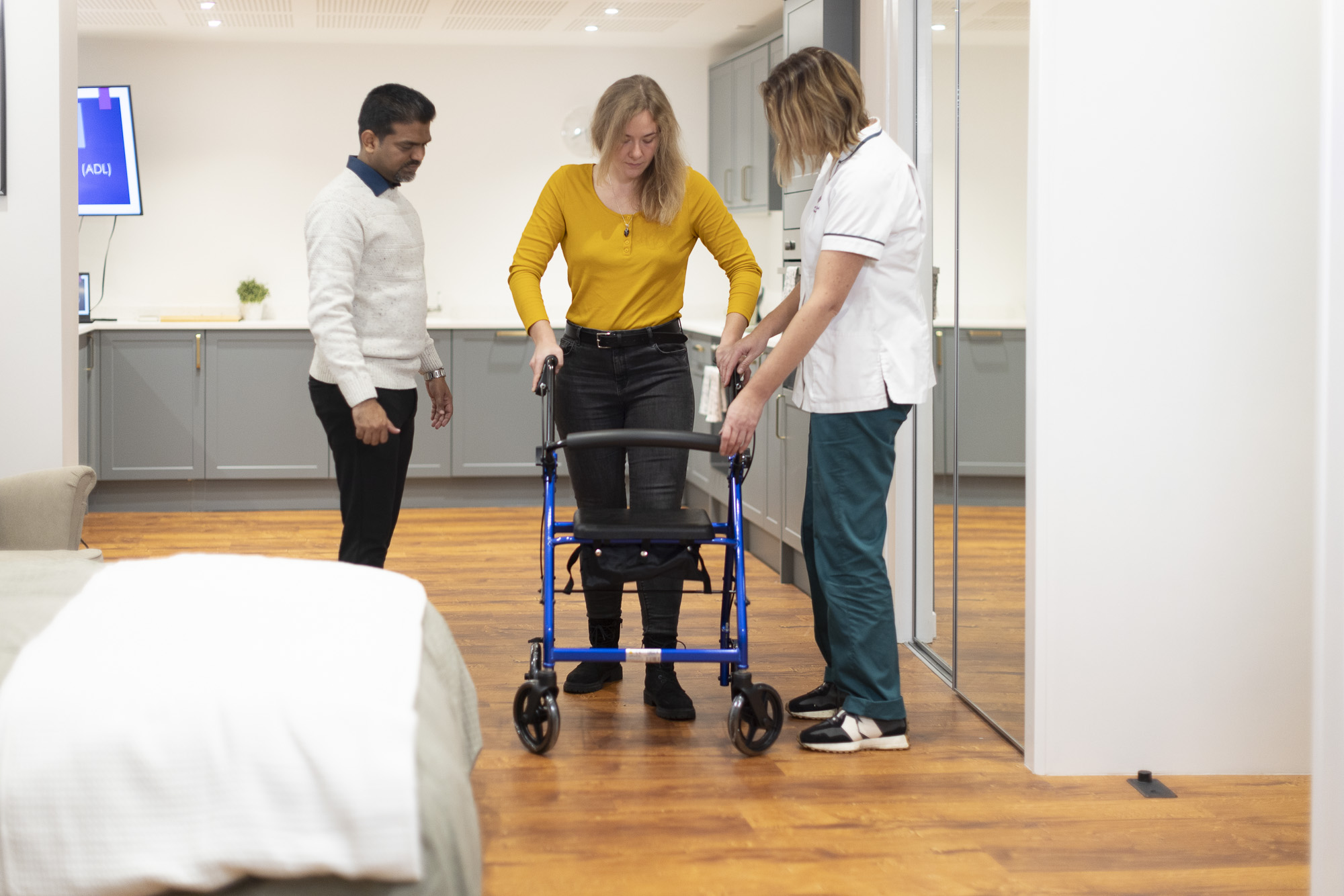
Occupational therapists work with people experiencing challenges with everyday life to help them overcome these difficulties. This could involve teaching new ways of doing things, introducing new techniques, or using assistive equipment.
Occupational therapists are also involved in rehabilitation, improving aspects of a person’s physical, mental, or social abilities through occupation-focused intervention. This could include rehabilitation for individuals who have had a stroke, or working with people living with dementia, eating disorders, or children with dyspraxia.
You will be supporting people to make changes to their home or work environments to make tasks easier for them to manage. Occupational therapists can work in traditional health and social care settings, as well as within charities, prisons, the third sector, or private practice, showcasing the versatility of this profession.
Occupational therapy provides the opportunity to work in both mental and physical health settings, as well as to support people with learning difficulties.
Studying at a specialist health sciences university like Health Sciences University, you will gain experience alongside healthcare professionals from a range of specialisms. You will share our campus with chiropractors, physiotherapists, radiographers, sonographers, speech and language therapists, dietitians, and more.
Why become an Occupational Therapist?
Occupational Therapy offers a really varied career, with opportunities to work within a range of different settings and with a range of people.
Working as an Occupational Therapist gives you the chance to make a big positive difference to people lives. You’ll be helping people to navigate and overcome challenges that they are facing at a difficult point in their lives. You’ll be helping people to stay as independent as possible, enabling them to keep doing the things that they love.
As such, good communication and people skills are really important to an Occupational Therapist.
You can read more about the important reasons why people choose to become Occupational Therapists here on the Royal College of Occupational Therapists website.

How Do I become an Occupational Therapist?
To become an occupational therapist, you’ll need to study for a degree in Occupational Therapy, either at the undergraduate or postgraduate level. We offer our MSc Occupational Therapy (Pre-Registration) degree here at Health Sciences University.
What might I have studied already?
Many of our applicants have studied Psychology, Health and Social Care, Education, or Sociology degrees. We generally look for a 2:2 in a relevant science degree subject or relevant experience in health and social care.
If you are unsure whether you have the right qualifications for this course, please contact our friendly Admissions team by emailing admissions@aecc.ac.uk.
Find out more about our Occupational Therapy courses via the links below:
BSc (Hons) Occupational Therapy (Integrated Degree Apprenticeship)
MSc Occupational Therapy (Pre-Registration)
Course Lead: Parag Sawant 
Course Lead: Parag Sawant
Parag gained his Masters in Occupational Therapy (Neurosciences) from Maharashtra University of Health Sciences, Nashik, India, in 2014. Since then, he has been working in Occupational Therapy clinical practices within various neurorehabilitation settings.
He has worked within multidisciplinary teams and has hands-on experience in upper-extremity robotics in neurorehabilitation for stroke patients. He also runs Cognitive Rehabilitation clinical services at the Integrated Rehabilitation Centre (IAC).
Parag led an Occupational Therapy clinical setting within a Neurosurgery Rehabilitation unit in a municipal tertiary healthcare setup in Mumbai, India.
Our Occupational Therapy facilities
Our Occupational Therapy facilities
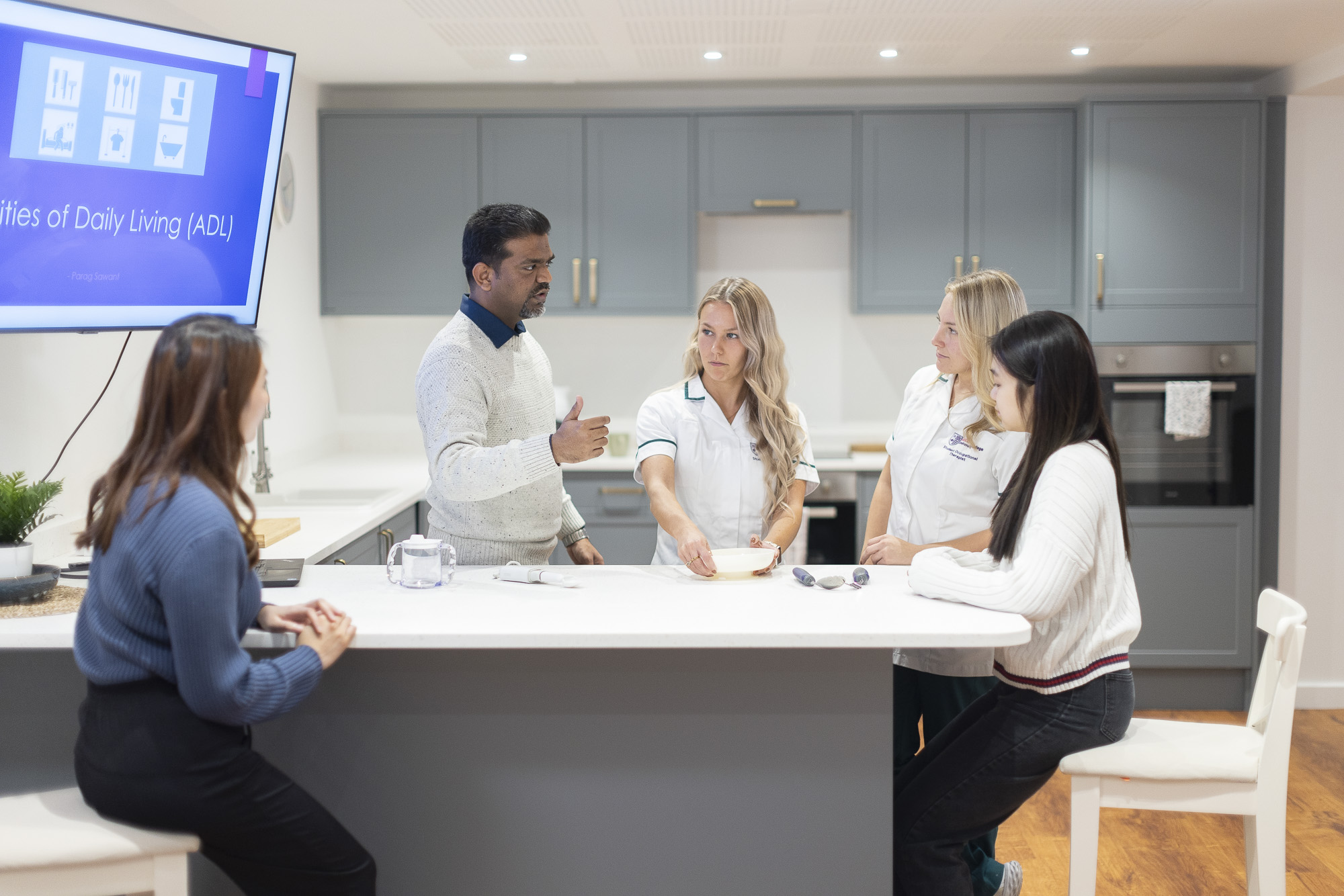
Our Assistance for Daily Living Suite (ADL)
