Strength training in older adults
Combatting sarcopenia to improve strength and function and reduce the risk of falls

Combatting sarcopenia to improve strength and function and reduce the risk of falls
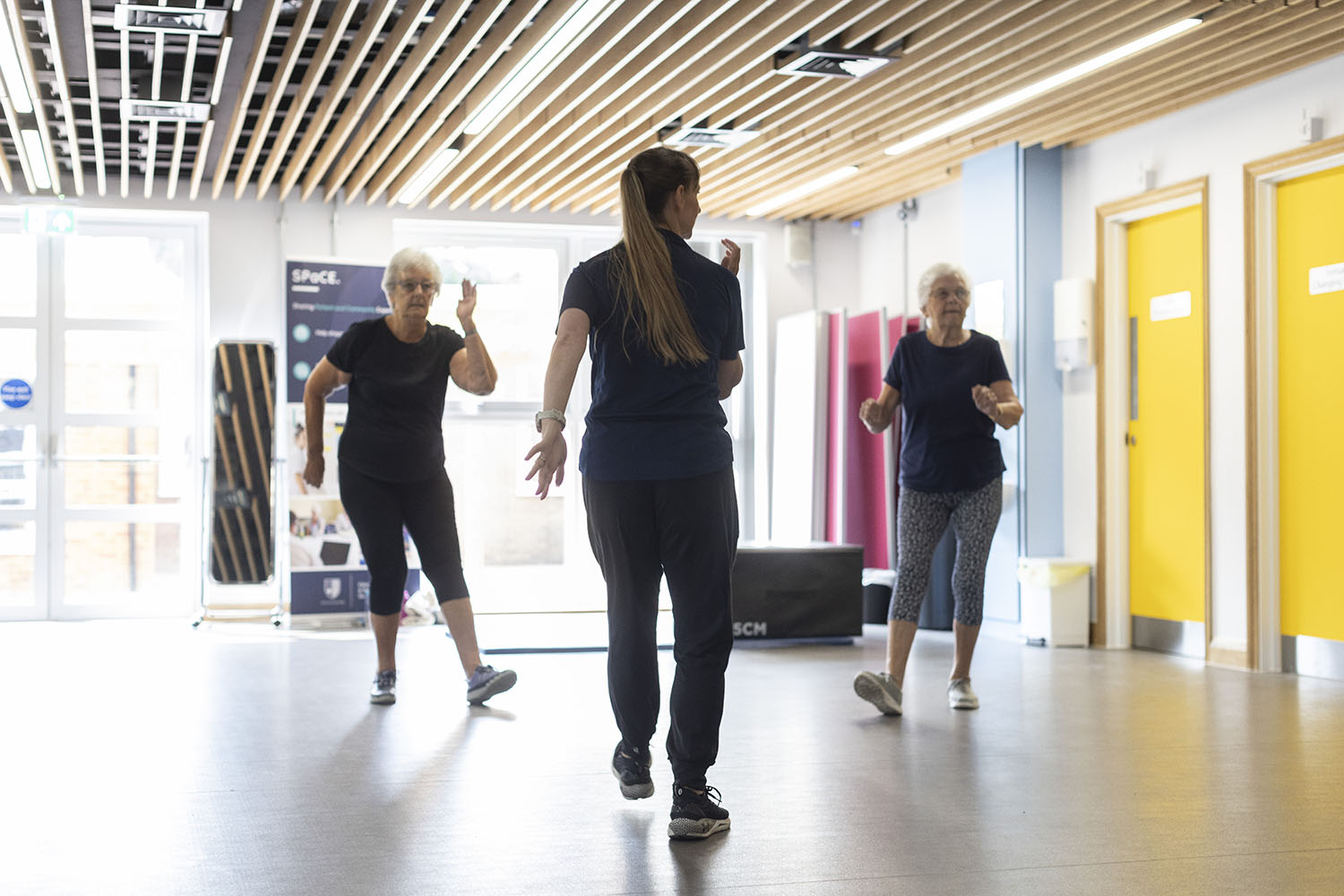
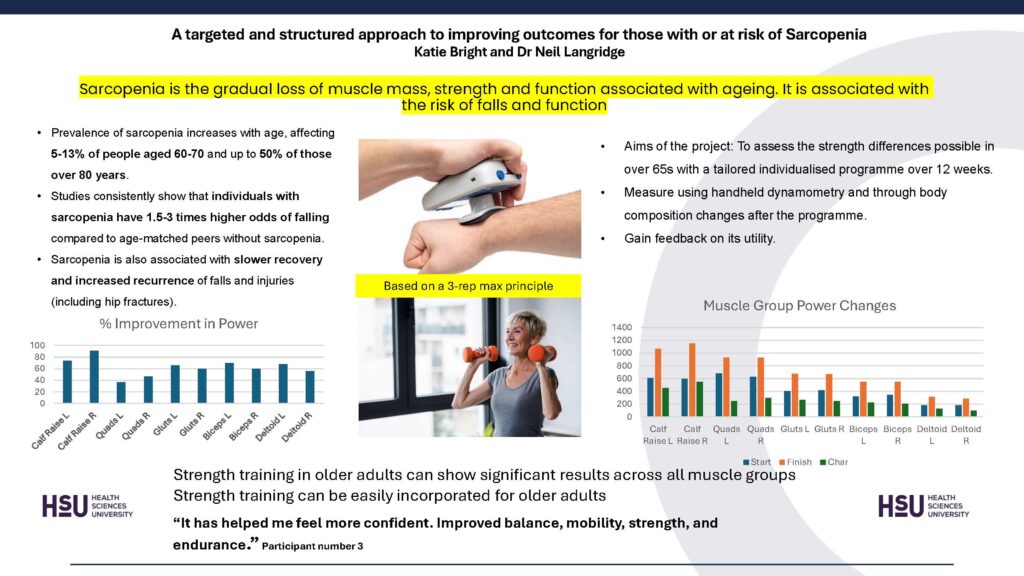
Sarcopenia is a condition which causes gradual loss of muscle mass, strength and function, thought to occur due to aging and commonly affecting the elderly population. It can greatly impact quality of life by reducing older people’s ability to perform daily tasks and it’s also linked directly to the risk of falls.
This study looked to add to the evidence base surrounding improving strength in older people. By creating parameters based on strength training, we postulate that adults will have a reduced risk of falls in their older years, although further work will be needed in the future to determine this.
The project aimed to explore the improvement of strength in older adults, through specific goal set training.
The study recruited 50 adults over the age of 65 and offered them 3 months of a strength training programme, based on close assessment of their individual capacity. Each participant was initially invited to attend for an assessment during which their limb strength was quantitatively measured. A specific programme was then designed for each individual. The participant then followed the programme for 12 weeks, after which their limb strength was re-measured.
The Strength Training in Older Adults study is the work of staff at the Integrated Rehabilitation Centre, Health Sciences University (HSU). The team’s Clinical Lead is Neurological Physiotherapist Katie Bright and the project is sponsored by Dr Neil Langridge,
Director of Clinical & Rehabilitation Services.
The project data is currently being analysed, but early reviews have seen significant improvement in strength output.
The findings of the pilot study have also already contributed to the development of the new ‘Get Strong’ personalised strength training programme offered by the Clinical & Rehabilitation Services department at HSU.
The project is being supported by Research England.
Falls are estimated to cost the NHS £2.3billion a year, with each fall typically costing £115 in ambulance costs and £1.9billion spent on hip replacements each year, not including the cost of onward social care. Therefore it’s clear that every fall and resultant hip replacement we can prevent will have a big impact for local health economies.
However, the cost of falls must also be measured in the social and emotional societal stresses that occur as a consequence. An older person dies every hour in England as a result of a fall.
This study will inform the evidence base around reducing fall risk by tackling sarcopenia, and also support the application in practice of a protocol.
Bright, K. and Langridge, N., 2024. Proposal for a unique Multidisciplinary Team approach to improving outcomes for those with Sarcopenia through service evaluation. Physiotherapy, 123, p.e207, available from: https://www.physiotherapyjournal.com/article/S0031-9406(24)00291-8/abstract
The team are keen to look at wider implementation and further work linked to fall prevention.

Health Sciences University
Bournemouth Campus
Parkwood Road
Bournemouth
BH5 2DF
Health Sciences University
London Campus
275 Borough High Street,
London
SE1 1JE
Health Sciences University
Reading Campus
19 Castle Street
Reading
RG1 7SB