
Osteopathic education and practice : mapping osteopathic models
The OsMoSys project – collaborating to enhance osteopathic education and practice worldwide

The OsMoSys project – collaborating to enhance osteopathic education and practice worldwide
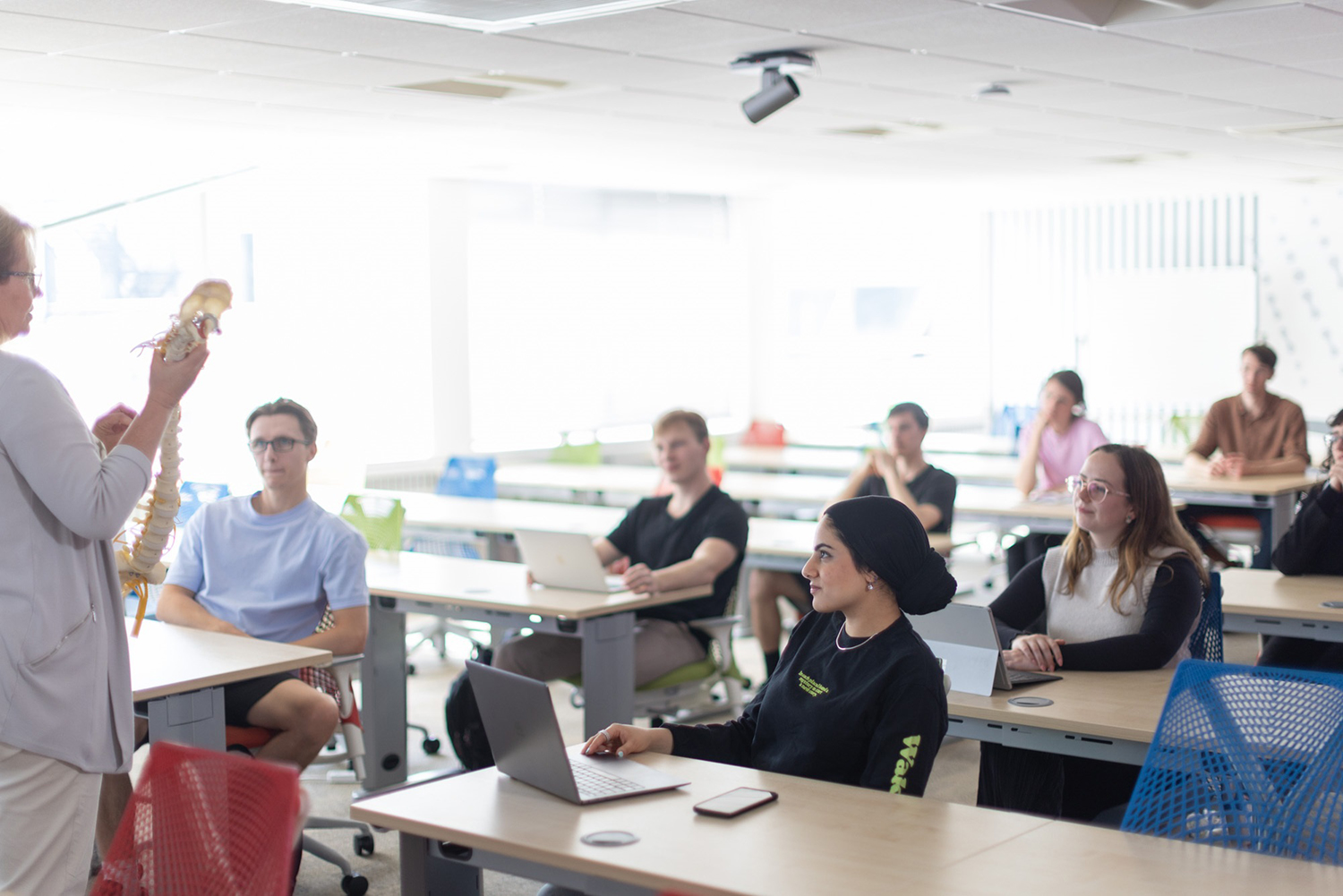
Osteopathic education providers around the world use various theoretical models in their curricula, but what exactly constitutes an osteopathic model? The OsMoSys project aims to identify and categorise the frameworks currently being taught at undergraduate level, determine which ones inform clinical practice, and map how these models are understood and applied across different countries and institutions.
The planned Osteopathic Models Synthesis (OsMoSys) project will be an international collaboration focused on exploring and enhancing osteopathic education through systematic examination of the models and concepts taught to students. It will address a critical gap between evidence-based knowledge and educational practice in osteopathy, by comprehensively mapping the models used globally in osteopathic education, understanding educators’ perspectives on their strengths and weaknesses, and assessing how practicing osteopaths incorporate these models into clinical work.
The project aims to strengthen the translation of evidence into osteopathic education, while fostering collaboration and coordination of research efforts among institutions worldwide.
The OsMoSys project aims to primarily answer 3 questions:
The project also aims to discover the level of consensus reached by educators on the evidence for the models they use, and whether the institution or educator’s level of research contribution (H-indexes) impacts on the models included in curricula.
Other project objectives include cataloguing the models taught in osteopathic education, documenting perspectives on their strengths and weaknesses and improving understanding of the challenges faced by education providers. The team aims to assess clinical implementation of educational models, identify priorities for building evidence to support osteopathic models, and develop professional research capacity through mentorship and training.
Senior responsible officer for the project is Dr Jerry Draper-Rodi (UCO School of Osteopathy in Health Sciences University). Working with Jerry is a core research team:
The project will also benefit from the support of the following partner organisations:

The OsMoSys project is in the planning and early implementation phase, with deliverables and outcomes planned as follows:
Phase 1 (months 1-3): Research associate recruitment and training
Phase 2 (months 4-6): Review of osteopathic models
Phase 3 (months 7-9): International survey of educators regarding models
Phase 4 (months 7-9): Parallel international survey of practicing osteopaths
Phase 5 (months 10-12): Analysis and dissemination
Key deliverables for the project are expected to include a complete catalogue of osteopathic models used in education worldwide, with a comprehensive analysis of educator and practitioner perspectives and evidence-based recommendations for curriculum development.
OsMoSys is funded by the Osteopathic Foundation (£20,000) and the Swiss Osteopathic Science Foundation (£15,000).
Direct beneficiaries of this work include the 200+ osteopathic schools worldwide and 8,000+ osteopathic educators globally, as well as research capacity development for practicing osteopaths.
40,000+ osteopathy students each year will also benefit indirectly, through improved curricula. Practicing osteopaths will benefit through enhanced clinical frameworks, and their patients through improved practitioner training.
The OsMoSys project will have a major impact on professional development, enabling enhanced evidence-informed curriculum development, improved alignment between education and clinical practice, and strengthened international collaboration in osteopathic education. The project will also provide a framework for reflective practice among educators and clinicians.
Innovations within education include the first comprehensive mapping of global osteopathic educational models, and an evidence-based framework for curriculum review and development. The project will provide tools for educators to update teaching materials and methods, and a model for international collaboration in healthcare education research.
Next steps for the project:
Planned publications include:
The OsMoSys project’s dissemination strategy consists of open-access publication to ensure global accessibility, conference presentations to educator and practitioner communities, and direct engagement with osteopathic education providers worldwide.
Future research opportunities associated with the project include:
For osteopathic practitioners, a research associate position will also be advertised.
Principal Investigator: Dr Jerry Draper-Rodi, jerry.draper-rodi@hsu.ac.uk
UCO School of Osteopathy, Health Sciences University, 275 Borough High Street, London SE1 1JE, UK

Health Sciences University
Bournemouth Campus
Parkwood Road
Bournemouth
BH5 2DF
Health Sciences University
London Campus
275 Borough High Street,
London
SE1 1JE