Ready for oART
Identifying the educational requirements of radiographers for the latest cancer treatment

Identifying the educational requirements of radiographers for the latest cancer treatment
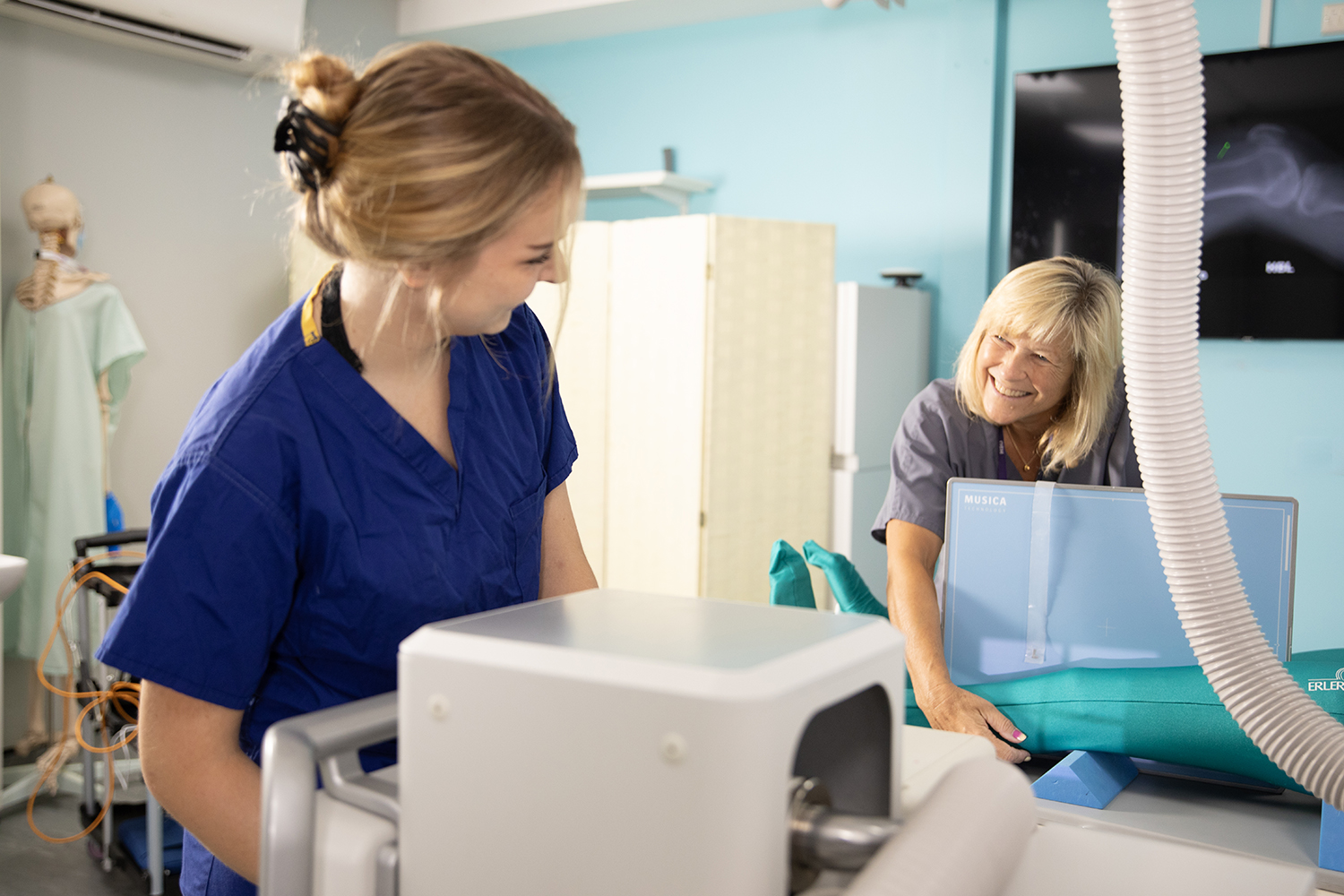
Online adaptive radiotherapy (oART) is a new technological innovation in cancer treatment. It involves detailed scanning of each patient immediately before each treatment session begins, enabling clinicians to adjust their treatment plan based on changes in the patient’s anatomy.
Since oART represents a major shift in cancer treatment, therapeutic radiographers need to be able to take on new technical and clinical decision-making roles. So it’s vital that they receive effective training to ensure safe, efficient and sustainable implementation of cutting-edge radiotherapy, improving cancer care outcomes.This project is a mixed-methods scoping study, investigating the educational needs of therapeutic radiographers in a UK region, and examining current knowledge gaps and strategies to prepare the workforce.
The project set out to identify regional educational gaps in radiographer knowledge and confidence regarding oART. Based on this, the team aimed to develop strategies and recommendations for workforce training at both pre-registration and post-registration levels. Using this information we could then propose sustainable, standardised education models such as CPD courses, MSc modules and ‘educational passports’.
We also explored how inter-disciplinary collaboration, such as with physicists, dosimetrists and oncologists, could support training.
The research was led by Amy Cooke, Senior Lecturer in Advanced Clinical Practice & Therapeutic Radiographer, Health Sciences University (HSU). Amy was supported by a team from HSU:
In addition to the research team, 32 radiographers from three regional radiotherapy centres responded to our survey and we had six focus group participants. Four local service and education leads participated via interviews.
Our research identified a significant knowledge gap: although most radiographers were moderately familiar with ART, 22 out of 32 felt ‘not confident’ adapting treatment plans.
Consequently there was a strong demand for structured education, particularly in decision-making, re-contouring and re-planning.
Participants expressed a preference for blended learning (online, classroom and practical), simulation-based training and flexible CPD/MSc modules. The design of a CPD unit and exploration of how virtual simulation could be used is now underway.
Barriers identified include limited time and funding, and technology variation across centres.
The research found a consensus that a regional, inter-organisational approach is needed to ensure efficiency and consistency in workforce upskilling.
This research was funded by the Health Sciences University Jumpstart Grant scheme.
Within our industry / clinical practice, findings support the safe roll-out of oART, enabling its efficient implementation.
In terms of policy, the project will inform workforce development strategies for the NHS and higher education institutions.
As a society, better prepared radiographers will be equipped to deliver more personalised, precise cancer treatment, improving patient outcomes and survivor rates.
This research is published in Radiography (Elsevier, 2025): DOI: 10.1016/j.radi.2025.103093.

Health Sciences University
Bournemouth Campus
Parkwood Road
Bournemouth
BH5 2DF
Health Sciences University
London Campus
275 Borough High Street,
London
SE1 1JE
Health Sciences University
Reading Campus
19 Castle Street
Reading
RG1 7SB