
Establishing priorities for osteopathic research
PROCare: an investigation into research needs for osteopathic care across Europe

PROCare: an investigation into research needs for osteopathic care across Europe

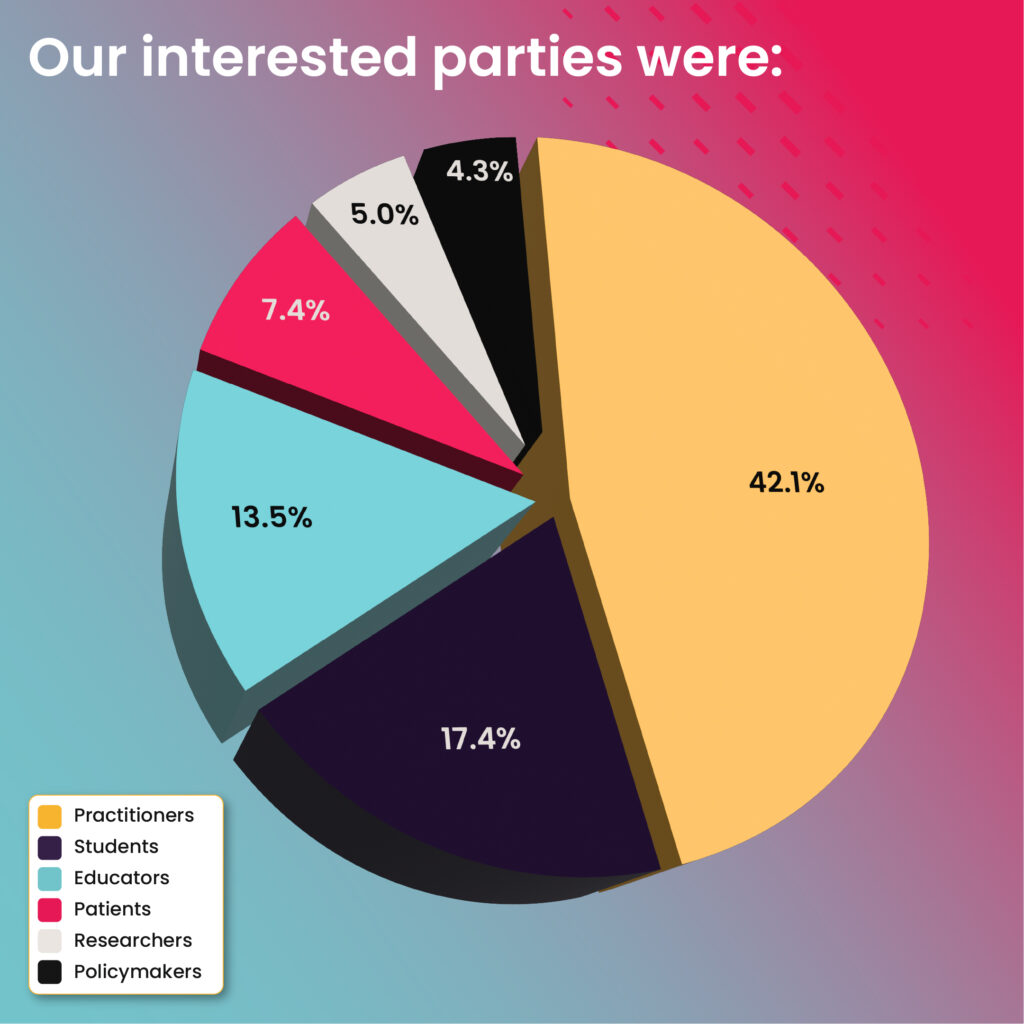
PROCare (Priorities in Research for Osteopathic Care) is a comprehensive international survey project aiming to identify and prioritise research needs for osteopathic care. The survey engaged diverse interested parties including practitioners, patients, students, educators, researchers and policymakers to establish an evidence-based research agenda for the osteopathic profession for 2024-2030.
The project is the largest multi-interested-party consultation on osteopathic research priorities ever conducted, involving over 2,200 participants from 42 countries.
Using mixed methods, the project aimed to describe osteopathic research priorities, as perceived by diverse interested parties, for 2024-2030.
As part of this, the team needed to investigate how research priorities differ between stakeholder groups, such as patients, practitioners and researchers. We also examined the relationship between individual values and research priority preferences, and analysed any country-specific variations in research priorities that arose.
From the evidence gathered, our goals included developing a comprehensive taxonomy of osteopathic research domains and priorities, and creating the ‘PROCare Eye’ framework for organising osteopathic research priorities.
A further overarching goal was to contribute towards bridging the gap between research evidence and clinical practice through stakeholder engagement.
The PROCare international research team, led by Prof Paul Vaucher (Swiss Distance University of Applied Sciences & Foundation COME Collaboration) were:
The project was supported by the following international collaborators:
The team also benefited from the support of partner organisations: Osteopathy Europe, the Swiss Federation of Osteopathy (SuisseOsteo), the National Council for Osteopathic Research (NCOR) and Foundation COME Collaboration.
The PROCare project enjoyed high levels of participation, receiving 2,229 completed responses from interested parties across 42 countries – 90.8% from European countries, with additional participants from Brazil and Canada. However, response rates varied significantly from country to country, ranging from 15-568 responses per 1,000 osteopaths.
The team developed a comprehensive ‘PROCare Eye’ taxonomy with 7 principal research domains, 28 subdomains and 96 research topics. They identified three stakeholder profiles for setting priorities: Conservatives (42.9%), Enthusiasts (36.9%) and Sceptics (20.2%).
Certain top priorities for research emerged, with consensus across the different interested party groups. Patient safety received the highest priority across all domains, with hands-on techniques, sedentary lifestyle prevention and the neurophysiological effects of osteopathic manual treatments all being seen as a priority for 50% or more of the interested parties. Osteopathic diagnosis and treatment mechanisms, quality of training and education, and physical activities and mobility were also highly ranked.
In terms of the differences between interested parties, researchers prioritised methodology improvement, knowledge transfer and research culture, whilst patients showed greater interest in digital health and access to care. Practitioners emphasised hands-on techniques and clinical diagnosis, with policy makers focusing on social justice research and regulatory priorities.
Some lower priority areas also emerged. Digital health was consistently rated lower across all groups. Theoretical concepts and basic science theory were generally considered to be of lower priority, along with cost-effectiveness studies. Social justice research was a lower priority to most groups except policy makers.
Primary funding for the project came from the UCO School of Osteopathy (HSU), with grant support from UK Research and Innovation for ‘Enhancing Research Culture’.
The project also received technical support in the form of a Qualtrics survey platform and multiple language translations.
In terms of professional development, the PROCare project provides a game-changing evidence-based framework for setting research funding priorities. It can be used to inform curriculum development for osteopathic education programmes, and guide professional development and continuing education priorities. It also offers a useful tool to supports strategic planning for osteopathic organisations.
Applications for the research community include establishing a baseline for future research priority assessments and demonstrating methodology for large-scale international stakeholder engagement. The project also provides a framework for other manual therapy professions and contributes to WHO strategy development for traditional, complementary and integrative healthcare.
For those working in healthcare policy, the project findings can be used to inform regulatory body priorities and evidence requirements. It supports the integration of osteopathic care within national health systems, provides evidence for research funding allocation decisions and addresses public health priorities through an osteopathic lens.
Finally, for clinical practitioners, the PROCare project validates practitioner priorities and clinical concerns, and supports evidence-based practice development, informing quality improvement initiatives. It helps to bridge the gap between research and practice through stakeholder engagement.
Primary publication:
Related infrastructure:
Conference presentations:
Future research opportunities related to the PROCare project include consensus studies to develop unified research agendas, country-specific priority analyses and longitudinal tracking of priority changes over time. There may also be opportunities to contribute to implementation studies of priority-driven research programmes and comparative studies with other manual therapy professions.

Health Sciences University
Bournemouth Campus
Parkwood Road
Bournemouth
BH5 2DF
Health Sciences University
London Campus
275 Borough High Street,
London
SE1 1JE
Health Sciences University
Reading Campus
19 Castle Street
Reading
RG1 7SB