PhD Project - Scanning Behaviour in Sport: Extending the Concept Across Sports and Linking Scanning to Fundamental Visual Functions
Applications for this PhD project are now open. The deadline for applications is 6 April 2026.

Applications for this PhD project are now open. The deadline for applications is 6 April 2026.
Expert performance in sport relies on the ability to perceive, interpret, and act upon visual information in dynamic and time-pressured environments. As a result, perceptual–cognitive skill has been a long-standing focus within sport psychology (Mann et al., 2007). Recent reviews have reinforced the importance of visual information pickup and attentional control in supporting skilled performance, while also highlighting variability in how visual capabilities relate to performance outcomes across sports (Lochhead et al., 2024).
Within this literature, scanning has emerged as a behaviour of interest, particularly in football. Research has demonstrated that scanning behaviour varies systematically with contextual constraints such as opponent pressure and pitch location, and that higher scanning frequency before ball reception is positively associated with subsequent on-ball actions (Jordet et al., 2020). Complementing this work, mobile eye-tracking studies conducted during full 11-vs-11 match play show that scans typically involve brief visual sampling rather than prolonged fixation, suggesting efficient extraction of environmental information (Aksum et al., 2021).
Despite these advances, scanning research remains narrowly focused on football and is largely descriptive. There is a lack of empirical work linking sport-specific perceptual behaviours to underlying visual functions such as saccadic control and peripheral awareness. Addressing this gap may contribute to a more mechanistic understanding of perceptual–cognitive expertise in sport.
Email: zoe.wimshurst@hsu.ac.uk
To investigate scanning behaviour across sports and examine its relationship with fundamental visual skills.
Indicative research questions include:
Teams from ball sports such as rugby or hockey will be recruited. Different performance levels may be considered subject to feasibility and access.
Scanning behaviour can be measured using video analysis and/or eye-tracking during representative sport-specific tasks. Variables may include scanning frequency, timing relative to task events, and coordination of head and eye movements.
Laboratory-based assessments of core visual skills may include:
Tasks will be selected based on relevance to information acquisition demands in sport and make use of equipment already owned by the university.
Analyses are expected to focus on associations between scanning behaviour, visual function measures, and performance level.

HSU is offering up to three fee waivers for UK home applicants starting in October 2026. All eligible UK home applicants will automatically be considered for fee waiver support, which is awarded competitively based on the excellence of the candidate.
International applicants are unfortunately not eligible for fee waivers.
All applicants are expected to have financial plans in place to cover their studies and should not rely on a fee waiver.
Self-funded students are also welcome to apply for this project. Self-funded students can be UK home students or international students.
Available to both UK and International students
Aksum, K. M., Brotangen, L., Bjørndal, C. T., Magnaguagno, L., & Jordet, G. (2021). Scanning activity of elite football players in 11 vs. 11 match play: An eye-tracking analysis on the duration and visual information of scanning. Plos one, 16(8), e0244118.
Jordet, G., Aksum, K. M., Pedersen, D. N., Walvekar, A., Trivedi, A., McCall, A., … & Priestley, D. (2020). Scanning, contextual factors, and association with performance in English premier league footballers: an investigation across a season. Frontiers in psychology, 11, 553813.
Lochhead, L., Feng, J., Laby, D. M., & Appelbaum, L. G. (2024). Training vision in athletes to improve sports performance: A systematic review of the literature. International Review of Sport and Exercise Psychology, 1-23.
Mann, D. T., Williams, A. M., Ward, P., & Janelle, C. M. (2007). Perceptual-cognitive expertise in sport: A meta-analysis. Journal of sport and exercise psychology, 29(4), 457-478.
Discover and read all the latest news, press releases and happenings here at Health Sciences University.

Health Sciences University (HSU) and the College of Integrated Chinese Medicine (CICM) have confirmed that they have begun early exploratory discussions about the possibility of a future merger. HSU and CICM already have an established academic relationship, with HSU currently validating CICM’s degree provision. The discussions now underway are separate from, and additional to, this existing validation arrangement.
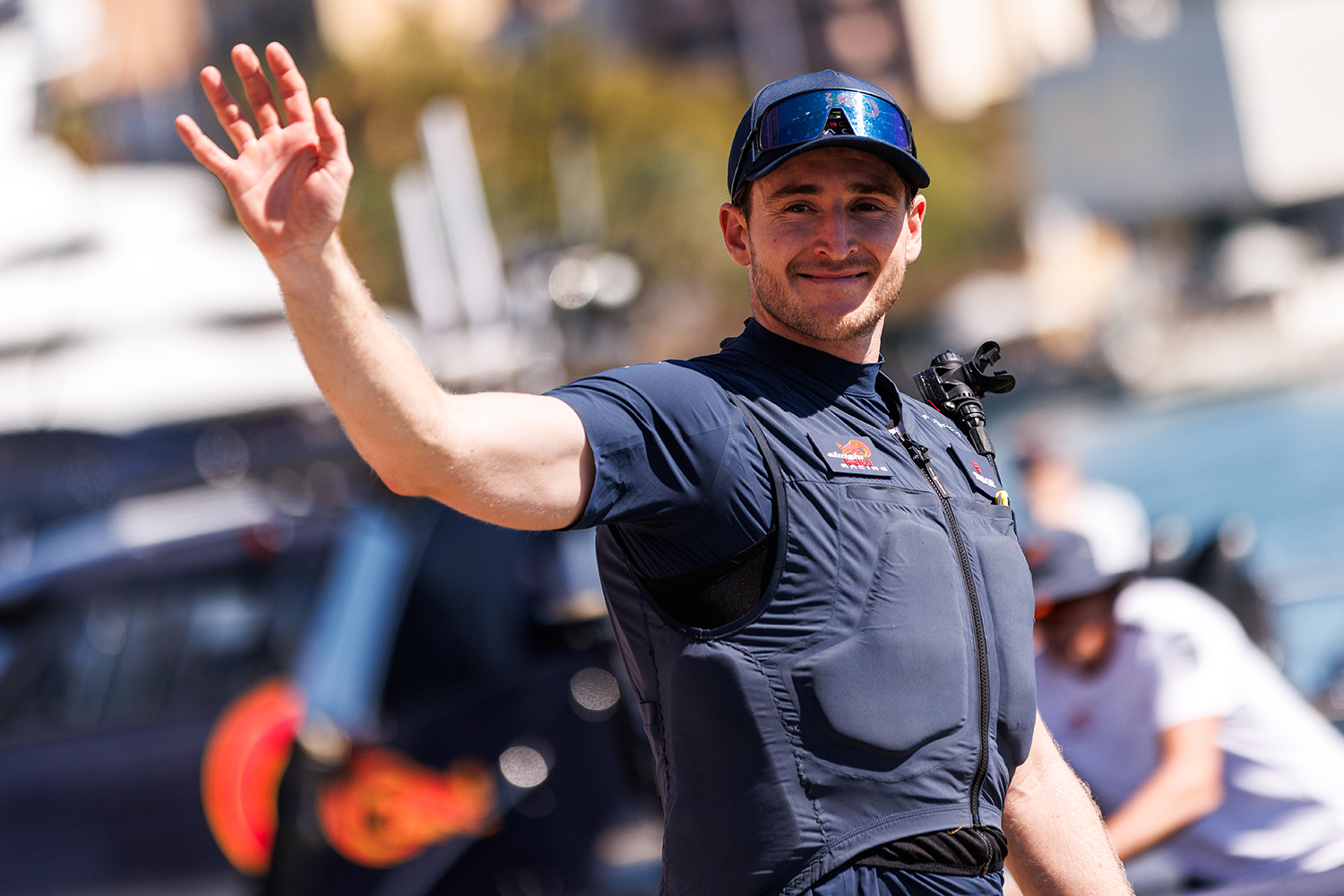
Nils Theuninck is a third-year Master of Chiropractic student at Health Sciences University with an impressive background in elite sailing. He has competed internationally as part of the Swiss National Sailing Team and has earned several podium finishes at major events. Most recently, Nils sailed with Alinghi Red Bull Racing in their challenge for the 37th America’s Cup. His dedication to both sport and chiropractic has been recognised with a 2025 International Sports Chiropractic Federation (FICS) Student Scholarship. We spoke to him about his sailing journey, how this influenced his decision to study chiropractic, and his goals for the future.

The National Student Survey (NSS) is now open and will close on 30 April 2026. If you’re a final‑year undergraduate, this is your chance to tell us about your experience of studying at HSU.

Our campuses in Bournemouth and London will be closed from 6pm Wednesday 24th December 2025, and will re-open at on Monday 5th January 2026.
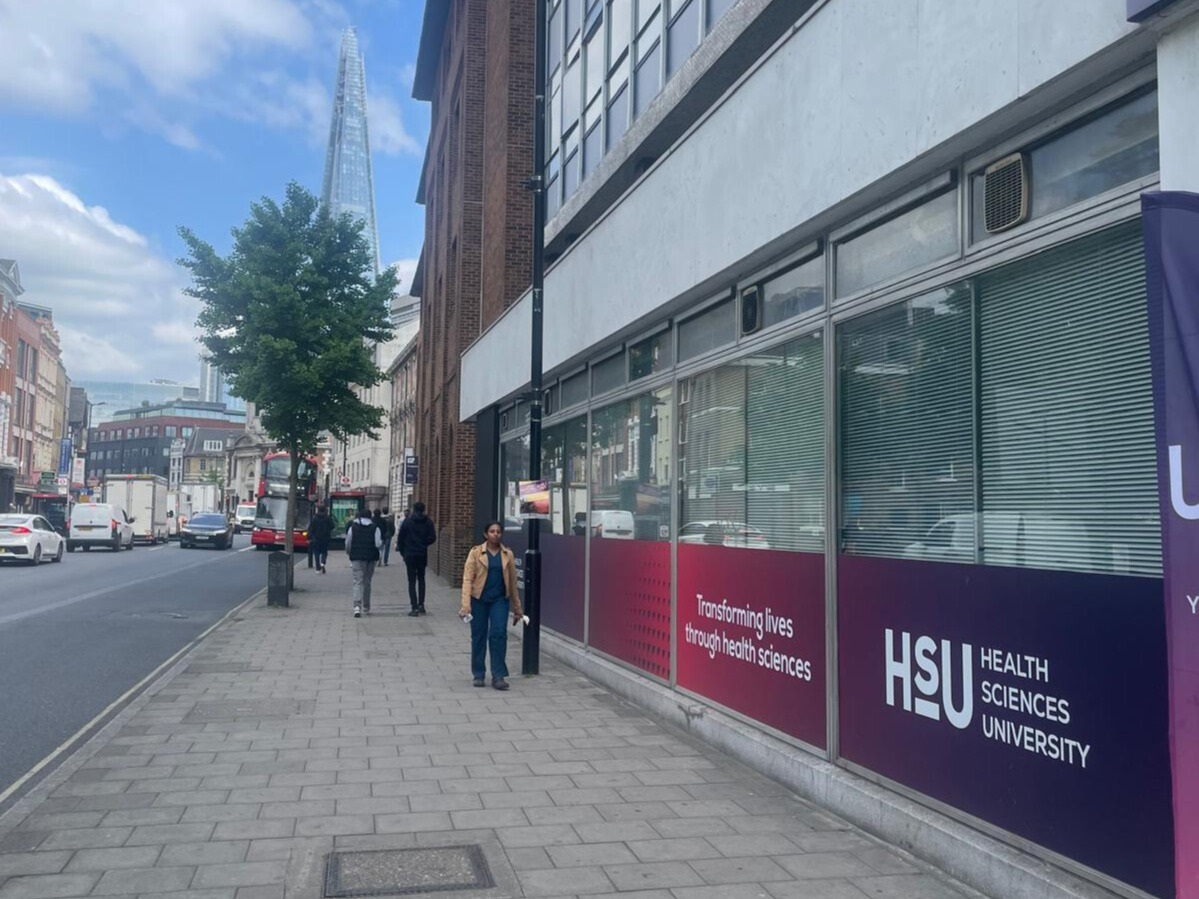
An innovation developed through HSU’s Centre for Osteopathic Research and Leadership (CORaL) has been selected by the World Health Organization as one of just 21 projects worldwide to feature at the WHO Global Summit.

Advance HE has published a new report that explores the merger which brought together AECC University College in Bournemouth and the University College of Osteopathy in London to create Health Sciences University (HSU).


Health Sciences University
Bournemouth Campus
Parkwood Road
Bournemouth
BH5 2DF
Health Sciences University
London Campus
275 Borough High Street,
London
SE1 1JE