Different sport, different neck strength?
Comparing neck strength profiles in contact sports

Comparing neck strength profiles in contact sports
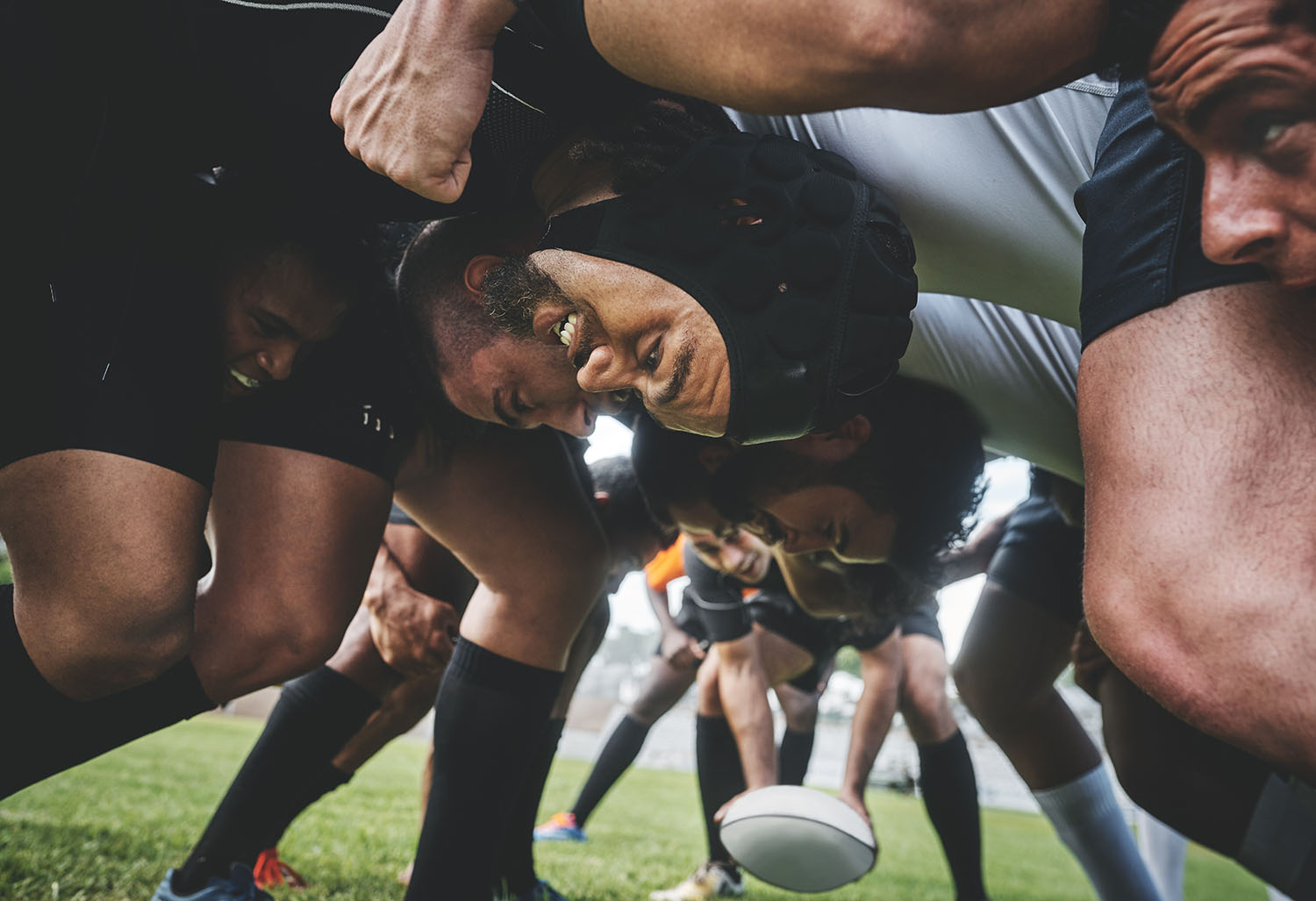
Sports Related Concussion (SRC) can be caused by the brain impacting against the inside surface of the skull when the head has rapidly accelerated or decelerated. This can cause temporary deformity of the brain structure, with the patient experiencing one or more transient symptoms.
Evidence suggests SRCs occur after high magnitudes and/or density of acceleration or deceleration of the head. However, research has observed that in people with a stiffer neck, the skull can be protected from these rapid movements. This is because the structure of the muscles and connective tissues surrounding their neck acts as an anatomical restraint system. Greater isometric strength of neck muscles has been associated with lower incidence of SRC in a variety of contact sports, and increased mass has also been associated with reduced SRC incidence.
Most studies investigating the strength of neck muscles use circumference or generic relative mass corrections to characterise neck volume. These offer a cheap and time-efficient alternative to imaging or anatomical measurement of specific muscles. However, isometric neck investigations relate to the function muscles while the neck is loaded with the mass of the head and any protective wear. Conversely, most research has been conducted with subjects supine or prone with an unloaded neck. There has been some research using ultrasound to look at neck morphology while the subject is in a seated position, but these experiments failed to keep the neck stable during measurement.
Until now there has been a lack of understanding of normative strength profiles and the variance in profiles between athletes of different sports, and between athletes and the general population. A clearer understanding of neck muscles and their function could inform targeted interventions to help athletes lower their risk of SRC.
The Concuss study set out to look at neck strength profiles in football, rugby union and Brazilian jiu jitsu – all sports with a high incidence of concussion. We aimed to understand whether sports participation influences neck strength profiles, and whether differences exist between neck strength profiles in athletes versus the general population.
In relation to accurately measuring the muscles of the neck, we explored whether it would be feasible to assess the trophic state of individual muscles in the cervical region, and whether we could replicate impact conditions by imaging cervical muscles in a loaded state.
In terms of neck strength, the Concuss study has found that amateur rugby players exhibited significantly greater relative strength in extension than amateur footballers. Rugby players also had greater absolute strength in left and right lateral flexion, and significantly greater absolute strength in extension than both footballers and controls.
We also found that amateur rugby players exhibited a significantly lower flexion-to-extension strength ratio than amateur footballers – i.e. there is a greater difference in extension compared to flexion in footballers than rugby players). Amateur rugby players also exhibited significantly greater absolute strength in flexion than controls.
In our work on neck imaging, we first established that the equipment we would be using (HSU 0.5 T Open MRI 0.5 T) provides the imaging resolution and contrast parameters required for the detailed visualisation of skeletal muscles in the cervical region. We optimised parameters for participant positioning in the scanner and established that participants can be comfortably and reliably scanned in the sitting position with loaded cervical muscles.
Working in collaboration with HSU’s MRI radiographers and visiting technicians from the scanner manufacturer’s headquarters in Italy, we were able to test various MRI sequences. From this, we were able to optimise a single MRI sequence that reliably resolves the muscle anatomy and surrounding anatomical structures, thus enabling prospective morphometric work. This enabled us to establish that all imaged cervical skeletal muscles can be anatomically identified.
This research was supported by a £15,000 Innovation Research Grant awarded by the Royal College of Chiropractors Sports Faculty. An additional £5,000 grant was awarded by Health Sciences University.
Improving knowledge of how individual muscles contribute to head-neck segment dynamics may lead to more targeted interventions aimed at enhancing neck musculature among athletes, potentially lowering the incidence of SRC. Additional research is needed to investigate the relationships between muscle morphology, volume, function and concussion risk, as well as to determine the effectiveness of resistance training programmes designed to bolster neck strength and reduce SRC susceptibility in various sports.
Ultimately, the Concuss study has laid the groundwork for future investigations aimed at improving concussion prevention strategies through enhanced understanding of cervical musculature dynamics.
Future research should be carried out to establish morphological norms between genders and correlate actual neck muscle mass with relative methods currently used more widely, such as neck circumference and estimated relative mass. Further research might also offer greater insight into what relationships exist between actual neck mass and directional isometric strengths in sporting and general populations.
In addition, our findings on neck strength in different sports indicate some key differences could exist between sports which warrant further investigation.
Jan 2023 – preliminary findings shared with RCC AGM, London, presented by Phillip Heritage.
March 2025 – abstract was accepted for presentation at the BASES Biomechanics Interest Group Division Day, Gloucester.
June 2025 – presentation of research findings to RCC Annual Summer conference, Birmingham by Phillip Heritage.
Although this project has now closed, further neck strength research is being conducted by this wider research team – look out for a weblink to find out more in due course.

Health Sciences University
Bournemouth Campus
Parkwood Road
Bournemouth
BH5 2DF
Health Sciences University
London Campus
275 Borough High Street,
London
SE1 1JE