

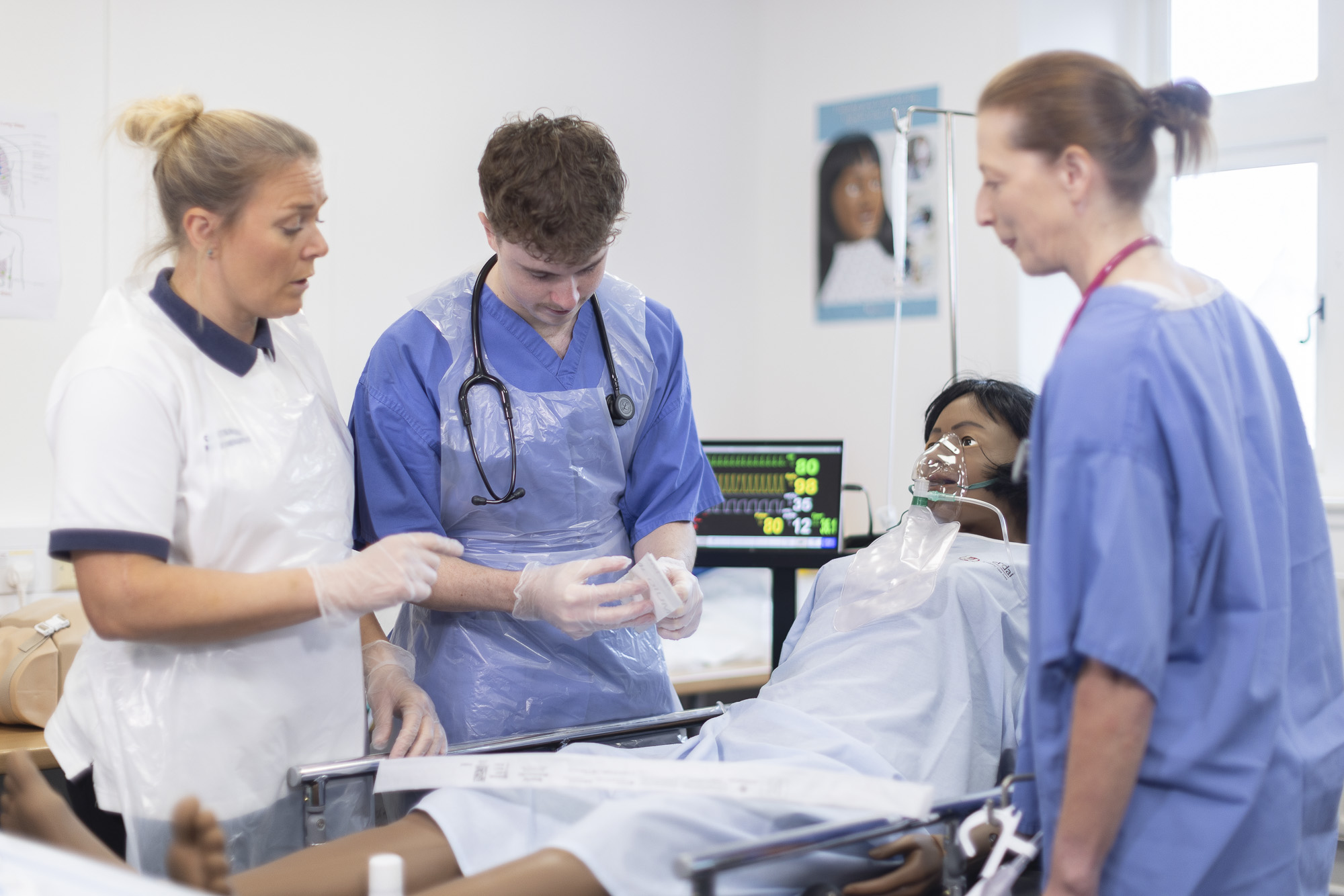
What is Physiotherapy?
Physiotherapists help people through movement and exercise, providing manual therapy, education and advice. They help people of all ages and conditions to maintain their health, prevent disease, and manage Long-Term Conditions to improve overall quality of life.
As a science-based profession, Physiotherapy takes a ‘whole person’ approach to health and wellbeing.
This involves encouraging patients to be actively engaged in their own treatment and wellbeing. Physiotherapists educate patients about their bodies and their activity, making them more aware, empowering them, and involving them in their treatment.
Physiotherapy can help to facilitate recovery and / or maintain quality of life so that people can remain independent for as long as possible, enabling them to return to previous activities of daily living, or making adjustments so that they can live as normal a life as possible.
Physiotherapists work in a variety of specialisms in health and social care. There is also the opportunity to be involved in education, research and service management.
You can read more about Physiotherapy on the Chartered Society of Physiotherapy website.
Why become a Physiotherapist?
Physiotherapy offers a varied career path, with opportunities to make a real positive difference to people’s lives.
Physiotherapists undertake many different roles, in a range of sectors and settings including the NHS, private practice and in the community, as well as in higher education and the charity sector. They often work in multidisciplinary and integrated teams, as well as independently.
Physiotherapists can be involved in all stages of patient care; from initial assessment, to diagnosis, treatment, discharge, referral, rehabilitation, and management of long-term conditions.
They work with a variety of age groups and health conditions, and play a key role in promoting and maintaining health.
Health Sciences University is a specialist health sciences University, which means you’ll be surrounded by other students studying a range of health care disciplines. This ranges from Chiropractic to Medical Imaging, Sport and Exercise Science, Speech and Language Therapy, Occupational Therapy, Radiography, Dietetics and Podiatry.
Learning alongside and meeting a variety of health care professionals gives you a fantastic insight into clinical life after graduation.
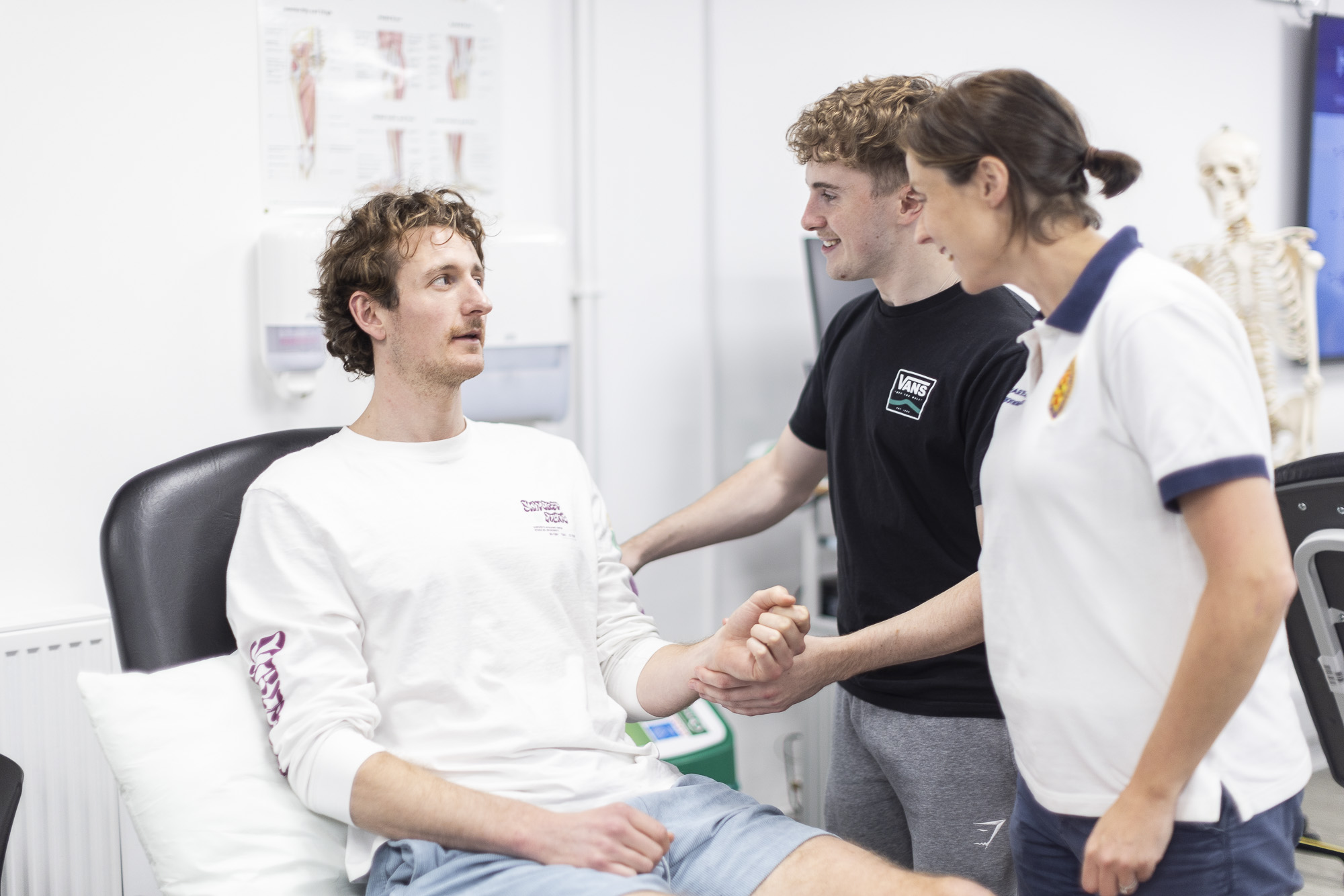
How do I become a Physiotherapist?
You’ll need to study for a degree in Physiotherapy – either at undergraduate or postgraduate level. We offer our MSc Physiotherapy (Pre-Registration) degree here at Health Sciences University.
What qualities does a Physiotherapist need?
First and foremost, Physiotherapists are caring individuals who have good communication skills. You need to have empathy, compassion, be proactive, resilient, work autonomously, and have the ability to and be good at collaborative working collaboratively. You also need to be calm and respond well in a crisis.
Good Physiotherapists work with one another’s strengths to achieve the best outcome possible for the patient. They also need to be adaptable and flexible in their approach to work.
What might I have studied already?
Many of our applicants have studied, Sports Science, Exercise Therapy, Rehabilitation, Occupational Therapy, Chiropractic or Nursing. We generally look for a 2:2 in a relevant Science degree subject, or relevant clinical experience. A good understanding of Anatomy is important for this course.
If you are unsure whether you have the right qualifications for this course, please do contact our friendly Admissions team by emailing admissions@aecc.ac.uk.
MSc Physiotherapy (Pre-Registration)
Additional course information
Course Lead: Louise Stanley 
Course Lead: Louise Stanley
Louise has 17 years’ experience in Physiotherapy in a variety of settings including NHS, research, voluntary and higher education sectors.
Louise specialised initially in respiratory physiotherapy working in a large acute hospital trust and then went on to facilitate and run clinical research trials in Interstitial Lung Diseases, during which time she gained a Masters in Clinical Research. Louise has also undertaken roles within the voluntary sector supporting patients with interstitial lung disease and developing remote support services for an established charity.
Louise has been involved in the delivery of pre registration physiotherapy education since 2010. She has a particular interest in the use of simulation and digital technologies in education and has utilised both virtual and physical simualtions to facilitate education delivery and practice based learning opportunities.
