Muscle palpation: are we kidding ourselves?
Advancing the scientific understanding of manual therapy within osteopathy

Advancing the scientific understanding of manual therapy within osteopathy
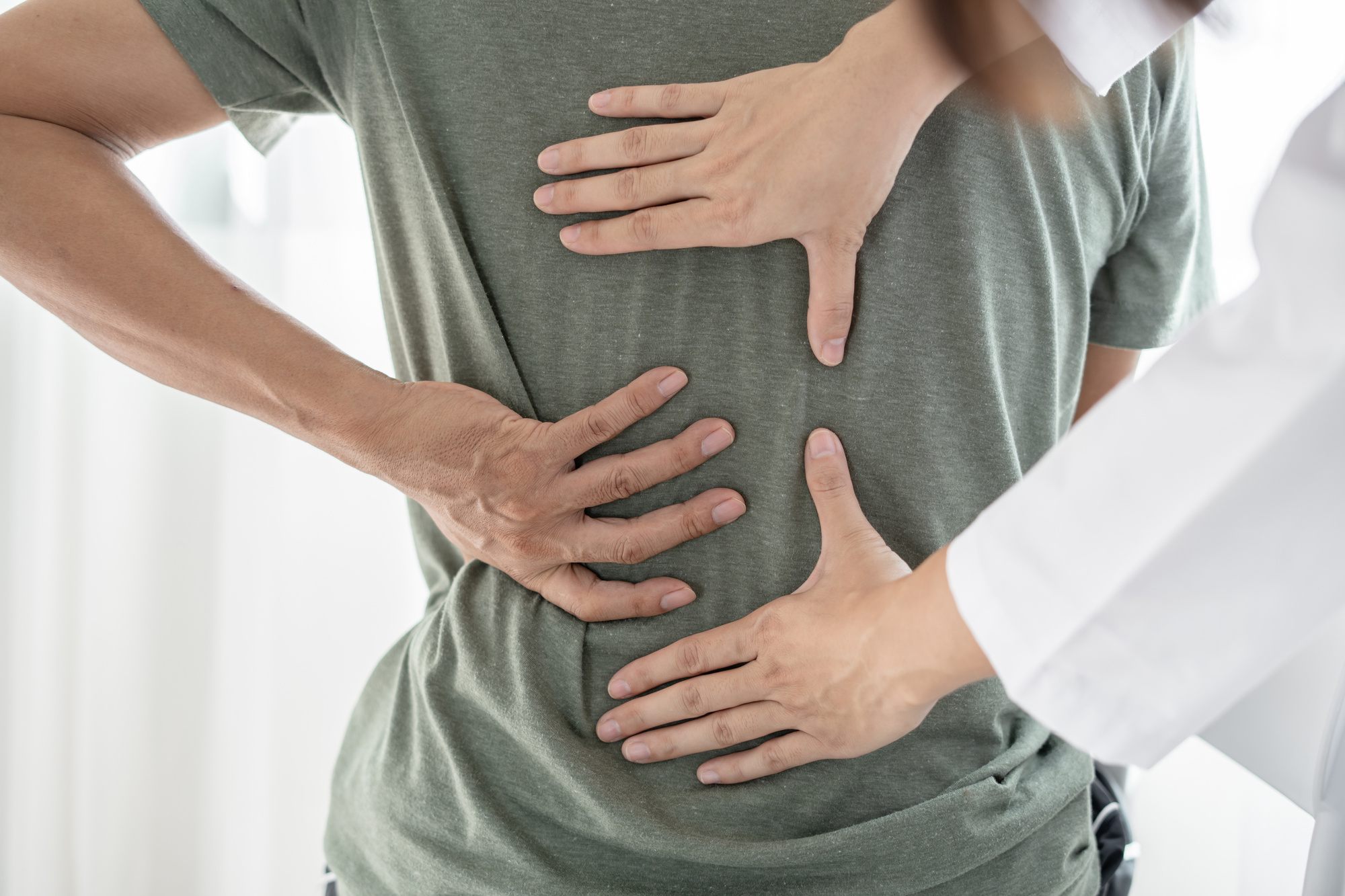
The use of our hands to detect musculoskeletal problems is an important tool for osteopaths. But are we really feeling genuine differences where problems exist – or are we kidding ourselves? ‘Are We Kidding Ourselves?’ is the impromptu title of two linked projects, which together aim to put the application of manual therapy on a firmer scientific foundation.
In this project, we examined the efficacy of muscle palpation – the feeling of body tissues with the hands to identify areas of alteration of muscle quality.
The project team set out to understand whether the osteopathic palpation of muscles can be used to distinguish those with a musculoskeletal complaint from those without. To test this, we needed to ensure that the osteopath had no other information about the person being examined, and no visual or auditory cues.
We also looked to establish whether there are objective measurable differences between muscles where palpation detects a problem and those where we don’t.
The first steps in investigating muscle palpation started as a pilot study undertaken by Iqra Kazee, a student osteopath at the University College of Osteopathy (UCO), as part of her dissertation.
A later project looking at correspondences between muscle palpation and objective findings was carried out in collaboration with student osteopath Audrey Buot and researcher Dr Frédéric Lange at University College London.
Both parts of the project were overseen by Dr Kevin Brownhill, Research Fellow at Health Sciences University and practicing osteopath.
For Iqra Kazee’s study, we explored whether an osteopath could detect which study volunteers had a history of recurrent non-migraine headache, amongst a group with and without the condition, using only gentle palpation of the upper neck muscles. Headphones playing white noise and a blindfold were used to remove possible information received via sound and vision. Despite this, the osteopath was able to detect cases of recurrent headache with greater than chance probability.
In the study carried out in collaboration with Audrey Buot and Dr Frédéric Lange, we looked at differences between areas of muscle classed as ‘tight’ and those classed as ‘normal’ by palpation. Specifically, we measured the concentration of haemoglobin-like molecules, oxygen saturation and muscle structure, using time-domain near-infrared spectroscopy. Study results showed that the tight muscle differed from normal muscle in all three areas of measurement
The work on muscle palpation was funded by UCO, with University College London funding the use of the near-infrared spectroscopy equipment.
These research projects attempt to advance basic research into manual therapy. It is hoped that this will strengthen the theoretical basis of manual therapy, which is essential to guide how it can be best applied and how it can be made more effective.Through these projects we also seek to advance the scientific understanding of very common and disabling musculoskeletal conditions, which are at the present time remain poorly understood.
The work undertaken in collaboration with Audrey Buot and Dr Frédéric Lange was published in the book series Advances in Experimental Medicine and Biology, and at the Oxygen Transport to Tissue XLIII annual conference.
I am always seeking collaborators with a similar approach to idiopathic musculoskeletal pain, which aim to put the application of manual therapy on a firmer scientific foundation.
Please email kevin.brownhill@hsu.ac.uk to get in touch

Health Sciences University
Bournemouth Campus
Parkwood Road
Bournemouth
BH5 2DF
Health Sciences University
London Campus
275 Borough High Street,
London
SE1 1JE